Birdr

Anhinga vs Double-crested Cormorant

Anhinga anhinga versus Nannopterum auritum

Play a quiz with Anhinga and Double-crested Cormorant
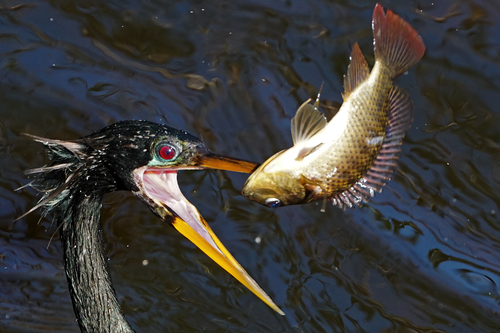
Anhinga (Anhinga anhinga) Anhinga
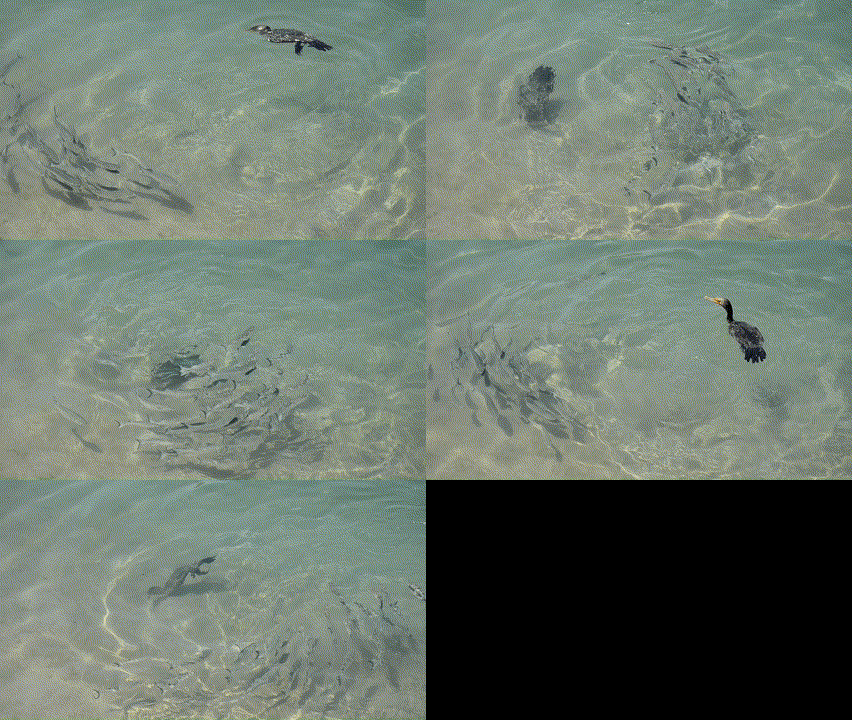
Double-crested Cormorant (Nannopterum auritum) Double-crested Cormorant

Media

Loading…

In short

The Anhinga and Double-crested Cormorant are both large, water-dwelling birds often seen swimming with only their necks above water. The most reliable field mark is the Anhinga's long, slender neck and pointed bill, compared to the Cormorant's thicker neck and hooked bill. Both species can be seen drying their wings, but their plumage and behavior offer additional clues.

Identification tips

  1. Look for the Anhinga's long, slender neck and pointed bill versus the Cormorant's thicker neck and hooked bill. 2. Observe the plumage: Anhingas have a glossy, greenish sheen, while Cormorants are more brownish-black with crests during breeding. 3. Note behavior: Anhingas swim with bodies submerged and spend more time drying wings. 4. Consider habitat: Anhingas prefer warmer climates with sunning spots; Cormorants are more widespread.

Size

Both species are similar in size, but the Anhinga appears more elongated due to its longer neck and tail.

Plumage

Anhingas have a more uniform dark plumage with a glossy, greenish sheen, while Double-crested Cormorants have a more varied plumage with a duller, brownish-black appearance and distinctive double crests during breeding season.

Behaviour

Anhingas are often seen with their bodies submerged and only their necks visible, earning them the nickname 'snake bird.' They also spend more time drying their wings due to their wettable plumage. Cormorants, while also drying their wings, are more likely to be seen swimming with more of their body above water.

Habitat

Both species inhabit freshwater and coastal environments, but Anhingas prefer warmer, more tropical areas with abundant sunning spots, while Cormorants are more adaptable to various climates and can be found in a wider range of habitats.

Voice

Both species are generally silent, but the Double-crested Cormorant may produce low grunts, especially in colonies. Anhingas are quieter and less vocal overall.

Submit a better description

Use the same sections as the comparison. Your text is published immediately.

The Anhinga and Double-crested Cormorant are both large, water-dwelling birds often seen swimming with only their necks above water. The most reliable field mark is the Anhinga's long, slender neck and pointed bill, compared to the Cormorant's thicker neck and hooked bill. Both species can be seen drying their wings, but their plumage and behavior offer additional clues.

  1. Look for the Anhinga's long, slender neck and pointed bill versus the Cormorant's thicker neck and hooked bill. 2. Observe the plumage: Anhingas have a glossy, greenish sheen, while Cormorants are more brownish-black with crests during breeding. 3. Note behavior: Anhingas swim with bodies submerged and spend more time drying wings. 4. Consider habitat: Anhingas prefer warmer climates with sunning spots; Cormorants are more widespread.

Both species are similar in size, but the Anhinga appears more elongated due to its longer neck and tail.

Anhingas have a more uniform dark plumage with a glossy, greenish sheen, while Double-crested Cormorants have a more varied plumage with a duller, brownish-black appearance and distinctive double crests during breeding season.

Anhingas are often seen with their bodies submerged and only their necks visible, earning them the nickname 'snake bird.' They also spend more time drying their wings due to their wettable plumage. Cormorants, while also drying their wings, are more likely to be seen swimming with more of their body above water.

Both species inhabit freshwater and coastal environments, but Anhingas prefer warmer, more tropical areas with abundant sunning spots, while Cormorants are more adaptable to various climates and can be found in a wider range of habitats.

Both species are generally silent, but the Double-crested Cormorant may produce low grunts, especially in colonies. Anhingas are quieter and less vocal overall.

Discard your changes?

You have unsaved edits. If you leave now, those changes will be lost.

Anhinga · Double-crested Cormorant · My Tricky Birds