
Blue Bustard vs Dusky Lark
Eupodotis caerulescens contro Pinarocorys nigricans
Fai un quiz con Blue Bustard e Dusky Lark
 Blue Bustard
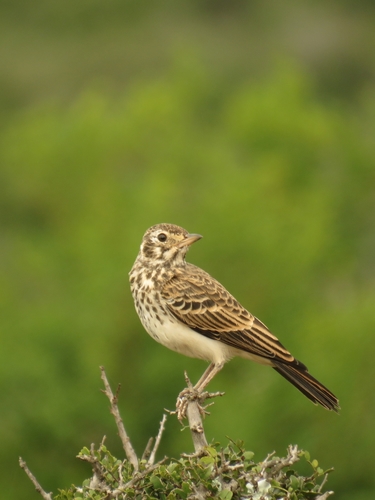 Dusky Lark
In breve
Il Blue Bustard e il Dusky Lark possono essere distinti principalmente dal loro piumaggio e comportamento. Il Blue Bustard ha un volto nero e bianco molto appariscente, mentre il Dusky Lark non presenta contrasti così marcati. Inoltre, i Blue Bustards si trovano spesso in piccoli gruppi, mentre i Dusky Larks sono tipicamente solitari.
Consigli di identificazione
Cerca il volto nero e bianco molto appariscente del Blue Bustard. Nota il comportamento sociale: i Blue Bustards sono spesso in piccoli gruppi, mentre i Dusky Larks sono solitari. Ascolta i forti e discordanti richiami del Blue Bustard.
Piumaggio
Il Blue Bustard presenta un volto nero e bianco ad alto contrasto, mentre il Dusky Lark non ha segni facciali così distintivi. Le femmine e i giovani Blue Bustards sono più opachi con copritrici auricolari fulve.
Comportamento
I Blue Bustards di solito si trovano in coppie o piccoli gruppi familiari e mostrano alcuni comportamenti di allevamento cooperativo. Al contrario, i Dusky Larks sono generalmente solitari.
Voce
La voce del Blue Bustard è relativamente irregolare e discordante, udibile fino a 3 km di distanza. Non sono fornite informazioni specifiche sulla vocalizzazione del Dusky Lark.