
Chestnut-bellied Seed-Finch vs Rusty-collared Seedeater
Sporophila angolensis contro Sporophila collaris
Fai un quiz con Chestnut-bellied Seed-Finch e Rusty-collared Seedeater
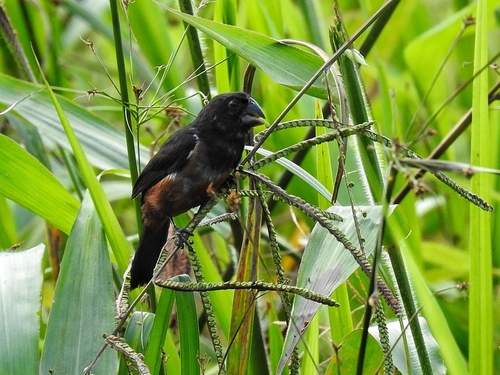 Chestnut-bellied Seed-Finch
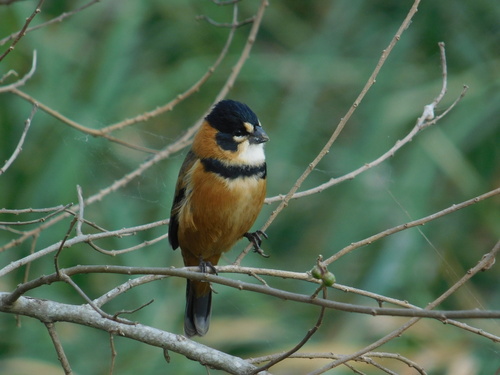 Rusty-collared Seedeater
In breve
Il Chestnut-bellied Seed-Finch e il Rusty-collared Seedeater possono essere distinti dal loro piumaggio e dalle preferenze di habitat. Il Chestnut-bellied Seed-Finch ha un aspetto più uniforme, mentre il maschio del Rusty-collared Seedeater è distintivo con lore bianche e una fascia nera sul petto. Il Rusty-collared Seedeater si trova tipicamente in prati umidi.
Consigli di identificazione
Cerca le lore bianche e la fascia nera sul petto del maschio Rusty-collared Seedeater, specialmente nelle aree di prati umidi. Il Chestnut-bellied Seed-Finch non mostrerà queste caratteristiche.
Piumaggio
Il maschio del Rusty-collared Seedeater è molto distintivo con lore bianche prominenti, una macchia bianca sotto l'occhio, un ampio collare color crema o bianco e una fascia nera sul petto. Ha anche fianchi e coda color cannella. Al contrario, il Chestnut-bellied Seed-Finch non presenta queste marcature distintive e ha un aspetto più uniforme.
Comportamento
Il Rusty-collared Seedeater si trova solitamente in coppie o piccoli gruppi e raramente si associa con altri seedeaters.
Habitat
Il Rusty-collared Seedeater si trova in prati umidi e aree con erbe e arbusti che bordano stagni. Le preferenze di habitat del Chestnut-bellied Seed-Finch non sono dettagliate qui, ma non sono notate per la stessa associazione con i prati umidi.
Chestnut-bellied Seed-Finch · Rusty-collared Seedeater · I miei uccelli difficili