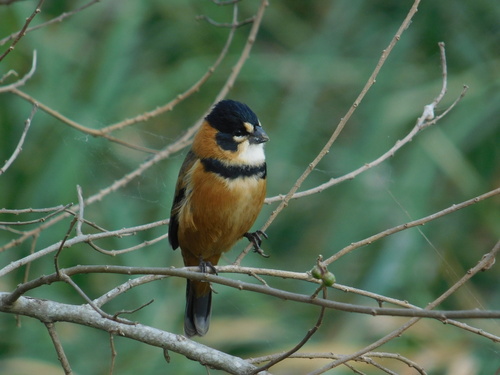
Chestnut-bellied Seed-Finch vs Rusty-collared Seedeater
Sporophila angolensis versus Sporophila collaris
Play a quiz with Chestnut-bellied Seed-Finch and Rusty-collared Seedeater
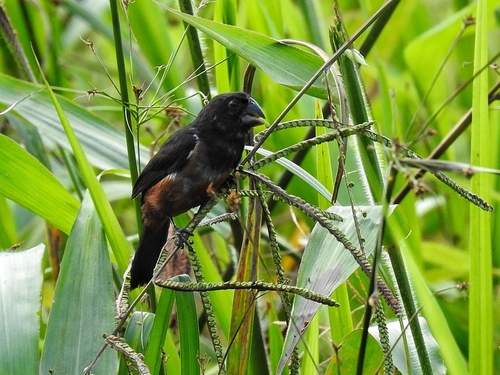
Chestnut-bellied Seed-Finch
Rusty-collared Seedeater
In short
The Chestnut-bellied Seed-Finch and the Rusty-collared Seedeater can be distinguished by their plumage and habitat preferences. The male Chestnut-bellied Seed-Finch is notable for its chestnut underparts, while the Rusty-collared Seedeater male has a distinctive black breast band and a buffy or white collar. Both species have thick bills, but their coloration and preferred environments are key to telling them apart.
Identification tips
- Look for the chestnut underparts in male Chestnut-bellied Seed-Finch. 2. Identify the black breast band and buffy or white collar in male Rusty-collared Seedeater. 3. Note the white throat and wingbars in female Rusty-collared Seedeater. 4. Observe habitat: Rusty-collared Seedeater favors wet grasslands, while Chestnut-bellied Seed-Finch is more versatile.
Size
Both species are relatively similar in size, typical of small seedeaters, but the Rusty-collared Seedeater is described as relatively large for its group.
Plumage
The male Chestnut-bellied Seed-Finch has chestnut underparts, while the Rusty-collared Seedeater male features a black breast band, white lores, and a buffy or white collar. Females of both species are less distinctive, but the Rusty-collared Seedeater female has a contrasting white throat and well-marked wingbars.
Behaviour
The Rusty-collared Seedeater is usually found in pairs or small groups and rarely associates with other seedeaters, unlike many species in its genus.
Habitat
The Chestnut-bellied Seed-Finch is often found in more varied habitats, while the Rusty-collared Seedeater prefers wet grasslands and areas with grasses and shrubs bordering ponds.
Chestnut-bellied Seed-Finch · Rusty-collared Seedeater · My Tricky Birds