Birdr

Greater Yellowlegs vs Great Knot

Tringa melanoleuca contro Calidris tenuirostris

Fai un quiz con Greater Yellowlegs e Great Knot

Greater Yellowlegs (Tringa melanoleuca) Greater Yellowlegs
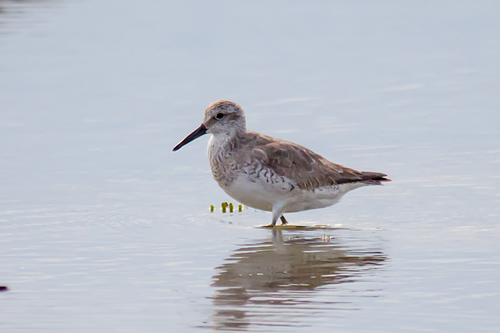
Great Knot (Calidris tenuirostris) Great Knot

Media

Caricamento…

In breve

Il Greater Yellowlegs si distingue per le sue gambe gialle brillanti e la postura eretta, mentre il Great Knot manca di queste caratteristiche e ha una struttura più compatta. Queste specie differiscono significativamente nella struttura e nelle preferenze di habitat, rendendo improbabile la loro confusione sul campo.

Consigli di identificazione

Cerca gambe gialle brillanti e una postura eretta nel Greater Yellowlegs. Il Great Knot non avrà gambe gialle ed è più compatto nell'aspetto. Inoltre, considera l'habitat: i Greater Yellowlegs si trovano più frequentemente in zone umide interne, mentre i Great Knot sono costieri.

Taglia

Il Greater Yellowlegs è più grande e più snodato rispetto al più compatto Great Knot.

Comportamento

Il Greater Yellowlegs è più solitario e spesso si trova da solo o in piccoli gruppi, mentre il Great Knot può essere visto in gruppi più numerosi.

Habitat

Il Greater Yellowlegs preferisce habitat paludosi e zone umide, mentre il Great Knot si trova tipicamente in aree costiere.

Voce

Il Greater Yellowlegs è noto per i suoi allarmi acuti, che non sono una caratteristica del Great Knot.

Invia una descrizione migliore

Usa le stesse sezioni del confronto. Il testo viene pubblicato subito.

The Greater Yellowlegs is distinguished by its bright yellow legs and upright stance, while the Great Knot lacks these features and has a more compact build. These species differ significantly in structure and habitat preferences, making them unlikely to be confused in the field.

Look for bright yellow legs and an upright stance in the Greater Yellowlegs. The Great Knot will not have yellow legs and is more compact in appearance. Additionally, consider habitat: Greater Yellowlegs are more likely in inland wetlands, while Great Knots are coastal.

The Greater Yellowlegs is larger and more slender compared to the more compact Great Knot.

The Greater Yellowlegs is more solitary and often found alone or in small groups, while the Great Knot may be seen in larger flocks.

Greater Yellowlegs prefers swampy muskeg habitats and wetlands, while the Great Knot is typically found in coastal areas.

The Greater Yellowlegs is known for its piercing alarm calls, which are not a feature of the Great Knot.

Scartare le modifiche?

Hai modifiche non salvate. Se esci ora, andranno perse.

Greater Yellowlegs · Great Knot · I miei uccelli difficili