Birdr

Greater Yellowlegs vs Voltapietre

Tringa melanoleuca contro Arenaria interpres

Fai un quiz con Greater Yellowlegs e Voltapietre

Greater Yellowlegs (Tringa melanoleuca) Greater Yellowlegs
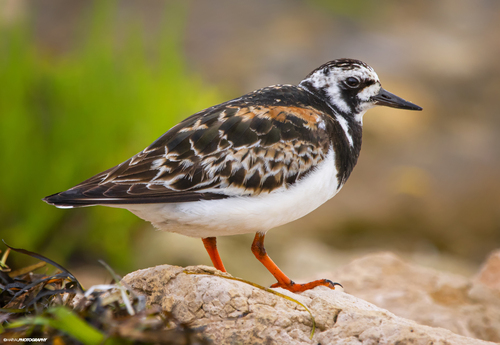
Voltapietre (Arenaria interpres) Voltapietre

Media

Caricamento…

In breve

Il Greater Yellowlegs e il Voltapietre sono uccelli costieri distinti, con il primo che ha zampe gialle brillanti e una postura eretta, mentre il secondo è noto per il suo unico schema di piumaggio. Il Greater Yellowlegs è più solitario, mentre il Voltapietre spesso cerca cibo in gruppi.

Consigli di identificazione

Leg color: Il Greater Yellowlegs ha zampe gialle brillanti, mentre il Voltapietre ha zampe arancioni. Plumage pattern: Cerca il distintivo schema nero e bianco del Voltapietre rispetto all'aspetto più uniforme del Greater Yellowlegs. Behavior: Osserva il comportamento sociale; il Greater Yellowlegs è più solitario, mentre il Voltapietre è spesso in gruppi.

Taglia

Il Greater Yellowlegs è generalmente più grande del Voltapietre.

Piumaggio

Il Greater Yellowlegs ha un piumaggio grigio-marrone più uniforme con un aspetto maculato, mentre il Voltapietre presenta un motivo sorprendente con una miscela di colori nero, bianco e marrone-rossiccio.

Comportamento

I Greater Yellowlegs sono più solitari e spesso si vedono da soli o in piccoli gruppi, mentre i Voltapietre sono più sociali e cercano frequentemente cibo in gruppi.

Habitat

I Greater Yellowlegs si trovano in zone umide dolci e saline, mentre i Voltapietre sono tipicamente visti lungo coste rocciose e fangose.

Voce

Il Greater Yellowlegs è noto per i suoi acuti richiami di allerta, spesso descritti come guaiti o chiacchiere.

Invia una descrizione migliore

Usa le stesse sezioni del confronto. Il testo viene pubblicato subito.

The Greater Yellowlegs and Ruddy Turnstone are distinct shorebirds, with the former having bright yellow legs and an upright stance, while the latter is known for its unique plumage pattern. The Greater Yellowlegs is more solitary, whereas the Ruddy Turnstone often forages in groups.

Leg color: Greater Yellowlegs have bright yellow legs, while Ruddy Turnstones have orange legs. Plumage pattern: Look for the distinctive black and white pattern of the Ruddy Turnstone compared to the more uniform appearance of the Greater Yellowlegs. Behavior: Observe the social behavior; Greater Yellowlegs are more solitary, whereas Ruddy Turnstones are often in groups.

The Greater Yellowlegs is generally larger than the Ruddy Turnstone.

The Greater Yellowlegs has a more uniform gray-brown plumage with a speckled appearance, while the Ruddy Turnstone features a striking pattern with a mix of black, white, and reddish-brown colors.

Greater Yellowlegs are more solitary and often seen alone or in small groups, whereas Ruddy Turnstones are more social and frequently forage in groups.

Greater Yellowlegs are found in fresh and saline wetlands, while Ruddy Turnstones are typically seen along rocky shorelines and mudflats.

The Greater Yellowlegs is known for its piercing alarm calls, often described as yelps or tattles.

Scartare le modifiche?

Hai modifiche non salvate. Se esci ora, andranno perse.

Greater Yellowlegs · Voltapietre · I miei uccelli difficili