
Green Thorntail vs Butterfly Coquette
Discosura conversii contro Lophornis verreauxii
Fai un quiz con Green Thorntail e Butterfly Coquette
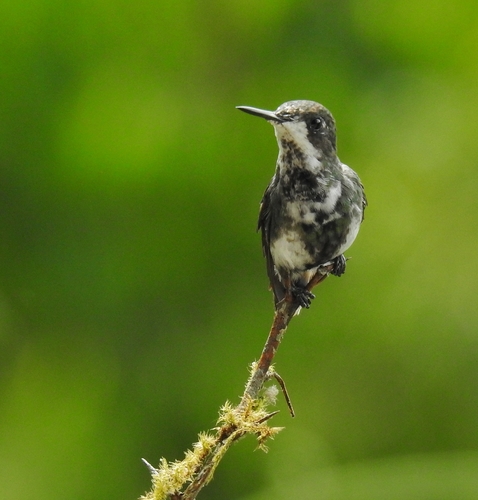 Green Thorntail
 Butterfly Coquette
In breve
Il segno di campo più affidabile tra Green Thorntail e Butterfly Coquette è la coda: il maschio adulto di Green Thorntail mostra una coda estremamente lunga, profondamente biforcuta e stretta, mentre i maschi di Butterfly Coquette hanno una coda più corta, color maroon, senza una biforcazione così profonda. Le femmine di entrambe le specie non hanno streamer di coda stravaganti, ma le femmine di Green Thorntail hanno una coda intagliata con distintive macchie bianche nelle piume esterne, mentre le femmine di Butterfly Coquette hanno una coda maroon o verde-bronzata. I maschi di Butterfly Coquette sono anche unici nel mostrare una lunga cresta verde con punte rosse e 'baffi' verdi con punte bianche, che Green Thorntail non ha affatto. Entrambe le specie hanno una banda bianca sul dorso, ma i loro schemi di testa e faccia, e il colore delle loro copritrici della coda, sono fondamentali per la separazione. Gli uccelli immaturi e femminili possono essere separati in base al viso e al modello della coda con attenta osservazione.
Consigli di identificazione
- Forma e lunghezza della coda (maschi adulti): I maschi di Green Thorntail hanno una coda blu-nera estremamente lunga, profondamente biforcuta e stretta, spesso tenuta in fuori o inclinata. I maschi di Butterfly Coquette hanno una coda più corta, color maroon, che non è profondamente biforcuta.
- Cresta e baffi (maschi adulti): Solo i maschi di Butterfly Coquette mostrano una lunga cresta verde con punte rosse e lunghi 'baffi' verdi con punte bianche. Green Thorntail non mostra mai una cresta o baffi.
- Copritrici della coda: I maschi di Green Thorntail hanno un dorso color bronzo rame con blu-nera, mentre i maschi di Butterfly Coquette hanno copritrici della coda di un rosso profondo (verde-bronzato nella sottospecie klagesi). Questo è visibile quando sono posati o in buona luce.
- Banda bianca sul dorso: Entrambe le specie hanno una banda bianca sul dorso, quindi questo segno da solo non è diagnostico, ma può essere usato in combinazione con altre caratteristiche.
- Schema facciale (femmine): Le femmine di Green Thorntail hanno una ampia macchia bianca sulla guancia e un mento nero opaco con macchie bianche. Le femmine di Butterfly Coquette hanno una macchia malare biancastra ma mancano della ampia macchia sulla guancia e del mento macchiato.
- Schema della coda (femmine): Le femmine di Green Thorntail hanno una coda intagliata con piume centrali blu-nera e piume esterne bianche alla base e con punte bianche. Le femmine di Butterfly Coquette hanno una coda maroon o verde-bronzata senza il distintivo schema bianco.
- Colore delle parti inferiori: I maschi di Green Thorntail hanno una gola verde metallico brillante e un centro del petto verde-blu, mentre i maschi di Butterfly Coquette hanno parti inferiori verdi con cosce bianche e riflessi dorati sul petto (femmine).
- Mento giovanile: I giovani di Green Thorntail hanno un mento grigio-bianco, che può aiutare a separarli da Butterfly Coquette se visti bene.
- Impressione di dimensione: I maschi di Green Thorntail appaiono più lunghi e più snelli a causa della loro coda, ma la dimensione corporea effettiva è simile tra le specie.
- Posa e display: I maschi di Green Thorntail spesso si posano su rami alti e nudi e possono essere visti eseguire display di immersione. Il comportamento di display di Butterfly Coquette non è descritto qui.
- Contesto dell'habitat: Se visti nella canopia di foreste montane umide o di pianura in Costa Rica, Panama, Colombia o Ecuador, è più probabile che si tratti di Green Thorntail. Butterfly Coquette è più diffuso nel nord del Sud America.
- Nessuna differenza nel modello delle ali: Nessuna delle due specie ha un modello distintivo delle ali superiori in volo a qualsiasi età, quindi concentrati su coda e testa/faccia.
- Differenze sessuali: Solo il maschio di Butterfly Coquette mostra cresta e baffi; le femmine di entrambe le specie sono più sottilmente marcate e richiedono attenzione al viso e al modello della coda.
- Trappole: Non fare affidamento solo sulla banda bianca sul dorso; controlla la forma della coda, la cresta e il modello facciale. Gli uccelli immaturi e femminili sono meglio separati dalla coda e dal viso, non dal colore complessivo.
- Variazione delle sottospecie: La sottospecie klagesi di Butterfly Coquette è più scura con copritrici della coda verde-bronzato e coda verde-bronzata, ma manca ancora della coda profondamente biforcuta di Green Thorntail.
Taglia
I maschi di Green Thorntail sono leggermente più lunghi (9.5–10.2 cm) rispetto a Butterfly Coquette (7.5–9.1 cm), ma le femmine sono più piccole (6.6–7.5 cm). Green Thorntail è più leggero (media 3.0 g, sesso non sempre registrato), mentre il peso di Butterfly Coquette non è specificato. Entrambi sono tra i più piccoli colibrì, quindi la dimensione da sola non è un segno di campo forte, ma la coda estremamente lunga del maschio di Green Thorntail lo fa apparire più lungo e più snello sul campo.
Piumaggio
- Giovanile/Immaturi/Non in riproduzione: Non è descritto alcun modello distintivo delle ali superiori o di volo per entrambe le specie a qualsiasi età; la separazione si basa sul modello della coda e del viso, non sull'ala.
- Maschio adulto: I maschi di Green Thorntail hanno una corona verde metallico, un dorso verde metallico più chiaro, un dorso color bronzo rame con blu-nera, una ampia banda bianca sul dorso e una coda blu-nera profondamente biforcuta e stretta. La gola e il petto sono di un verde metallico brillante fino al verde-blu. I maschi di Butterfly Coquette hanno una testa verde profonda con una lunga cresta verde con punte rosse e lunghi 'baffi' verdi con punte bianche, un dorso verde con riflessi dorati, copritrici della coda di un rosso profondo, una banda bianca sul dorso, parti inferiori verdi, cosce bianche e una coda maroon. Mancano della coda profondamente biforcuta di Green Thorntail.
- Femmina adulta: Le femmine di Green Thorntail hanno un dorso verde scuro, un dorso più scuro, una coda intagliata ma non allungata con piume centrali blu-nera e piume esterne bianche alla base e con punte bianche, una ampia macchia bianca sulla guancia e un mento nero opaco con macchie bianche. Le femmine di Butterfly Coquette mancano di cresta e baffi, hanno una macchia malare biancastra, copritrici della coda di un rosso meno intenso, riflessi dorati sul petto e una coda maroon o verde-bronzata.
- Giovanile: I giovani di Green Thorntail assomigliano agli adulti ma hanno un mento grigio-bianco. Non sono descritti segni specifici per i giovanili di Butterfly Coquette.
Comportamento
I maschi di Green Thorntail spesso si posano su rami alti e nudi e eseguono display di immersione durante la stagione di riproduzione. Si nutrono principalmente sulla cima degli alberi fioriti, rimanendo sospesi con la coda inclinata a un angolo retto rispetto al corpo. Il comportamento di Butterfly Coquette non è descritto in dettaglio, ma come coquette, è probabile che si nutra anche di fiori e possa mostrare un volo attivo e agile. La coda esagerata dei maschi di Green Thorntail è spesso tenuta in fuori e accentua il loro aspetto snello, specialmente quando sono sospesi o in display.
Habitat
Green Thorntail si trova in foreste sempreverdi montane e di pianura umide, tipicamente nella canopia o ai margini, da 300 a 1.400 m a seconda del paese (Costa Rica, Panama, Colombia, Ecuador). Butterfly Coquette si verifica in una gamma più ampia attraverso Bolivia, Brasile, Colombia, Ecuador, Perù e Venezuela, ma i dettagli specifici dell'habitat non sono forniti qui. Entrambi sono specialisti della canopia, ma Green Thorntail è più legato ai margini e alle radure delle foreste montane e di pianura umide.
Green Thorntail · Butterfly Coquette · I miei uccelli difficili