
Hammond's Flycatcher vs Black-throated Blue Warbler
Empidonax hammondii contro Setophaga caerulescens
Fai un quiz con Hammond's Flycatcher e Black-throated Blue Warbler
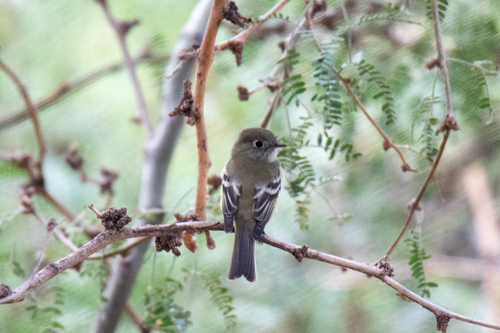 Hammond's Flycatcher
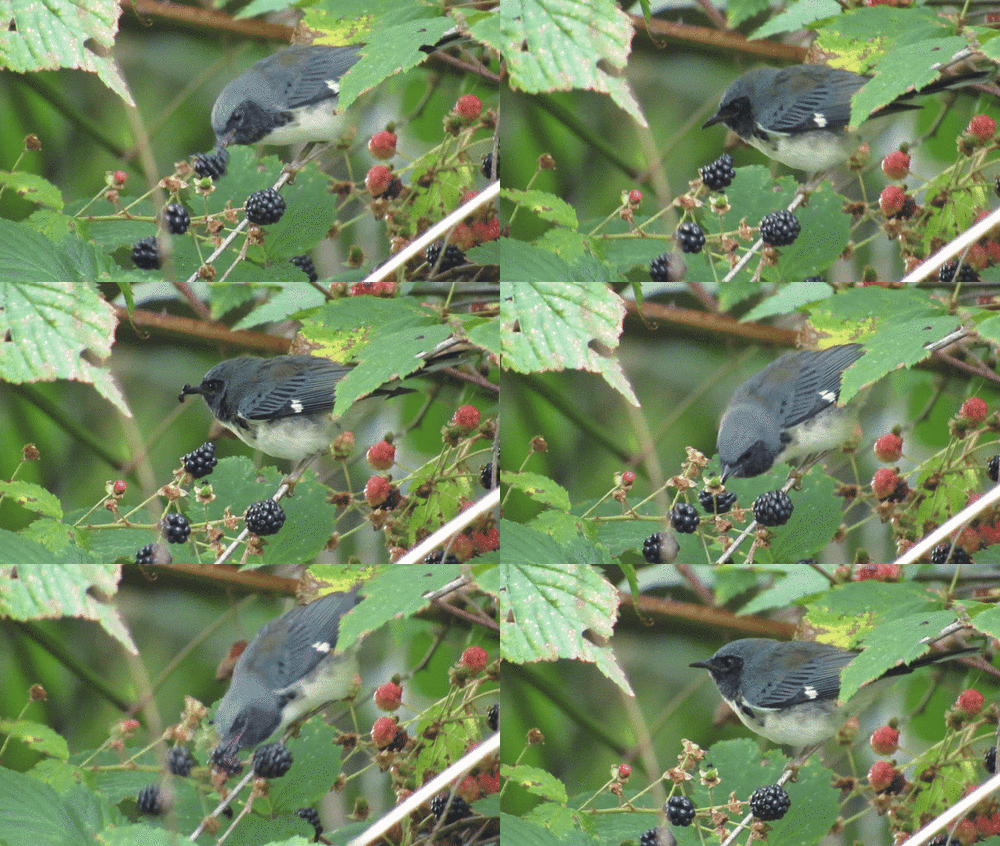 Black-throated Blue Warbler
In breve
Hammond's Flycatcher e Black-throated Blue Warbler possono essere distinti dalla loro livrea e dalle preferenze di habitat. Hammond's Flycatcher è un piccolo uccello poco appariscente delle foreste conifere mature, mentre il Black-throated Blue Warbler è più colorato e abita le foreste decidue.
Consigli di identificazione
Cerca la livrea vibrante del Black-throated Blue Warbler, specialmente il blu e il nero del maschio, rispetto ai toni più sottotono di Hammond's Flycatcher. Considera l'habitat: le foreste conifere suggeriscono Hammond's Flycatcher, mentre le foreste decidue possono indicare il Black-throated Blue Warbler.
Piumaggio
Hammond's Flycatcher è generalmente opaco con toni attenuati, mentre il Black-throated Blue Warbler è più vibrante, con i maschi che mostrano una livrea blu e nera sorprendente e le femmine che mostrano una colorazione più criptica grigio-verdastra.
Comportamento
Hammond's Flycatcher è principalmente un foraggiatore aereo, spesso catturando insetti in volo, mentre il comportamento di foraggiamento del Black-throated Blue Warbler non è dettagliato qui.
Habitat
Hammond's Flycatcher preferisce le foreste conifere mature e di vecchia crescita, mentre il Black-throated Blue Warbler è associato alle foreste decidue.
Hammond's Flycatcher · Black-throated Blue Warbler · I miei uccelli difficili