
Hammond's Flycatcher vs Western Flycatcher
Empidonax hammondii contro Empidonax difficilis
Fai un quiz con Hammond's Flycatcher e Western Flycatcher
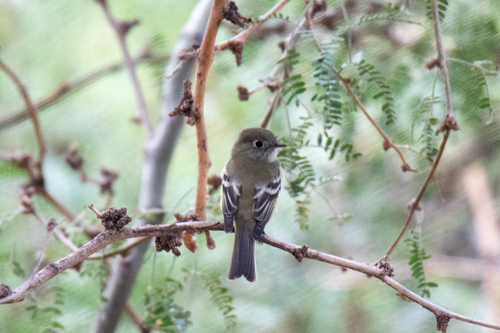 Hammond's Flycatcher
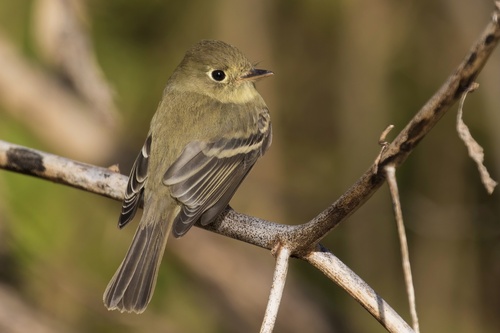 Western Flycatcher
In breve
Hammond's Flycatcher e Western Flycatcher sono difficili da distinguere a causa della loro somiglianza nell'aspetto. Il segno di campo più affidabile è la struttura: Hammond's ha un becco più corto e una proiezione primaria più lunga rispetto al Western Flycatcher. Le vocalizzazioni non sono affidabili per la differenziazione a causa della variazione.
Consigli di identificazione
- Controlla la lunghezza del becco: Hammond's Flycatcher ha un becco più corto. 2. Osserva la proiezione primaria: Hammond's ha una proiezione primaria più lunga. 3. Considera la preferenza dell'habitat: Hammond's è più probabile che si trovi in foreste conifere mature.
Comportamento
Hammond's Flycatcher si nutre principalmente in volo, catturando insetti in volo, mentre il comportamento del Western Flycatcher non è distintamente annotato nelle fonti.
Habitat
Hammond's Flycatcher preferisce foreste conifere mature e di vecchia crescita, mentre la preferenza dell'habitat per il Western Flycatcher non è specificata nelle note.
Voce
Le vocalizzazioni non sono affidabili per distinguere queste specie a causa di uno spettro continuo di variazione.
Hammond's Flycatcher · Western Flycatcher · I miei uccelli difficili