
Karoo Bustard vs Red-crested Bustard
Heterotetrax vigorsii contro Lophotis ruficrista
Fai un quiz con Karoo Bustard e Red-crested Bustard
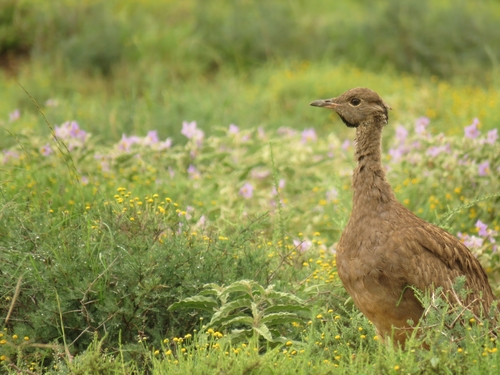 Karoo Bustard
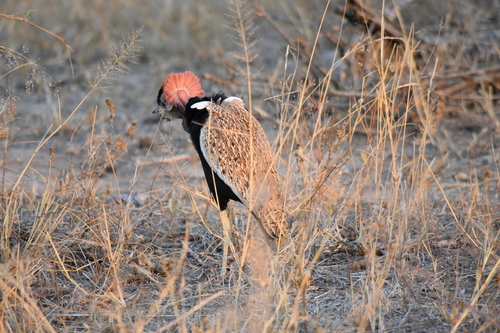 Red-crested Bustard
In breve
Per distinguere il Karoo Bustard dal Red-crested Bustard, concentrati su habitat e comportamento: i Karoo Bustard abitano in regioni aride e aperte del karoo con arbusti sparsi, mentre i Red-crested Bustard preferiscono habitat più boschivi. Inoltre, il Red-crested Bustard è noto per il suo spettacolare volo di corteggiamento, un comportamento non osservato nel Karoo Bustard.
Consigli di identificazione
- Habitat: Cerca i Karoo Bustard in regioni aperte del karoo, mentre i Red-crested Bustard sono più probabili in aree boschive.
- Behavior: Osserva i voli di corteggiamento; i Red-crested Bustard eseguono voli drammatici, che i Karoo Bustard non fanno.
- Plumage: Nota la macchia nera sul collo del Karoo Bustard e l'aspetto più opaco delle femmine di Red-crested Bustard.
Piumaggio
I Karoo Bustard hanno una grande macchia nera dalla gola al collo, che è più piccola e marrone nelle femmine, e una pancia bianco sporco con sfumature rosate sopra. I Red-crested Bustard hanno un aspetto più opaco nelle femmine, senza grigio sulla testa o sul collo, e una banda superiore del petto bianca meno audace.
Comportamento
I Karoo Bustard si trovano tipicamente in coppie o piccoli gruppi e possono essere allevatori cooperativi, mentre i Red-crested Bustard sono poliginosi, con i maschi che si radunano in lek per esibirsi e attrarre le femmine.
Habitat
I Karoo Bustard abitano in regioni aride e aperte del karoo con un substrato roccioso o ghiaioso e arbusti sparsi. Al contrario, i Red-crested Bustard si trovano in habitat più boschivi, inclusi mopane e acacia, tranne che nel Kalahari meridionale dove possono trovarsi in aree senza alberi.
Karoo Bustard · Red-crested Bustard · I miei uccelli difficili