Birdr

Karoo Bustard vs Red-crested Bustard

Heterotetrax vigorsii versus Lophotis ruficrista

Play a quiz with Karoo Bustard and Red-crested Bustard
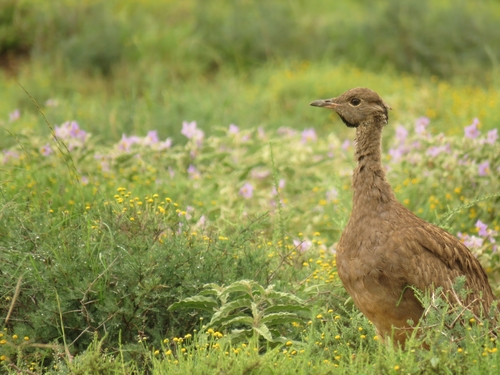
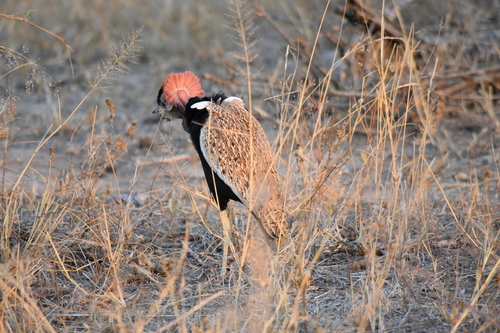
Karoo Bustard (Heterotetrax vigorsii) Karoo Bustard
Red-crested Bustard (Lophotis ruficrista) Red-crested Bustard

Media

Loading…

In short

The Karoo Bustard and Red-crested Bustard can be distinguished by habitat preference and plumage details. Karoo Bustards favor dry, open karoo landscapes, while Red-crested Bustards are found in more wooded areas. Look for the Karoo Bustard's distinctive black patch on the neck and the Red-crested Bustard's aerial display during mating season.

Identification tips

Size

Both species are medium-sized bustards, but size differences are not a reliable field mark.

Plumage

Karoo Bustards have a large black patch from the chin to the foreneck, which is smaller and browner in females. Red-crested Bustards lack this feature and have a duller white upper breast-band in females.

Behaviour

Karoo Bustards are often seen in pairs or small parties and may be cooperative breeders. Red-crested Bustards are polygynous, with males displaying in leks and performing aerial displays.

Habitat

Karoo Bustards inhabit dry, open karoo country with scattered shrubs. Red-crested Bustards prefer more wooded habitats, including mopane and acacia regions, though they can be found in open areas for displaying.

Voice

Vocalizations are not a reliable distinguishing feature, as both species have similar calls.

Submit a better description

Use the same sections as the comparison. Your text is published immediately.

The Karoo Bustard and Red-crested Bustard can be distinguished by habitat preference and plumage details. Karoo Bustards favor dry, open karoo landscapes, while Red-crested Bustards are found in more wooded areas. Look for the Karoo Bustard's distinctive black patch on the neck and the Red-crested Bustard's aerial display during mating season.

  • Habitat: Karoo Bustard in open, dry areas; Red-crested Bustard in wooded regions.
  • Neck Patch: Look for the black neck patch on Karoo Bustard.
  • Display Behavior: Observe Red-crested Bustard's aerial display during mating season.
  • Group Behavior: Karoo Bustards in pairs or small groups; Red-crested Bustards in leks.

Both species are medium-sized bustards, but size differences are not a reliable field mark.

Karoo Bustards have a large black patch from the chin to the foreneck, which is smaller and browner in females. Red-crested Bustards lack this feature and have a duller white upper breast-band in females.

Karoo Bustards are often seen in pairs or small parties and may be cooperative breeders. Red-crested Bustards are polygynous, with males displaying in leks and performing aerial displays.

Karoo Bustards inhabit dry, open karoo country with scattered shrubs. Red-crested Bustards prefer more wooded habitats, including mopane and acacia regions, though they can be found in open areas for displaying.

Vocalizations are not a reliable distinguishing feature, as both species have similar calls.

Discard your changes?

You have unsaved edits. If you leave now, those changes will be lost.

Karoo Bustard · Red-crested Bustard · My Tricky Birds