
Karoo Bustard vs White-quilled Bustard
Heterotetrax vigorsii contro Afrotis afraoides
Fai un quiz con Karoo Bustard e White-quilled Bustard
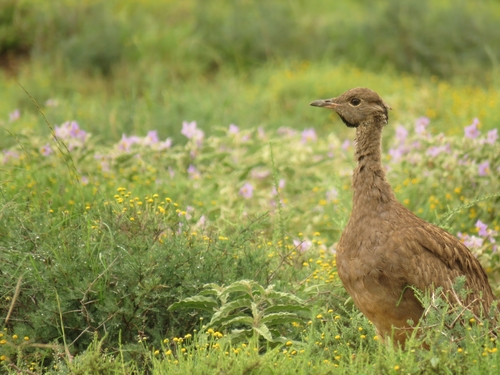 Karoo Bustard
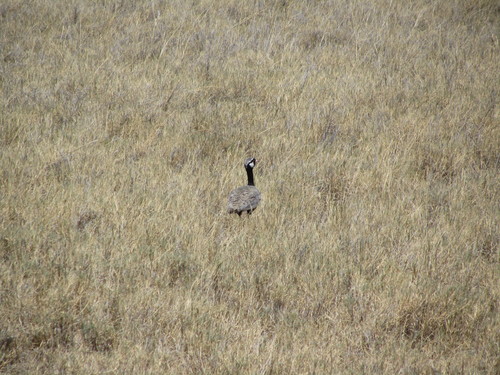 White-quilled Bustard
In breve
Il Karoo Bustard e il White-quilled Bustard possono essere distinti per il piumaggio e le preferenze di habitat. Il Karoo Bustard ha una distintiva macchia nera dal mento al collo anteriore, mentre il maschio del White-quilled Bustard presenta una testa e parti inferiori per lo più nere con una macchia e un collare bianchi sulle guance. Le differenze di habitat aiutano anche nell'identificazione, con il Karoo Bustard che preferisce il paese karoo secco e aperto e il White-quilled Bustard che si trova in una gamma più ampia di habitat secchi, inclusi Nama Karoo e savana aperta.
Consigli di identificazione
Cerca la macchia nera sul collo anteriore del Karoo Bustard, specialmente nei maschi. Al contrario, identifica il maschio del White-quilled Bustard dalla sua macchia e collare bianchi sulle guance. Considera l'habitat: Karoo Bustard nel paese karoo contro White-quilled Bustard in habitat secchi più variati.
Piumaggio
Il Karoo Bustard ha una grande macchia nera dal mento al collo anteriore, che è più piccola e marrone nelle femmine. Il maschio del White-quilled Bustard ha una testa e parti inferiori per lo più nere con una macchia bianca sulle guance, un collare bianco e una banda sull'ala; le femmine non hanno la macchia e il collare bianchi, con il nero confinato all'addome e alle parti inferiori posteriori.
Habitat
Il Karoo Bustard abita il paese karoo secco e aperto con arbusti sparsi e un substrato roccioso o ghiaioso. Al contrario, il White-quilled Bustard si trova in una gamma di habitat secchi, inclusi Nama Karoo, Kalahari sandveld, praterie secche e savana aperta.
Karoo Bustard · White-quilled Bustard · I miei uccelli difficili