
Lesser Honeyguide vs Rock Kestrel
Indicator minor contro Falco rupicolus
Fai un quiz con Lesser Honeyguide e Rock Kestrel
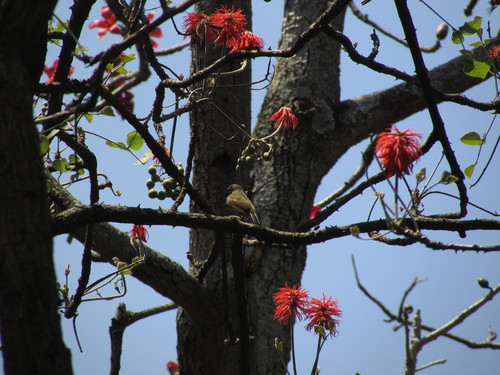 Lesser Honeyguide
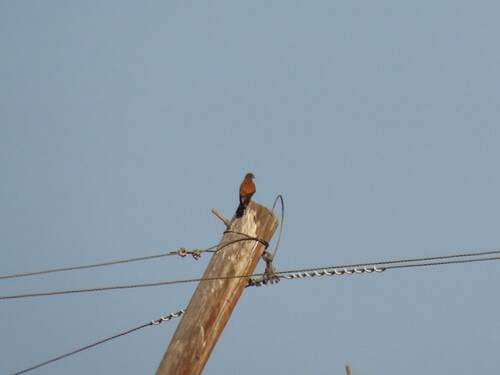 Rock Kestrel
In breve
Il Lesser Honeyguide e il Rock Kestrel sono facilmente distinguibili per le loro dimensioni e il piumaggio. Il Lesser Honeyguide è un uccello di piccole dimensioni con bordi bianchi distintivi sulla coda e una striscia malare scura, mentre il Rock Kestrel è un rapace più grande con una corporatura più robusta e privo di queste marcature specifiche.
Consigli di identificazione
Controlla prima le dimensioni: il Rock Kestrel è molto più grande. Cerca le marcature sulla coda: il Lesser Honeyguide ha bordi bianchi sulla coda. Osserva l'habitat: il Lesser Honeyguide si trova in aree boschive, il Rock Kestrel in paesaggi aperti.
Taglia
Il Rock Kestrel è significativamente più grande del Lesser Honeyguide, essendo un rapace di dimensioni medie rispetto al piccolo honeyguide.
Piumaggio
Il Lesser Honeyguide presenta bordi bianchi sulla coda, una piccola macchia loriale chiara e una striscia malare scura. Il Rock Kestrel non ha queste caratteristiche e ha invece un piumaggio tipico dei rapaci con una colorazione più uniforme.
Comportamento
Il Lesser Honeyguide è noto per nutrirsi di cera d'api e insetti, spesso visto mentre cattura insetti in volo o cerca cibo sulla corteccia degli alberi. Il Rock Kestrel, in quanto rapace, caccia piccoli mammiferi e insetti, spesso visto in volo stazionario o appollaiato mentre scruta il terreno per la preda.
Habitat
Il Lesser Honeyguide abita in aree boschive, giardini e frutteti, mentre il Rock Kestrel si trova tipicamente in aree aperte come praterie e affioramenti rocciosi.