Birdr

Lesser Honeyguide vs Rock Kestrel

Indicator minor versus Falco rupicolus

Play a quiz with Lesser Honeyguide and Rock Kestrel
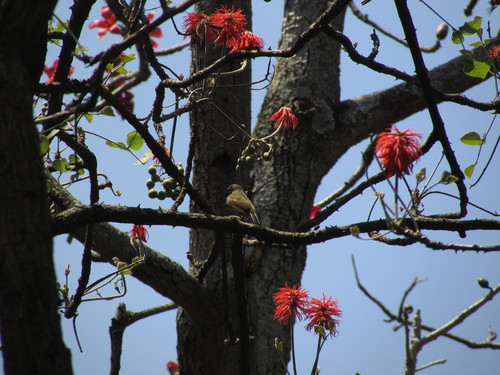
Lesser Honeyguide (Indicator minor) Lesser Honeyguide
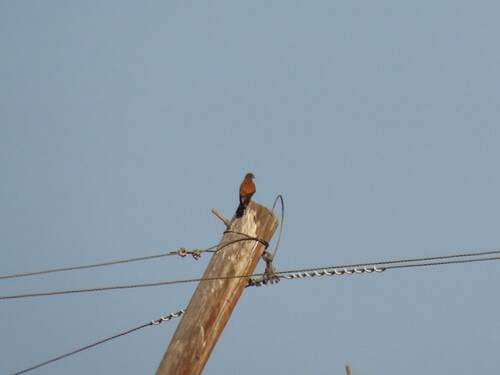
Rock Kestrel (Falco rupicolus) Rock Kestrel

Media

Loading…

In short

The Lesser Honeyguide and Rock Kestrel are easily distinguished by their size and plumage. The Lesser Honeyguide is a small bird with distinctive white edges to its tail and a dark malar stripe, while the Rock Kestrel is a larger raptor with a more robust build and lacks these specific markings.

Identification tips

Check size first: Rock Kestrel is much larger. Look for tail markings: Lesser Honeyguide has white edges to the tail. Observe habitat: Lesser Honeyguide in wooded areas, Rock Kestrel in open landscapes.

Size

The Rock Kestrel is significantly larger than the Lesser Honeyguide, being a medium-sized raptor compared to the small honeyguide.

Plumage

The Lesser Honeyguide features white edges to the tail, a small pale loral spot, and a dark malar stripe. The Rock Kestrel lacks these features and instead has a typical raptor plumage with a more uniform coloration.

Behaviour

The Lesser Honeyguide is known for feeding on beeswax and insects, often seen flycatching or searching for food on tree bark. The Rock Kestrel, as a raptor, hunts for small mammals and insects, often seen hovering or perched while scanning for prey.

Habitat

The Lesser Honeyguide inhabits wooded areas, gardens, and orchards, while the Rock Kestrel is typically found in open areas such as grasslands and rocky outcrops.

Submit a better description

Use the same sections as the comparison. Your text is published immediately.

The Lesser Honeyguide and Rock Kestrel are easily distinguished by their size and plumage. The Lesser Honeyguide is a small bird with distinctive white edges to its tail and a dark malar stripe, while the Rock Kestrel is a larger raptor with a more robust build and lacks these specific markings.

Check size first: Rock Kestrel is much larger. Look for tail markings: Lesser Honeyguide has white edges to the tail. Observe habitat: Lesser Honeyguide in wooded areas, Rock Kestrel in open landscapes.

The Rock Kestrel is significantly larger than the Lesser Honeyguide, being a medium-sized raptor compared to the small honeyguide.

The Lesser Honeyguide features white edges to the tail, a small pale loral spot, and a dark malar stripe. The Rock Kestrel lacks these features and instead has a typical raptor plumage with a more uniform coloration.

The Lesser Honeyguide is known for feeding on beeswax and insects, often seen flycatching or searching for food on tree bark. The Rock Kestrel, as a raptor, hunts for small mammals and insects, often seen hovering or perched while scanning for prey.

The Lesser Honeyguide inhabits wooded areas, gardens, and orchards, while the Rock Kestrel is typically found in open areas such as grasslands and rocky outcrops.

Discard your changes?

You have unsaved edits. If you leave now, those changes will be lost.

Lesser Honeyguide · Rock Kestrel · My Tricky Birds