Rufous-bellied Eagle vs Aquila minore
Lophotriorchis kienerii contro Hieraaetus pennatus
Fai un quiz con Rufous-bellied Eagle e Aquila minore
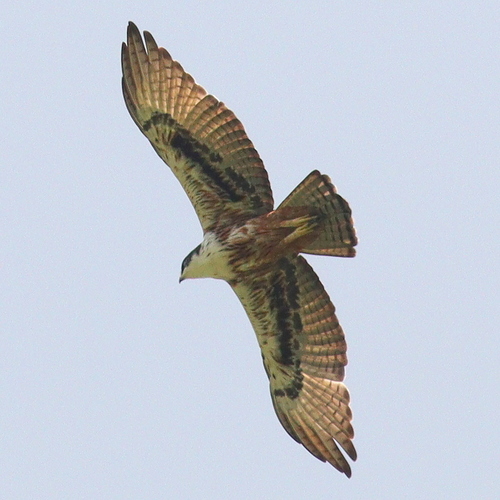 Rufous-bellied Eagle
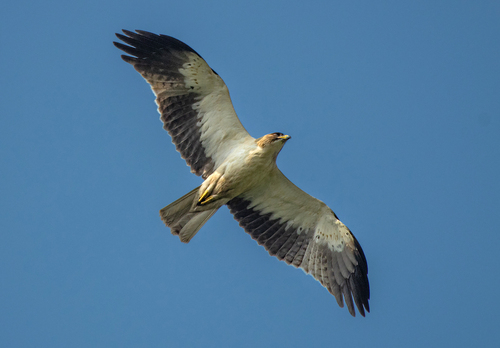 Aquila minore
In breve
La separazione più affidabile tra il Rufous-bellied Eagle e l'Aquila minore—specialmente per gli immaturi—è il modello delle parti inferiori e delle ali inferiori in volo. I giovani Rufous-bellied Eagles mostrano parti inferiori sorprendentemente bianche con testa scura e bordi delle ali inferiori scuri, mentre le Aquile minori (soprattutto le forme chiare) hanno molto meno contrasto e mancano dell'aspetto con cappuccio nero. Anche gli adulti sono distintivi: i Rufous-bellied Eagles hanno un cappuccio nero audace, parti inferiori castanee e una gola bianca, a differenza di qualsiasi forma di Aquila minore. La struttura e il comportamento offrono ulteriori indizi: il Rufous-bellied si appollaia dritto con ali lunghe che quasi raggiungono la coda ed è uno specialista della foresta, mentre l'Aquila minore è più da paese aperto e variabile nel colore. Le dimensioni sono simili, ma l'Aquila minore è leggermente più pesante in media.
Consigli di identificazione
- Juvenile underwing pattern: In volo, i giovani Rufous-bellied Eagles mostrano parti inferiori molto bianche con una maschera scura sulla testa, segni scuri sui lati e un bordo nero sulle copritrici delle ali inferiori. I giovani Aquile minori (soprattutto le forme chiare) mancano di questo forte contrasto e non hanno un cappuccio o una maschera nera.
- Adult head pattern: Gli adulti Rufous-bellied Eagles hanno un cappuccio nero audace e una cresta corta, con una gola e un petto bianchi. Le Aquile minori non mostrano mai un cappuccio o una cresta nera, indipendentemente dalla forma.
- Underpart color: Gli adulti Rufous-bellied Eagle hanno parti inferiori castanee ricche e copritrici delle ali, nettamente distinte dalla gola bianca. Le Aquile minori (forma chiara) sono molto più chiare sotto, e le forme scure sono uniformemente marroni, mai castanee.
- Perching posture: Il Rufous-bellied Eagle si appollaia molto dritto, con ali che quasi raggiungono la coda. L'Aquila minore si appollaia meno dritta e appare più compatta.
- Tarsi: Il Rufous-bellied Eagle ha tarsi completamente piumati; l'Aquila minore ha anche tarsi piumati, ma questo non è un forte separatore sul campo.
- Tail pattern: Entrambe le specie hanno code barrate, ma quella del Rufous-bellied è più scura e più distintamente barrata, specialmente nei giovani.
- Wing shape in flight: Entrambi sono a larga ala, ma il Rufous-bellied può sembrare più simile a un falco a causa del suo modello contrastante e delle ali più lunghe rispetto alla coda.
- Color morphs: L'Aquila minore si presenta in forme chiare e scure, ma nessuna corrisponde al contrasto rufous e nero dell'adulto Rufous-bellied. La forma scura dell'Aquila minore può essere confusa con altri rapaci ma non con il modello unico del Rufous-bellied.
- Habitat: Il Rufous-bellied è quasi sempre in foreste chiuse; l'Aquila minore è più probabile che si trovi in habitat aperti o ai margini.
- Flight behavior: Il Rufous-bellied vola in alto sopra la foresta, spesso tuffandosi ripidamente; l'Aquila minore vola più in basso e può essere vista cacciare su terreni aperti.
- Vocalization: Se udito, il Rufous-bellied emette note acute 'fwick'; l'Aquila minore emette un 'kli-kli-kli' acuto.
- Sex differences: Entrambe le specie sono sessualmente simili nel piumaggio; la femmina del Rufous-bellied può avere leggermente più nero sul viso, ma questo è sottile.
- Size: L'Aquila minore è leggermente più pesante, ma questo non è ovvio sul campo.
- Confusion risk: Il giovane Rufous-bellied Eagle può essere confuso con l'Aquila minore, ma le parti inferiori bianche audaci e i bordi scuri della testa/ali inferiori sono diagnostici per il Rufous-bellied.
- Season/context: Nell'Asia tropicale, l'Aquila minore è spesso un migrante o visitatore invernale, mentre il Rufous-bellied è residente in aree forestali. Considera la stagione e l'habitat quando identifichi.
Taglia
Entrambe le specie sono piccole aquile, ma l'Aquila minore è leggermente più pesante, con le femmine che pesano in media 840–1.025 g e i maschi 510–770 g [wikidata]. Non sono disponibili dati diretti sulla massa per il Rufous-bellied Eagle, ma è descritto come relativamente piccolo per un'aquila. Sul campo, la dimensione da sola non è un separatore affidabile; concentrati invece sul piumaggio e sulla struttura.
Piumaggio
-
Juveniles/immatures: I giovani Rufous-bellied Eagle sono molto bianchi sotto, con segni scuri sui lati, una maschera scura sulla testa e un bordo scuro sulle copritrici delle ali inferiori. L'imbottitura delle ali inferiori è scura, con copritrici maggiori nere e piume da volo sottilmente barrate bordate di nero. La coda è scura e barrata. I giovani Aquile minori (soprattutto le forme chiare) sono molto meno contrastanti, con parti inferiori chiare e segni scuri meno definiti; le Aquile minori di forma scura sono complessivamente più marroni e mancano del cappuccio nero e della gola bianca.
-
Adults: Gli adulti Rufous-bellied Eagle hanno un cappuccio nero sorprendente e una cresta corta, parti inferiori castanee e copritrici delle ali, gola e petto bianchi, e tarsi completamente piumati. Le Aquile minori si presentano in forme chiare e scure: le forme chiare sono grigie chiare con testa e piume da volo più scure, mentre le forme scure sono marroni medi con piume da volo grigie scure. Nessuna forma mostra il cappuccio nero audace o il ventre castano del Rufous-bellied. I sessi sono simili in entrambe le specie, anche se le femmine dei Rufous-bellied Eagles possono avere leggermente più nero sul viso.
Comportamento
I Rufous-bellied Eagles sono tipicamente visti volare in alto sopra le chiome delle foreste, spesso tuffandosi per catturare prede nella chioma o sul pavimento della foresta. Si appollaiano molto dritti, con ali che quasi raggiungono la coda. Le Aquile minori sono solitamente viste volare a quote più basse, spesso in coppie o da sole, e sono più propense a trovarsi in habitat aperti o ai margini. Le Aquile minori cacciano anche in volo, tuffandosi rapidamente con le ali ripiegate e i piedi estesi. Entrambe le specie possono essere viste eseguire voli di display, ma il display del Rufous-bellied include tuffi e vibrazioni delle ali.
Habitat
Il Rufous-bellied Eagle è uno specialista della foresta, trovato in regioni forestali dell'Asia tropicale. È raramente visto lontano da boschi densi o maturi. L'Aquila minore, al contrario, ha una tolleranza abitativa molto più ampia, nidificando nel Paleartico e nell'Asia meridionale, svernando in Africa e Asia, e spesso trovata in paesi aperti, margini boschivi e persino regioni semi-aride. Nelle aree di sovrapposizione, il Rufous-bellied è molto più legato alla foresta chiusa.
Voce
Il Rufous-bellied Eagle emette una serie di note acute 'fwick, fwick...' seguite da un sottile 'sweek!'. Il richiamo dell'Aquila minore è un 'kli-kli-kli' acuto. Le vocalizzazioni non sono solitamente il primo indizio nella separazione sul campo, ma se udite bene, la differenza nel tono e nel modello è notevole.
Rufous-bellied Eagle · Aquila minore · I miei uccelli difficili