rufous-bellied eagle vs águia-calçada
Lophotriorchis kienerii versus Hieraaetus pennatus
Jogue um quiz com rufous-bellied eagle e águia-calçada
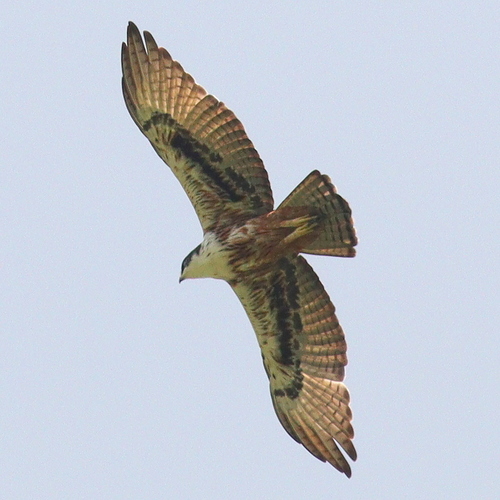 rufous-bellied eagle
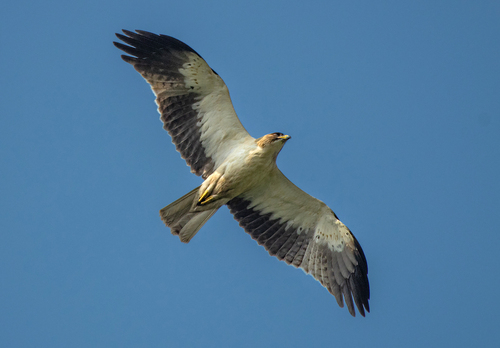 águia-calçada
Em resumo
A separação mais confiável entre rufous-bellied eagle e águia-calçada—especialmente para imaturos—é o padrão das partes inferiores e das asas inferiores em voo. Águias-calçadas juvenis mostram partes inferiores strikingly white com cabeça escura e bordas das asas inferiores escuras, enquanto rufous-bellied eagles (especialmente morfos pálidos) têm muito menos contraste e carecem da aparência de capuz preto. Os adultos também são distintos: rufous-bellied eagles têm um capuz preto ousado, partes inferiores castanhas e uma garganta branca, ao contrário de qualquer morfo de águia-calçada. Estrutura e comportamento oferecem pistas adicionais: rufous-bellied pousa ereto com asas longas quase alcançando a cauda, e é um especialista em florestas, enquanto águia-calçada é mais de campo aberto e variável em cor. O tamanho é semelhante, mas a águia-calçada é ligeiramente mais pesada em média.
Dicas de identificação
- Padrão das asas inferiores juvenis: Em voo, águias-calçadas juvenis mostram partes inferiores muito brancas com uma máscara escura na cabeça, marcas escuras nas laterais e uma borda preta nas coberturas das asas inferiores. Juvenis de rufous-bellied eagle (especialmente morfos pálidos) carecem desse forte contraste e não têm capuz ou máscara pretos.
- Padrão da cabeça dos adultos: Adultos de rufous-bellied eagle têm um capuz preto ousado e uma crista curta, com uma garganta e peito brancos. Águias-calçadas nunca mostram um capuz ou crista pretos, independentemente do morfo.
- Cor das partes inferiores: Adultos de rufous-bellied eagle têm partes inferiores castanhas ricas e coberturas das asas, destacando-se nitidamente da garganta branca. Águias-calçadas (morfos pálidos) são muito mais pálidas por baixo, e morfos escuros são uniformemente marrons, nunca castanhos.
- Postura ao pousar: Rufous-bellied eagle pousa muito ereto, com asas quase alcançando a cauda. Águia-calçada pousa menos ereta e parece mais compacta.
- Tarsos: Rufous-bellied eagle tem tarsos totalmente plumados; águia-calçada também tem tarsos plumados, mas isso não é um separador forte no campo.
- Padrão da cauda: Ambas as espécies têm caudas listradas, mas a de rufous-bellied é mais escura e mais distintamente listrada, especialmente em juvenis.
- Forma das asas em voo: Ambas são de asas largas, mas rufous-bellied pode parecer mais semelhante a um falcão devido ao seu padrão contrastante e asas mais longas em relação à cauda.
- Morfos de cor: Águia-calçada vem em morfos pálidos e escuros, mas nenhum corresponde ao contraste ruivo e preto do adulto rufous-bellied. O morfo escuro da águia-calçada pode ser confundido com outros raptores, mas não com o padrão único de rufous-bellied.
- Habitat: Rufous-bellied está quase sempre em florestas fechadas; águia-calçada é mais provável de ser encontrada em habitats abertos ou de borda.
- Comportamento de voo: Rufous-bellied voa alto sobre a floresta, frequentemente mergulhando acentuadamente; águia-calçada voa mais baixo e pode ser vista caçando em terreno aberto.
- Vocalização: Se ouvido, rufous-bellied emite notas agudas 'fwick'; águia-calçada emite um 'kli-kli-kli' estridente.
- Diferenças sexuais: Ambas as espécies são sexualmente semelhantes em plumagem; a fêmea de rufous-bellied pode ter um pouco mais de preto no rosto, mas isso é sutil.
- Tamanho: Águia-calçada é ligeiramente mais pesada, mas isso não é óbvio no campo.
- Risco de confusão: Juvenis de rufous-bellied eagle podem ser confundidos com águia-calçada, mas as partes inferiores brancas ousadas e as bordas escuras da cabeça/asas inferiores são diagnósticas para rufous-bellied.
- Estação/contexto: Na Ásia tropical, águia-calçada é frequentemente um migrante ou visitante de inverno, enquanto rufous-bellied é residente em áreas florestadas. Considere a estação e o habitat ao identificar.
Tamanho
Ambas as espécies são pequenas águias, mas a águia-calçada é ligeiramente mais pesada, com fêmeas pesando em média 840–1.025 g e machos 510–770 g [wikidata]. Não há dados diretos de massa disponíveis para rufous-bellied eagle, mas é descrita como relativamente pequena para uma águia. No campo, o tamanho sozinho não é um separador confiável; concentre-se na plumagem e na estrutura em vez disso.
Plumagem
-
Juvenis/imaturos: Juvenis de rufous-bellied eagle são muito brancos por baixo, com marcas escuras nas laterais, uma máscara escura na cabeça e uma borda escura nas coberturas das asas inferiores. O forro das asas inferiores é escuro, com coberturas maiores pretas e penas de voo finamente listradas com bordas pretas. A cauda é escura e listrada. Juvenis de águia-calçada (especialmente morfos pálidos) são muito menos contrastantes, com partes inferiores pálidas e marcas escuras menos definidas; morfos escuros de águia-calçada são mais marrons no geral e carecem do capuz preto e da garganta branca.
-
Adultos: Adultos de rufous-bellied eagle têm um capuz preto impressionante e uma crista curta, partes inferiores castanhas e coberturas das asas, garganta e peito brancos, e tarsos totalmente plumados. Águias-calçadas vêm em morfos pálidos e escuros: morfos pálidos são cinza claro com cabeça e penas de voo mais escuras, enquanto morfos escuros são marrons médios com penas de voo cinza escuras. Nenhum morfo mostra o capuz preto ousado ou a barriga castanha de rufous-bellied. Os sexos são semelhantes em ambas as espécies, embora fêmeas de rufous-bellied eagles possam ter um pouco mais de preto no rosto.
Comportamento
Águias-calçadas de rufous-bellied são tipicamente vistas voando alto sobre as copas das florestas, frequentemente mergulhando para capturar presas na copa ou no chão da floresta. Elas pousam muito eretas, com asas quase alcançando a cauda. Águias-calçadas geralmente são vistas voando a alturas mais baixas, frequentemente em pares ou sozinhas, e são mais propensas a serem encontradas em habitats abertos ou de borda. Águias-calçadas também caçam em voo, mergulhando rapidamente com asas dobradas e pés estendidos. Ambas as espécies podem ser vistas realizando voos de exibição, mas a exibição de rufous-bellied inclui mergulhos e tremores de asas.
Habitat
Rufous-bellied eagle é um especialista em florestas, encontrado em regiões florestadas da Ásia tropical. É raramente vista longe de florestas densas ou maduras. Águia-calçada, por outro lado, tem uma tolerância de habitat muito mais ampla, reproduzindo-se no Paleártico e no sul da Ásia, invernando na África e na Ásia, e frequentemente encontrada em campo aberto, bordas de florestas e até mesmo em regiões semiáridas. Em áreas de sobreposição, rufous-bellied está muito mais ligada a florestas fechadas.
Voz
Rufous-bellied eagle emite uma série de notas agudas 'fwick, fwick...' seguidas por um 'sweek!' fino. O chamado da águia-calçada é um 'kli-kli-kli' estridente. As vocalizações geralmente não são a primeira pista na separação de campo, mas se ouvidas bem, a diferença de tom e padrão é notável.