
Three-banded Courser vs Double-banded Courser
Rhinoptilus cinctus contro Smutsornis africanus
Fai un quiz con Three-banded Courser e Double-banded Courser
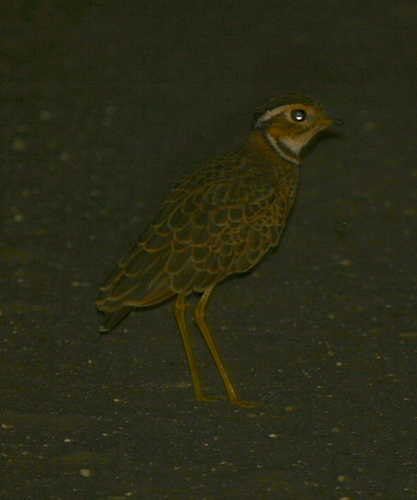 Three-banded Courser
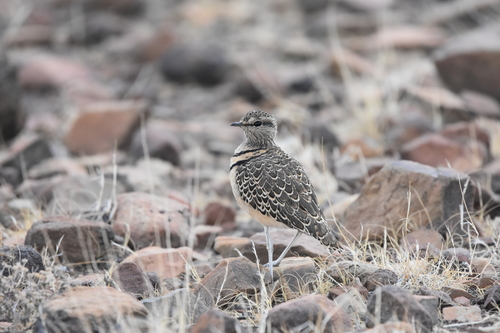 Double-banded Courser
In breve
Il segno di campo più affidabile per distinguere queste specie è il numero di bande sul petto: due bande sul Double-banded Courser e tre bande sul Three-banded Courser. Inoltre, il Double-banded Courser ha un piumaggio complessivo molto più chiaro rispetto al più scuro Three-banded Courser.
Consigli di identificazione
- Conta il numero di bande sul petto: due per il Double-banded, tre per il Three-banded. 2. Nota il tono complessivo del piumaggio: più chiaro nel Double-banded, più scuro nel Three-banded. 3. Osserva il pattern facciale: più semplice nel Double-banded, intricato nel Three-banded. 4. In volo, controlla il colore delle primarie e secondarie interne: castano ricco o rufous nel Double-banded, marrone uniforme nel Three-banded. 5. Considera l'habitat: pianure aperte per il Double-banded, boschi per il Three-banded.
Piumaggio
Il Double-banded Courser è più chiaro con due strette bande nere sul petto e caratteristiche facciali più semplici. Al contrario, il Three-banded Courser è più scuro dorsalmente con tre bande sul petto e marcature facciali intricate. In volo, il Double-banded Courser mostra primarie e secondarie interne di un ricco castano o rufous, mentre quelle del Three-banded Courser sono quasi marrone uniforme.
Habitat
Il Double-banded Courser preferisce aree di erba corta su pianure aperte o bordi di pozze in arbusteti semi-aridi e aridi o semi-deserti. Il Three-banded Courser si trova in boschi da semi-aridi a mesici.
Three-banded Courser · Double-banded Courser · I miei uccelli difficili