
White-breasted Woodswallow vs Chestnut-cheeked Starling
Artamus leucorynchus contro Agropsar philippensis
Fai un quiz con White-breasted Woodswallow e Chestnut-cheeked Starling
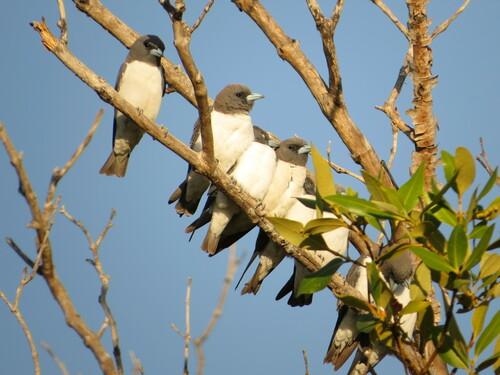 White-breasted Woodswallow
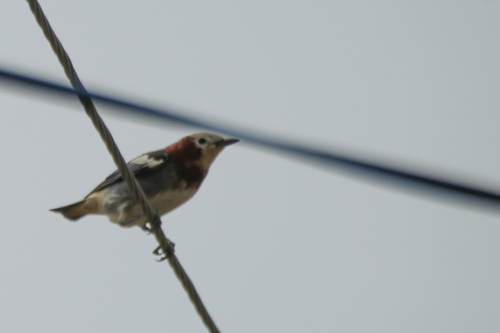 Chestnut-cheeked Starling
In breve
Il White-breasted Woodswallow e il Chestnut-cheeked Starling possono essere distinti principalmente dal loro piumaggio e comportamento. Il Woodswallow ha un distintivo petto bianco e un corpo superiore scuro più uniforme, mentre il Starling presenta guance castagne e un piumaggio più variegato. Comportamentalmente, il Woodswallow spesso mostra abitudini di alimentazione aerea, mentre il Starling è più propenso a cercare cibo a terra o sugli alberi.
Consigli di identificazione
- Cerca il petto bianco e il corpo superiore scuro del Woodswallow.
- Nota le guance castagne del Starling.
- Osserva il comportamento: l'alimentazione aerea suggerisce Woodswallow, mentre la ricerca di cibo a terra o sugli alberi suggerisce Starling.
Piumaggio
Il White-breasted Woodswallow ha un petto bianco e un corpo superiore scuro, fornendo un forte contrasto. Al contrario, il Chestnut-cheeked Starling è noto per le sue guance castagne e un piumaggio più variegato, privo dell'uniformità del Woodswallow.
Comportamento
I White-breasted Woodswallows sono spesso visti impegnati in alimentazione aerea, catturando insetti in volo. I Chestnut-cheeked Starlings sono più propensi a essere osservati mentre cercano cibo a terra o sugli alberi.
White-breasted Woodswallow · Chestnut-cheeked Starling · I miei uccelli difficili