Birdr

White-breasted Woodswallow vs Chestnut-cheeked Starling

Artamus leucorynchus versus Agropsar philippensis

Play a quiz with White-breasted Woodswallow and Chestnut-cheeked Starling
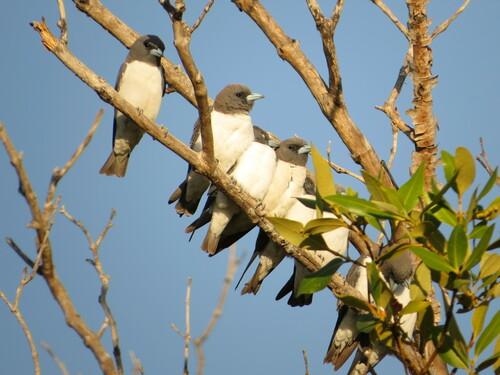
White-breasted Woodswallow (Artamus leucorynchus) White-breasted Woodswallow
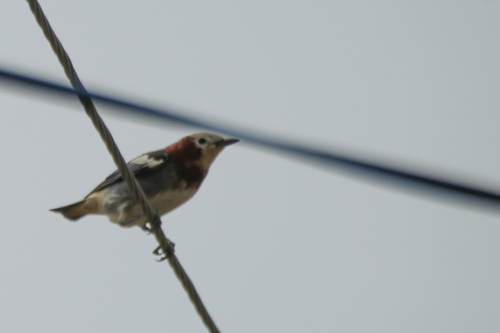
Chestnut-cheeked Starling (Agropsar philippensis) Chestnut-cheeked Starling

Media

Loading…

In short

The White-breasted Woodswallow and the Chestnut-cheeked Starling can be distinguished by their plumage and behavior. The Woodswallow has a distinctive white breast and dark upperparts, while the Starling shows a chestnut cheek patch and more varied plumage. Behaviorally, Woodswallows often glide and perch conspicuously, whereas Starlings are more active foragers.

Identification tips

  1. Look for the white breast and dark upperparts of the Woodswallow versus the chestnut cheek patch of the Starling. 2. Observe behavior: Woodswallows glide and perch conspicuously; Starlings are active foragers. 3. Listen for vocal differences: soft twittering of the Woodswallow versus varied whistles and clicks of the Starling.

Size

The White-breasted Woodswallow is generally more robust and slightly larger than the Chestnut-cheeked Starling.

Plumage

The White-breasted Woodswallow features a white breast with dark gray to black upperparts. In contrast, the Chestnut-cheeked Starling has a chestnut cheek patch, with a mix of gray and white on the body and a more varied plumage overall.

Behaviour

Woodswallows are known for their gliding flight and often perch in groups conspicuously. Starlings, on the other hand, are active foragers, frequently seen on the ground or in trees searching for food.

Habitat

Both species can be found in open areas, but Woodswallows are more likely to be seen in open woodlands and near water, while Starlings are often found in agricultural areas and urban settings.

Voice

The vocalizations of these species differ, with the Woodswallow producing a series of soft, twittering calls, while the Starling's calls are more varied and include whistles and clicks.

Submit a better description

Use the same sections as the comparison. Your text is published immediately.

The White-breasted Woodswallow and the Chestnut-cheeked Starling can be distinguished by their plumage and behavior. The Woodswallow has a distinctive white breast and dark upperparts, while the Starling shows a chestnut cheek patch and more varied plumage. Behaviorally, Woodswallows often glide and perch conspicuously, whereas Starlings are more active foragers.

  1. Look for the white breast and dark upperparts of the Woodswallow versus the chestnut cheek patch of the Starling. 2. Observe behavior: Woodswallows glide and perch conspicuously; Starlings are active foragers. 3. Listen for vocal differences: soft twittering of the Woodswallow versus varied whistles and clicks of the Starling.

The White-breasted Woodswallow is generally more robust and slightly larger than the Chestnut-cheeked Starling.

The White-breasted Woodswallow features a white breast with dark gray to black upperparts. In contrast, the Chestnut-cheeked Starling has a chestnut cheek patch, with a mix of gray and white on the body and a more varied plumage overall.

Woodswallows are known for their gliding flight and often perch in groups conspicuously. Starlings, on the other hand, are active foragers, frequently seen on the ground or in trees searching for food.

Both species can be found in open areas, but Woodswallows are more likely to be seen in open woodlands and near water, while Starlings are often found in agricultural areas and urban settings.

The vocalizations of these species differ, with the Woodswallow producing a series of soft, twittering calls, while the Starling's calls are more varied and include whistles and clicks.

Discard your changes?

You have unsaved edits. If you leave now, those changes will be lost.

White-breasted Woodswallow · Chestnut-cheeked Starling · My Tricky Birds