Birdr

Luì verde vs Luì bianco

Phylloscopus sibilatrix contro Phylloscopus bonelli

Fai un quiz con Luì verde e Luì bianco
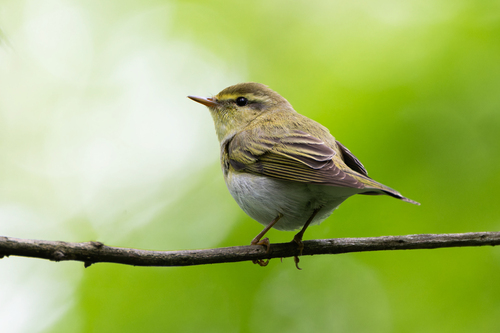
Luì verde (Phylloscopus sibilatrix) Luì verde
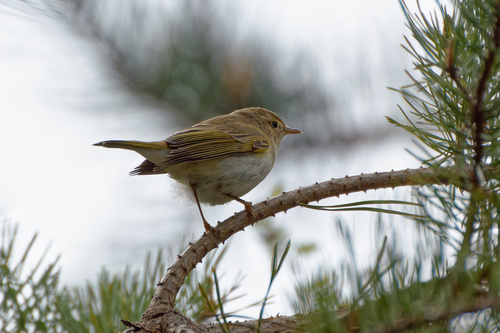
Luì bianco (Phylloscopus bonelli) Luì bianco

Media

Caricamento…

In breve

Il Luì verde e il Luì bianco possono essere distinti dalle loro vocalizzazioni e dalle sottili differenze nel piumaggio. Il Luì verde ha un sottocoda e bordi delle ali di un giallo-verde più vivace, mentre il Luì bianco ha un aspetto più pallido e uniforme. Anche i loro canti differiscono, con il Luì verde che ha un trillo accelerato distintivo.

Consigli di identificazione

  1. Cerca il sottocoda e i bordi delle ali di un giallo-verde brillante del Luì verde. 2. Ascolta il trillo accelerato del Luì verde, che è diverso dal trillo discendente del Luì bianco. 3. Nota l'aspetto complessivamente più pallido e uniforme del Luì bianco.

Piumaggio

Il Luì verde ha un sottocoda e bordi delle ali di un giallo-verde brillante, in contrasto con il suo ventre bianco setoso. Al contrario, il Luì bianco è generalmente di un grigio-bruno pallido con un sopracciglio meno distinto e manca dei contrasti verdi vivaci del Luì verde.

Voce

Il canto del Luì verde è un trillo accelerato distintivo, mentre il Luì bianco ha un trillo discendente che è più lento, più piatto e di tonalità più bassa. I richiami del Luì bianco sono più nasali e più deboli rispetto al Luì verde.

Invia una descrizione migliore

Usa le stesse sezioni del confronto. Il testo viene pubblicato subito.

The Wood Warbler and Western Bonelli's Warbler can be distinguished by their vocalizations and subtle plumage differences. The Wood Warbler has a more vibrant greenish-yellow rump and wing edges, while the Western Bonelli's Warbler has a paler, more uniform appearance. Their songs also differ, with the Wood Warbler having a distinctive accelerating trill.

  1. Look for the bright greenish-yellow rump and wing edges of the Wood Warbler. 2. Listen for the Wood Warbler's accelerating trill, which is different from the Western Bonelli's Warbler's descending trill. 3. Note the overall paler and more uniform appearance of the Western Bonelli's Warbler.

The Wood Warbler has a bright greenish-yellow rump and wing edges, contrasting with its silky white underparts. In contrast, the Western Bonelli's Warbler is generally pale grey-brown with a less distinct supercilium and lacks the vibrant green contrasts of the Wood Warbler.

The Wood Warbler's song is a distinctive accelerating trill, while the Western Bonelli's Warbler has a descending trill that is slower, flatter, and lower-pitched. The Western Bonelli's Warbler's calls are more nasal and weaker compared to the Wood Warbler.

Scartare le modifiche?

Hai modifiche non salvate. Se esci ora, andranno perse.

Luì verde · Luì bianco · I miei uccelli difficili