Birdr

Seebohms tapuit vs Izabeltapuit

Oenanthe seebohmi versus Oenanthe isabellina

Speel een quiz met Seebohms tapuit en Izabeltapuit
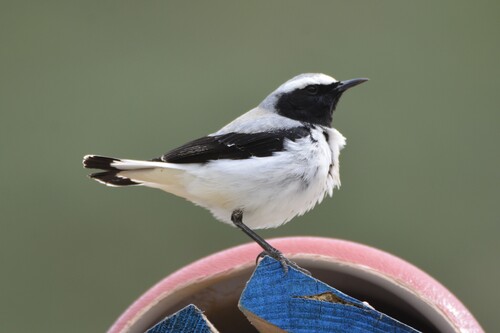
Seebohms tapuit (Oenanthe seebohmi) Seebohms tapuit
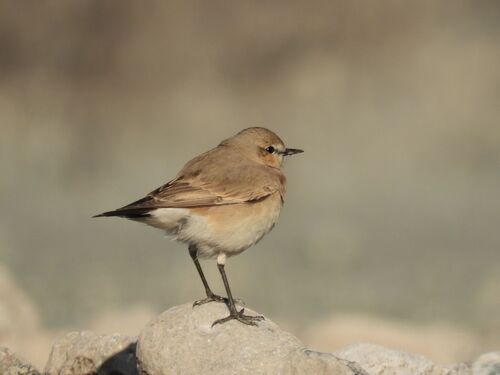
Izabeltapuit (Oenanthe isabellina) Izabeltapuit

Media

Laden…

Kort gezegd

De Seebohms tapuit en Izabeltapuit kunnen worden onderscheiden op basis van verenkleed en habitatvoorkeuren. De Seebohms tapuit heeft doorgaans een uitgebreidere zwarte gezicht en keel, terwijl de Izabeltapuit zwarte lores en een brede zwarte terminale staartband heeft. De keuze van het habitat kan ook aanwijzingen geven, aangezien de Seebohms tapuit vaak wordt aangetroffen in bergweiden en op hoge hoogtes.

Herkenningstips

Let op de uitgebreide zwarte gezicht en keel bij de Seebohms tapuit, vooral bij volwassen broedmannen. Controleer op de zwarte lores en brede zwarte terminale staartband bij de Izabeltapuit. Overweeg het habitat: Seebohms tapuiten bevinden zich doorgaans op hogere hoogtes.

Verenkleed

De Seebohms tapuit heeft een uitgebreide zwarte gezicht en keel, bleek asgrijze bovenkant, en zwarte ondervleugelbedekking. In tegenstelling tot de Izabeltapuit, die wordt gekenmerkt door zwarte lores, een zeer brede zwarte terminale staartband, en een zwakke bleke supercilium.

Habitat

Seebohms tapuiten worden aangetroffen in bergweiden met lage vegetatie, kale stenen plateaus, en berghellingen boven de 1.500 meter. De habitatvoorkeuren van de Izabeltapuit zijn niet gespecificeerd in de aantekeningen.

Stuur een betere beschrijving

Gebruik dezelfde onderdelen als de vergelijking. Je tekst staat meteen live.

The Atlas Wheatear and Isabelline Wheatear can be distinguished by plumage and habitat preferences. The Atlas Wheatear typically has a more extensive black face and throat, whereas the Isabelline Wheatear features black lores and a broad black terminal tail band. Habitat choice can also provide clues, as the Atlas Wheatear is often found in montane meadows and high elevations.

Look for the extensive black face and throat in the Atlas Wheatear, especially in adult breeding males. Check for the black lores and broad black terminal tail band in the Isabelline Wheatear. Consider the habitat: Atlas Wheatears are typically at higher elevations.

The Atlas Wheatear has an extensive black face and throat, pale ash-gray upperparts, and black underwing coverts. In contrast, the Isabelline Wheatear is characterized by black lores, a very broad black terminal tail band, and a weak pale supercilium.

Atlas Wheatears are found in montane meadows with low vegetation, bare stony plateaus, and mountain slopes above 1,500 meters. The Isabelline Wheatear's habitat preferences are not specified in the notes.

Wijzigingen weggooien?

Je hebt niet-opgeslagen wijzigingen. Als je nu weggaat, gaan die verloren.

Seebohms tapuit · Izabeltapuit · Mijn lastige vogels