Birdr

Atlas Wheatear vs Isabelline Wheatear

Oenanthe seebohmi versus Oenanthe isabellina

Play a quiz with Atlas Wheatear and Isabelline Wheatear
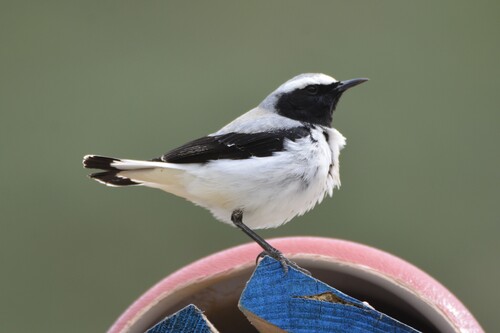
Atlas Wheatear (Oenanthe seebohmi) Atlas Wheatear
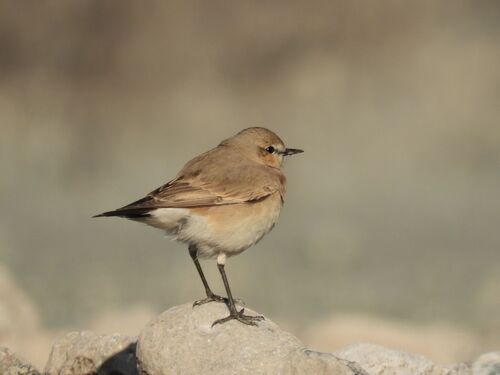
Isabelline Wheatear (Oenanthe isabellina) Isabelline Wheatear

Media

Loading…

In short

The Atlas Wheatear and Isabelline Wheatear can be distinguished primarily by plumage differences, especially in males. Atlas Wheatear males have a distinctive black face and throat, while Isabelline Wheatears have a paler overall appearance with a weak pale supercilium. Structural differences are subtle, so focus on plumage and behavior.

Identification tips

  1. Look for the black face and throat in male Atlas Wheatears. 2. Note the pale supercilium and broad black tail band in Isabelline Wheatears. 3. Consider habitat: higher elevations for Atlas Wheatear, open arid areas for Isabelline. 4. Be cautious with females and immatures, as they are more similar.

Size

Both species are similar in size, typical of wheatears.

Plumage

Male Atlas Wheatears have a black face and throat, pale ash-gray upperparts, and black underwing coverts. In contrast, Isabelline Wheatears have a paler appearance with black lores, a broad black terminal tail band, and a weak pale supercilium. Females and immature birds of both species can be more challenging to differentiate.

Behaviour

Both species exhibit typical wheatear behavior, such as ground feeding and tail flicking.

Habitat

Atlas Wheatears are found in montane meadows and rocky plateaus above 1,500 meters, while Isabelline Wheatears prefer open, arid habitats at lower elevations.

Voice

Vocalizations are not well-documented for field differentiation in the provided notes.

Submit a better description

Use the same sections as the comparison. Your text is published immediately.

The Atlas Wheatear and Isabelline Wheatear can be distinguished primarily by plumage differences, especially in males. Atlas Wheatear males have a distinctive black face and throat, while Isabelline Wheatears have a paler overall appearance with a weak pale supercilium. Structural differences are subtle, so focus on plumage and behavior.

  1. Look for the black face and throat in male Atlas Wheatears. 2. Note the pale supercilium and broad black tail band in Isabelline Wheatears. 3. Consider habitat: higher elevations for Atlas Wheatear, open arid areas for Isabelline. 4. Be cautious with females and immatures, as they are more similar.

Both species are similar in size, typical of wheatears.

Male Atlas Wheatears have a black face and throat, pale ash-gray upperparts, and black underwing coverts. In contrast, Isabelline Wheatears have a paler appearance with black lores, a broad black terminal tail band, and a weak pale supercilium. Females and immature birds of both species can be more challenging to differentiate.

Both species exhibit typical wheatear behavior, such as ground feeding and tail flicking.

Atlas Wheatears are found in montane meadows and rocky plateaus above 1,500 meters, while Isabelline Wheatears prefer open, arid habitats at lower elevations.

Vocalizations are not well-documented for field differentiation in the provided notes.

Discard your changes?

You have unsaved edits. If you leave now, those changes will be lost.

Atlas Wheatear · Isabelline Wheatear · My Tricky Birds