Birdr

Pauraque vs Witvleugelnachtzwaluw

Nyctidromus albicollis versus Eleothreptus candicans

Speel een quiz met Pauraque en Witvleugelnachtzwaluw
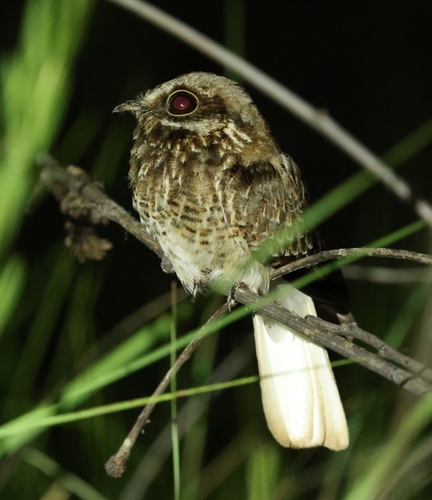
Pauraque (Nyctidromus albicollis) Pauraque
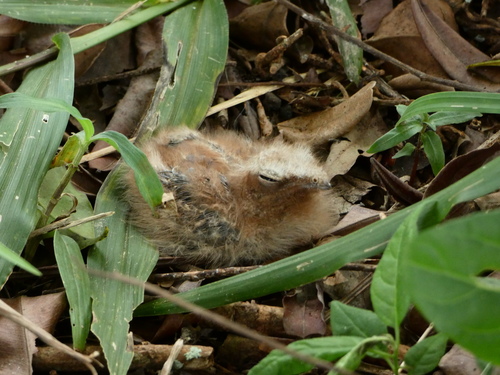
Witvleugelnachtzwaluw (Eleothreptus candicans) Witvleugelnachtzwaluw

Media

Laden…

Kort gezegd

De Pauraque en Witvleugelnachtzwaluw kunnen worden onderscheiden op basis van hun vleugelpatronen en habitatvoorkeuren. De Pauraque heeft een kenmerkende witte band over de primaire veren en een lange afgeronde staart met aanzienlijke witte delen in de staartveren, terwijl de Witvleugelnachtzwaluw bekend staat om zijn witte vleugelvlekken die zichtbaar zijn tijdens de vlucht. De Pauraque is wijdverspreid en terrestrisch, terwijl de Witvleugelnachtzwaluw beperkt is tot specifieke graslandhabitats.

Herkenningstips

Let op de witte band over de primaire veren en lange afgeronde staart met witte staartveren bij de Pauraque. Observeer daarentegen de witte vleugelvlekken van de Witvleugelnachtzwaluw, vooral tijdens de vlucht. Overweeg het habitat: Pauraques zijn meer aanpasbaar, terwijl Witvleugelnachtzwaluwen worden aangetroffen in specifieke graslandgebieden.

Verenkleed

De Pauraque heeft een complex patroon van bruin, buff, grijs en zwart met een witte band over de primaire veren en aanzienlijke witte delen in de staart. Daarentegen wordt de Witvleugelnachtzwaluw gekenmerkt door zijn witte vleugelvlekken, vooral opvallend tijdens de vlucht.

Gedrag

De Pauraque is bijzonder schemerig en terrestrisch, vaak foeragerend op de grond. Het gedrag van de Witvleugelnachtzwaluw is minder gedocumenteerd, maar wordt geassocieerd met zijn specifieke graslandhabitat.

Habitat

De Pauraque is wijdverspreid in tropische laaglanden, terwijl de Witvleugelnachtzwaluw beperkt is tot de cerrado-graslanden van het noorden van Bolivia, het centraal-zuidelijke Brazilië en het oosten van Paraguay.

Geluid

Het lied van de Pauraque is een luchtige 'hip-hip hip-hip hip-hip-hoera', een typisch geluid van de tropische laaglanden. Er is geen specifieke vocalisatie-informatie gegeven voor de Witvleugelnachtzwaluw.

Stuur een betere beschrijving

Gebruik dezelfde onderdelen als de vergelijking. Je tekst staat meteen live.

The Common Pauraque and White-winged Nightjar can be distinguished by their wing patterns and habitat preferences. The Pauraque has a distinctive white band across the primaries and a long rounded tail with substantial white in the rectrices, while the White-winged Nightjar is known for its white wing patches visible in flight. The Pauraque is more widespread and terrestrial, whereas the White-winged Nightjar is restricted to specific grassland habitats.

Look for the white band across the primaries and long rounded tail with white rectrices in the Common Pauraque. In contrast, observe the white wing patches of the White-winged Nightjar, especially when in flight. Consider habitat: Pauraques are more adaptable, while White-winged Nightjars are found in specific grassland areas.

The Common Pauraque features a complex pattern of browns, buffs, grays, and blacks with a white band across the primaries and significant white in the tail. In contrast, the White-winged Nightjar is characterized by its white wing patches, especially noticeable in flight.

The Common Pauraque is particularly crepuscular and terrestrial, often foraging on the ground. The behavior of the White-winged Nightjar is less documented but is associated with its specific grassland habitat.

The Common Pauraque is widespread in tropical lowlands, while the White-winged Nightjar is restricted to the cerrado grasslands of northern Bolivia, south-central Brazil, and eastern Paraguay.

The Common Pauraque's song is a breezy 'hip-hip hip-hip hip-hip-hooray', a quintessential sound of the tropical lowlands. There is no specific vocalization information provided for the White-winged Nightjar.

Wijzigingen weggooien?

Je hebt niet-opgeslagen wijzigingen. Als je nu weggaat, gaan die verloren.

Pauraque · Witvleugelnachtzwaluw · Mijn lastige vogels