
noitibó-cinzento vs andorinhão-real
Caprimulgus europaeus versus Tachymarptis melba
Jogue um quiz com noitibó-cinzento e andorinhão-real
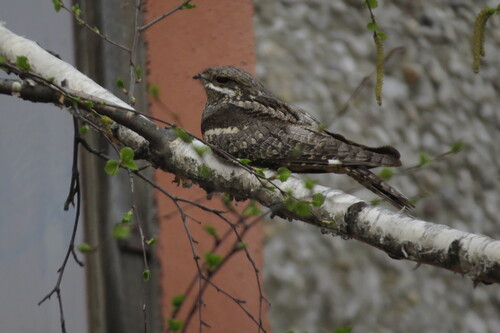 noitibó-cinzento
 andorinhão-real
Em resumo
O noitibó-cinzento e o andorinhão-real são facilmente distinguidos por seus padrões de voo e plumagem. O noitibó-cinzento tem uma plumagem críptica com manchas brancas nas asas e na cauda nos machos, enquanto o andorinhão-real é uniforme em cor e não possui essas marcas. O noitibó-cinzento depende de camuflagem e nidificação no solo, enquanto o andorinhão-real é um alimentador aéreo de voo rápido.
Dicas de identificação
Procure pelas manchas brancas nas asas e na cauda do noitibó-cinzento nos machos durante o voo. Observe o padrão de voo: os noitibós têm um voo mais flutuante, enquanto os andorinhões são rápidos e diretos. Note o horário de atividade: os noitibós são ativos ao crepúsculo e à noite, os andorinhões durante o dia.
Tamanho
O andorinhão-real é maior e mais robusto que o noitibó-cinzento.
Plumagem
Os machos do noitibó-cinzento têm manchas brancas distintas em suas primárias e cauda, que estão ausentes nas fêmeas e no andorinhão-real. O andorinhão-real tem uma plumagem mais uniforme, sem essas marcas contrastantes.
Comportamento
O noitibó-cinzento é principalmente noturno e depende de camuflagem, sendo frequentemente visto descansando no solo. Em contraste, o andorinhão-real é diurno e passa a maior parte do tempo em voo.