Birdr

pi-puí vs joão-grilo

Synallaxis cinerascens versus Synallaxis hypospodia

Jogue um quiz com pi-puí e joão-grilo
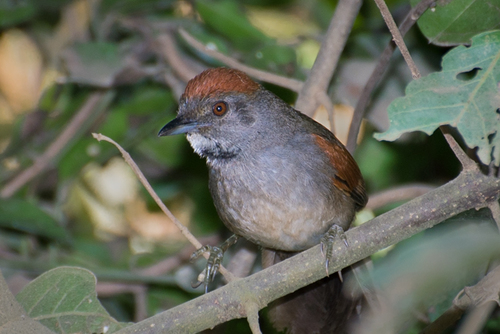
pi-puí (Synallaxis cinerascens) pi-puí
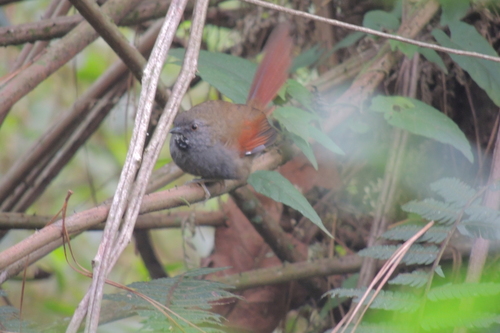
joão-grilo (Synallaxis hypospodia) joão-grilo

Mídia

Carregando…

Em resumo

O pi-puí e o joão-grilo podem ser diferenciados por suas preferências de habitat e vocalizações. O pi-puí é encontrado no sub-bosque de florestas mais altas, enquanto o joão-grilo habita campos e savanas sazonalmente úmidos. Suas vocalizações também são distintas, com o joão-grilo tendo um chamado alto e tagarela.

Dicas de identificação

Habitat é um diferenciador chave: procure pi-puís no sub-bosque de florestas e joão-grilos em campos ou savanas. Vocalizações também podem ajudar: ouça o chamado alto e tagarela do joão-grilo. Diferenças de Plumagem incluem a coroa e asas ruivas do joão-grilo em contraste com o cinza opaco do pi-puí.

Plumagem

O pi-puí tem uma plumagem cinza opaca com uma pequena marca de garganta negra e um queixo esbranquiçado. Em contraste, o joão-grilo apresenta uma coroa e asas ruivas, partes superiores marrons, partes inferiores em grande parte cinzas e uma mancha de garganta escura.

Comportamento

Ambas as espécies são tipicamente secretivas e podem ser detectadas por suas vocalizações. O joão-grilo é frequentemente visto em pares, forrageando próximo ao solo.

Habitat

O pi-puí é encontrado no sub-bosque de florestas mais altas, incluindo regeneração, na região da Mata Atlântica. O joão-grilo prefere campos sazonalmente úmidos, arbustos de regeneração e savanas.

Voz

As vocalizações do pi-puí não são detalhadas, mas é notado por ser secretivo. O joão-grilo tem um chamado alto e tagarela distinto que acelera no final.

Enviar uma descrição melhor

Use as mesmas seções da comparação. Seu texto é publicado na hora.

The Grey-bellied Spinetail and the Cinereous-breasted Spinetail can be differentiated by their habitat preferences and vocalizations. The Grey-bellied Spinetail is found in the undergrowth of taller forests, while the Cinereous-breasted Spinetail inhabits seasonally wet grasslands and savannas. Their vocalizations are also distinct, with the Cinereous-breasted Spinetail having a loud, chattering call.

Habitat is a key differentiator: look for Grey-bellied Spinetails in forest undergrowth and Cinereous-breasted Spinetails in grasslands or savannas. Vocalizations can also help: listen for the Cinereous-breasted Spinetail's loud, chattering call. Plumage differences include the rufous crown and wings of the Cinereous-breasted Spinetail versus the dull gray of the Grey-bellied Spinetail.

The Grey-bellied Spinetail has a dull gray plumage with a small blackish throat mark and a whitish chin. In contrast, the Cinereous-breasted Spinetail features a rufous crown and wings, brown upperparts, largely gray underparts, and a dark throat patch.

Both species are typically secretive and may be detected by their vocalizations. The Cinereous-breasted Spinetail is often seen in pairs, foraging close to the ground.

The Grey-bellied Spinetail is found in the undergrowth of taller forests, including second growth, within the Atlantic Forest region. The Cinereous-breasted Spinetail prefers low seasonally wet grasslands, second-growth scrub, and savannas.

The Grey-bellied Spinetail's vocalizations are not detailed, but it is noted for being secretive. The Cinereous-breasted Spinetail has a distinctive loud, chattering call that accelerates at the end.

Descartar as alterações?

Você tem edições não salvas. Se sair agora, elas serão perdidas.

pi-puí · joão-grilo · Minhas aves difíceis