Birdr

gaivota-alegre vs fragata

Leucophaeus atricilla versus Fregata magnificens

Jogue um quiz com gaivota-alegre e fragata
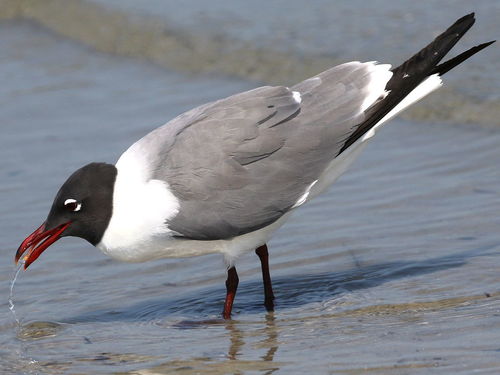
gaivota-alegre (Leucophaeus atricilla) gaivota-alegre
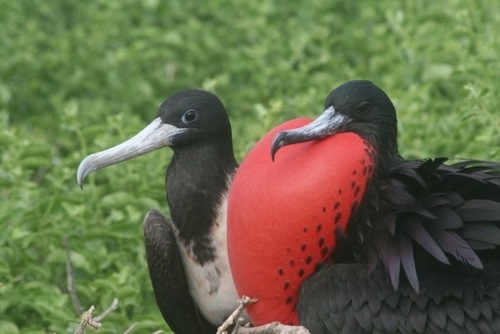
fragata (Fregata magnificens) fragata

Mídia

Carregando…

Em resumo

A gaivota-alegre e a fragata são facilmente distinguidas pelo seu comportamento de voo e tamanho. Gaivotas-alegres são gaivotas pequenas com capuz preto e voo leve, enquanto fragatas são aves marinhas grandes e planadoras com asas longas e caudas bifurcadas, raramente vistas pousadas na água.

Dicas de identificação

1. Comportamento de Voo: Gaivotas-alegres têm um voo leve e são frequentemente vistas na água, enquanto fragatas são planadoras e raramente pousam na água. 2. Tamanho e Estrutura: Note a diferença de tamanho; fragatas são muito maiores com asas longas e caudas bifurcadas. 3. Plumagem: Procure o capuz preto e os crescentes oculares brancos da gaivota-alegre em comparação com a plumagem totalmente preta da fragata. 4. Habitat: Gaivotas-alegres são costeiras, enquanto fragatas são oceânicas.

Tamanho

A gaivota-alegre é muito menor do que a fragata, que é uma das maiores aves marinhas com envergadura superior a 2 metros.

Plumagem

Gaivotas-alegres têm uma cabeça preta distinta durante a época de reprodução, mantos cinza escuro e crescentes oculares brancos. Fragatas têm plumagem predominantemente preta, com machos exibindo uma bolsa vermelha na garganta.

Comportamento

Gaivotas-alegres são frequentemente vistas no chão ou na água, engajando em comportamentos sociais como exibições de corte. Fragatas são quase exclusivamente aéreas, conhecidas por seu voo planador e comportamento cleptoparasitário.

Habitat

Gaivotas-alegres são encontradas ao longo das costas, nidificando em praias de areia ou rochosas e ilhas de pântano salgado. Fragatas habitam oceanos tropicais e subtropicais, raramente se aventurando longe do mar.

Voz

Gaivotas-alegres são conhecidas por seus chamados alegres e melodiosos, enquanto fragatas são geralmente silenciosas.

Enviar uma descrição melhor

Use as mesmas seções da comparação. Seu texto é publicado na hora.

The Laughing Gull and Magnificent Frigatebird are easily distinguished by their flight behavior and size. Laughing Gulls are small, black-hooded gulls with a buoyant flight, while Magnificent Frigatebirds are large, soaring seabirds with long wings and forked tails, rarely seen sitting on water.

1. Flight Behavior: Laughing Gulls have a buoyant flight and are often seen on water, while Magnificent Frigatebirds are soaring and rarely land on water. 2. Size and Structure: Note the size difference; frigatebirds are much larger with long wings and forked tails. 3. Plumage: Look for the black hood and white eye-crescents of the Laughing Gull versus the all-black plumage of the frigatebird. 4. Habitat: Laughing Gulls are coastal, while frigatebirds are oceanic.

The Laughing Gull is much smaller than the Magnificent Frigatebird, which is one of the largest seabirds with a wingspan reaching over 2 meters.

Laughing Gulls have a distinctive black head during the breeding season, dark gray mantles, and white eye-crescents. Magnificent Frigatebirds have predominantly black plumage, with males displaying a red throat pouch.

Laughing Gulls are often seen on the ground or water, engaging in social behaviors like courtship displays. Magnificent Frigatebirds are almost exclusively aerial, known for their soaring flight and kleptoparasitic behavior.

Laughing Gulls are found along coasts, nesting on sandy or rocky shores and salt-marsh islands. Magnificent Frigatebirds inhabit tropical and subtropical oceans, rarely venturing far from the sea.

Laughing Gulls are known for their lilting, laughing calls, while Magnificent Frigatebirds are generally silent.

Descartar as alterações?

Você tem edições não salvas. Se sair agora, elas serão perdidas.

gaivota-alegre · fragata · Minhas aves difíceis