
maria-te-viu vs guaracava-de-crista-alaranjada
Tyrannulus elatus versus Myiopagis viridicata
Jogue um quiz com maria-te-viu e guaracava-de-crista-alaranjada
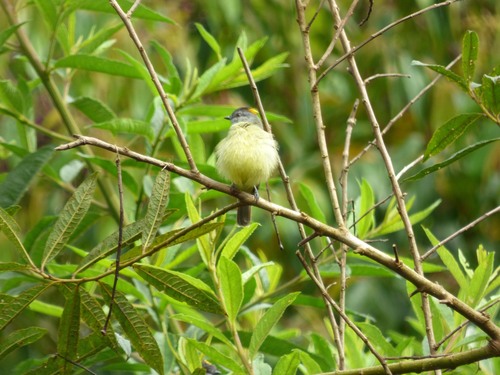 maria-te-viu
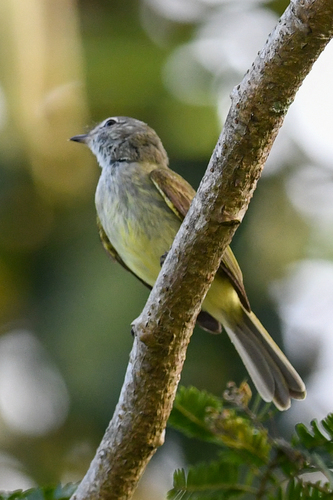 guaracava-de-crista-alaranjada
Em resumo
A marca de campo mais confiável para separar a maria-te-viu da guaracava-de-crista-alaranjada é o tamanho: a maria-te-viu é visivelmente menor e mais leve, com uma construção mais delicada. Na plumagem, a maria-te-viu apresenta uma faixa de coroa brilhante, amarela ou amarelo-alaranjada, bem definida, em uma coroa mais escura, enquanto a guaracava tem uma faixa de coroa amarela mais difusa e parcialmente oculta em uma coroa verde-oliva. Ambas têm partes superiores oliva e partes inferiores amarelo-pálido, mas a maria-te-viu é mais brilhante embaixo e tem um padrão de cabeça mais contrastante. Diferenças estruturais, especialmente no tamanho do bico e nas proporções gerais, também são fundamentais. Padrões de asas específicos de imaturos não são descritos para nenhuma das espécies, então concentre-se na plumagem e estrutura dos adultos.
Dicas de identificação
- O tamanho é o separador mais claro: Se o pássaro é visivelmente pequeno e delicado, pense na maria-te-viu; se for de tamanho médio e mais robusto, pense na guaracava-de-crista-alaranjada. Isso é especialmente confiável quando visto ao lado de outros tiranídeos.
- Faixa de coroa: Procure uma faixa bem definida, brilhante, amarela ou amarelo-alaranjada em uma coroa escura (cinza-ardósia a negra) para a maria-te-viu. A faixa de coroa da guaracava é fraca, muitas vezes oculta, e a coroa é verde-oliva em vez de escura. Essa marca é melhor vista em boa luz ou quando o pássaro levanta suas penas da coroa.
- Padrão da cabeça: A maria-te-viu tem um supercílios cinza claro e uma linha ocular fina e escura, dando uma aparência facial nítida. O supercílios da guaracava é mais pálido, com um anel ocular branco parcial e coberturas auriculares grisalhas, fazendo com que o rosto pareça menos marcado.
- Formato do bico: A maria-te-viu tem um bico preto curto e arredondado; o bico da guaracava é maior, mais robusto e pode ter uma base mais clara na mandíbula. O tamanho do bico é frequentemente visível de perfil ou quando o pássaro está chamando.
- Barras de asa: Ambas as espécies têm barras de asa pálidas, mas as da maria-te-viu são brancas a amarelo-esbranquiçadas e frequentemente mais brilhantes, enquanto as da guaracava são amareladas e podem se misturar mais com a asa.
- Partes inferiores: A maria-te-viu é geralmente mais amarela embaixo, com um tom oliva no peito; a guaracava é mais pálida, com um peito cinza-branco (às vezes levemente estriado) e uma barriga amarelo-pálido. Em luz fraca, essa diferença pode ser sutil.
- Partes superiores: A nuca e as costas da maria-te-viu são verde-oliva brilhante, enquanto as partes superiores da guaracava podem ser mais opacas ou mais brilhantes dependendo da subespécie, mas são sempre verde-oliva.
- Cauda: Ambas têm caudas oliva escuras, então não confie na cor da cauda para separação.
- Variação de sexo/idade: As fêmeas de maria-te-viu são ligeiramente mais pálidas e menores, mas a faixa da coroa está sempre presente. Os machos da guaracava têm uma mancha amarela na coroa ligeiramente maior, mas ainda é fraca. Nenhum padrão de asas juvenil/imaturo distinto é descrito para nenhuma das espécies.
- Comportamento: A maria-te-viu pode parecer mais ativa e delicada, batendo asas e cauda, enquanto a guaracava é mais estável e menos inquieta.
- Habitat: Ambas ocorrem em habitats florestais e de borda semelhantes; não confie apenas no habitat para separação.
- Distribuição: Ambas se sobrepõem amplamente na América Central e do Sul, mas verifique o status local; a guaracava está ausente do Chile e da Guiana Francesa, a maria-te-viu do extremo sul da América do Sul.
- Bandos mistos: Ambas podem se juntar a bandos de espécies mistas, então não assuma a identidade com base na composição do bando.
- Voz: Não descrita aqui; use com cautela, a menos que esteja familiarizado com os chamados de ambas as espécies.
- Quando em dúvida: Priorize o tamanho, a nitidez da faixa da coroa e o padrão geral da cabeça para a separação de campo mais confiável.
Tamanho
maria-te-viu is much smaller and lighter (7 g, 10–11 cm) than guaracava-de-crista-alaranjada (14 g, 13–14 cm) [wikidata]. The tyrannulet appears dainty and compact, with a short, rounded bill, while the elaenia is bulkier and longer overall, with a slightly larger, stouter bill. In the field, the difference is obvious if both are seen together or compared to familiar flycatchers: the tyrannulet is among the smallest tyrannids, while the elaenia is mid-sized.
Plumagem
- Crown stripe: Adult maria-te-viu has a sharply defined, bright yellow to orange-yellow stripe running along the middle of a slate-gray to blackish crown, very striking and contrasting. In contrast, guaracava-de-crista-alaranjada's crown is greenish-olive with only a faint, partially hidden yellow stripe (more extensive in males), blending into the crown and rarely obvious unless the feathers are raised.
- Head pattern: Tyrannulet shows a grayish supercilium and a thin dark eye-line, with a pale gray lower face. Elaenia has a whitish gray supercilium, a partial white eyering, and grizzled whitish ear coverts, giving a more muted, less sharply marked face.
- Upperparts: Both are olive-green above, but the tyrannulet's nape and back are brighter, while the elaenia's upperparts can vary from dull to bright olive-green depending on subspecies.
- Wings: Both have dusky wings with pale wingbars, but the tyrannulet's bars are white to yellowish white and often stand out more. Elaenia's wingbars are yellowish, and the inner flight feathers have yellowish edges.
- Underparts: Tyrannulet is pale to medium yellow below with an olive wash on the breast; elaenia is paler, with a pale grayish white breast (sometimes lightly streaked olive) and pale yellow belly and undertail. Subtle, but the tyrannulet is generally brighter and more uniform below.
- Tail: Both have dusky olive tails, not a strong separator.
- Sex/age differences: Female tyrannulets are slightly paler and smaller, but the crown stripe is always sharper than in elaenia. No juvenile/immature-specific wing patterns are described for either species.
Comportamento
Ambas as espécies são tiranídeos ativos e arbóreos, frequentemente forrageando no dossel médio a superior. A maria-te-viu, sendo menor, pode parecer mais delicada e rápida em seus movimentos, frequentemente batendo as asas e a cauda. A guaracava, com seu tamanho maior, pode parecer mais deliberada e menos inquieta. Ambas podem se juntar a bandos de espécies mistas, mas a maria-te-viu é mais propensa a ser ignorada devido ao seu tamanho e sutileza.
Habitat
As distribuições se sobrepõem amplamente na América Central e do Sul, mas a maria-te-viu está ausente do extremo sul da América do Sul, enquanto a guaracava está ausente apenas do Chile e da Guiana Francesa [wikipedia]. Ambas utilizam uma variedade de habitats florestais e de borda, mas a abundância local pode diferir: a guaracava-de-crista-alaranjada é frequentemente descrita como incomum a comum, mas facilmente ignorada, enquanto a maria-te-viu é amplamente distribuída, mas menos frequentemente relatada. Ambas podem ser encontradas em bordas de florestas, crescimento secundário e matas abertas, então o habitat não é um separador forte.
maria-te-viu · guaracava-de-crista-alaranjada · Minhas aves difíceis