Birdr

Acorn Woodpecker vs Black-cheeked Woodpecker

Melanerpes formicivorus versus Melanerpes pucherani

Play a quiz with Acorn Woodpecker and Black-cheeked Woodpecker
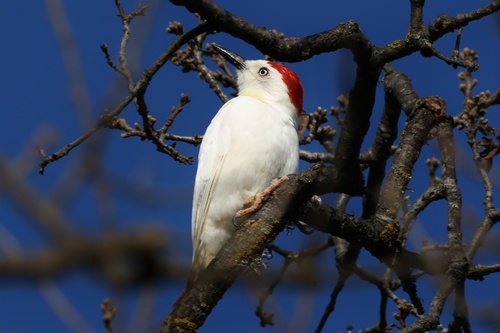
Acorn Woodpecker (Melanerpes formicivorus) Acorn Woodpecker
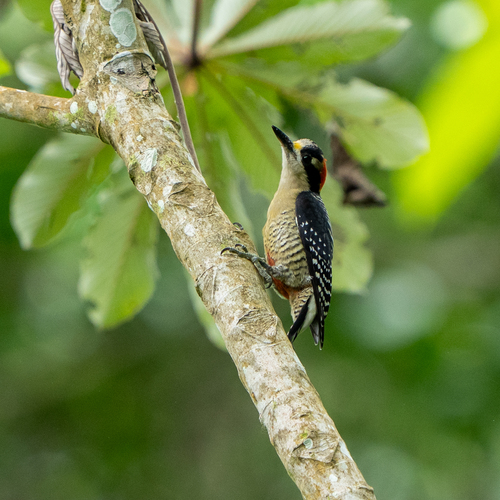
Black-cheeked Woodpecker (Melanerpes pucherani) Black-cheeked Woodpecker

Media

Loading…

In short

The Acorn Woodpecker and Black-cheeked Woodpecker can be distinguished by their head patterns and habitat preferences. The Acorn Woodpecker has a distinctive white forehead and throat, while the Black-cheeked Woodpecker features a black cheek patch. Both species are similar in size, but their behaviors and habitats provide additional clues for identification.

Identification tips

  1. Head pattern: Look for the white forehead and throat of the Acorn Woodpecker versus the black cheek patch of the Black-cheeked Woodpecker. 2. Habitat: Consider the environment; Acorn Woodpeckers prefer oak woodlands, while Black-cheeked Woodpeckers are found in humid lowland forests. 3. Behavior: Observe for acorn storage behavior, which is unique to the Acorn Woodpecker.

Size

Both species are similar in size, typical of medium-sized woodpeckers.

Plumage

The Acorn Woodpecker has a white forehead and throat with a red cap, while the Black-cheeked Woodpecker has a black cheek patch and a red crown, with a white forehead. The Acorn Woodpecker's back is black with white wing patches, whereas the Black-cheeked Woodpecker has a more uniform black back.

Behaviour

Acorn Woodpeckers are known for their unique behavior of storing acorns in granaries, often in large communal groups. Black-cheeked Woodpeckers do not exhibit this behavior and are often seen foraging alone or in pairs.

Habitat

Acorn Woodpeckers are typically found in oak woodlands and mixed forests, where they can find acorns to store. In contrast, Black-cheeked Woodpeckers inhabit humid lowland forests and edges, often near water.

Voice

The Acorn Woodpecker has a distinctive, loud "waka-waka" call, while the Black-cheeked Woodpecker's vocalizations are less documented but generally include sharp, high-pitched calls.

Submit a better description

Use the same sections as the comparison. Your text is published immediately.

The Acorn Woodpecker and Black-cheeked Woodpecker can be distinguished by their head patterns and habitat preferences. The Acorn Woodpecker has a distinctive white forehead and throat, while the Black-cheeked Woodpecker features a black cheek patch. Both species are similar in size, but their behaviors and habitats provide additional clues for identification.

  1. Head pattern: Look for the white forehead and throat of the Acorn Woodpecker versus the black cheek patch of the Black-cheeked Woodpecker. 2. Habitat: Consider the environment; Acorn Woodpeckers prefer oak woodlands, while Black-cheeked Woodpeckers are found in humid lowland forests. 3. Behavior: Observe for acorn storage behavior, which is unique to the Acorn Woodpecker.

Both species are similar in size, typical of medium-sized woodpeckers.

The Acorn Woodpecker has a white forehead and throat with a red cap, while the Black-cheeked Woodpecker has a black cheek patch and a red crown, with a white forehead. The Acorn Woodpecker's back is black with white wing patches, whereas the Black-cheeked Woodpecker has a more uniform black back.

Acorn Woodpeckers are known for their unique behavior of storing acorns in granaries, often in large communal groups. Black-cheeked Woodpeckers do not exhibit this behavior and are often seen foraging alone or in pairs.

Acorn Woodpeckers are typically found in oak woodlands and mixed forests, where they can find acorns to store. In contrast, Black-cheeked Woodpeckers inhabit humid lowland forests and edges, often near water.

The Acorn Woodpecker has a distinctive, loud "waka-waka" call, while the Black-cheeked Woodpecker's vocalizations are less documented but generally include sharp, high-pitched calls.

Discard your changes?

You have unsaved edits. If you leave now, those changes will be lost.

Acorn Woodpecker · Black-cheeked Woodpecker · My Tricky Birds