Birdr

African Harrier-Hawk vs European Honey-buzzard

Polyboroides typus versus Pernis apivorus

Play a quiz with African Harrier-Hawk and European Honey-buzzard
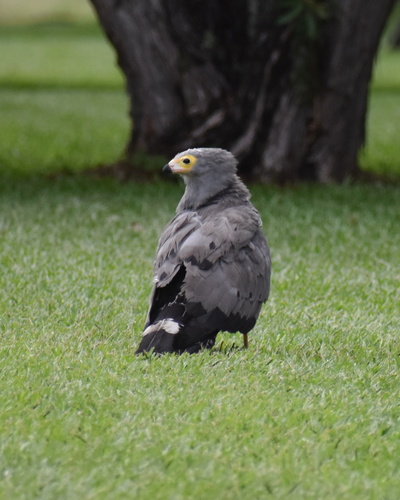
African Harrier-Hawk (Polyboroides typus) African Harrier-Hawk
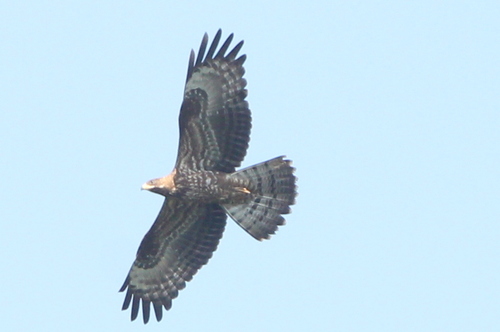
European Honey-buzzard (Pernis apivorus) European Honey-buzzard

Media

Loading…

In short

The African Harrier-Hawk and the European Honey-buzzard can be distinguished by their unique structural features and behavior. The Harrier-Hawk has a distinctive bare yellow face and double-jointed legs, while the Honey-buzzard is known for its long neck and small head, resembling a pigeon in flight. Both species have similar habitats but differ in diet and vocalizations.

Identification tips

  1. Look for the bare yellow face and double-jointed legs of the African Harrier-Hawk. 2. Note the long neck and small head of the European Honey-buzzard, especially in flight. 3. Observe behavior: Harrier-Hawks hang upside down; Honey-buzzards glide with flat wings. 4. Listen for vocalizations: Harrier-Hawks whistle, Honey-buzzards are mostly silent. 5. Consider habitat: Harrier-Hawks may be in urban areas, Honey-buzzards in forested regions.

Size

Both species are medium-sized raptors, but the African Harrier-Hawk appears bulkier with broader wings compared to the more slender European Honey-buzzard.

Plumage

The African Harrier-Hawk has a gray body with a striking black and white barred belly and underwings, while the European Honey-buzzard has a more variable plumage, often brown with a barred tail and wings, and lacks the Harrier-Hawk's bare facial skin.

Behaviour

The African Harrier-Hawk is known for its unique behavior of hanging upside down to extract prey from crevices, whereas the European Honey-buzzard is more often seen gliding with flat wings, searching for wasp nests.

Habitat

Both species inhabit a range of wooded and forested areas, but the African Harrier-Hawk is more adaptable to urban environments, while the European Honey-buzzard prefers deciduous and mixed forests.

Voice

The African Harrier-Hawk has a distinctive whistling call, while the European Honey-buzzard is generally silent outside the breeding season, making vocalizations a useful differentiator when heard.

Submit a better description

Use the same sections as the comparison. Your text is published immediately.

The African Harrier-Hawk and the European Honey-buzzard can be distinguished by their unique structural features and behavior. The Harrier-Hawk has a distinctive bare yellow face and double-jointed legs, while the Honey-buzzard is known for its long neck and small head, resembling a pigeon in flight. Both species have similar habitats but differ in diet and vocalizations.

  1. Look for the bare yellow face and double-jointed legs of the African Harrier-Hawk. 2. Note the long neck and small head of the European Honey-buzzard, especially in flight. 3. Observe behavior: Harrier-Hawks hang upside down; Honey-buzzards glide with flat wings. 4. Listen for vocalizations: Harrier-Hawks whistle, Honey-buzzards are mostly silent. 5. Consider habitat: Harrier-Hawks may be in urban areas, Honey-buzzards in forested regions.

Both species are medium-sized raptors, but the African Harrier-Hawk appears bulkier with broader wings compared to the more slender European Honey-buzzard.

The African Harrier-Hawk has a gray body with a striking black and white barred belly and underwings, while the European Honey-buzzard has a more variable plumage, often brown with a barred tail and wings, and lacks the Harrier-Hawk's bare facial skin.

The African Harrier-Hawk is known for its unique behavior of hanging upside down to extract prey from crevices, whereas the European Honey-buzzard is more often seen gliding with flat wings, searching for wasp nests.

Both species inhabit a range of wooded and forested areas, but the African Harrier-Hawk is more adaptable to urban environments, while the European Honey-buzzard prefers deciduous and mixed forests.

The African Harrier-Hawk has a distinctive whistling call, while the European Honey-buzzard is generally silent outside the breeding season, making vocalizations a useful differentiator when heard.

Discard your changes?

You have unsaved edits. If you leave now, those changes will be lost.

African Harrier-Hawk · European Honey-buzzard · My Tricky Birds