Birdr

African Oystercatcher vs Grey Plover

Haematopus moquini versus Pluvialis squatarola

Play a quiz with African Oystercatcher and Grey Plover
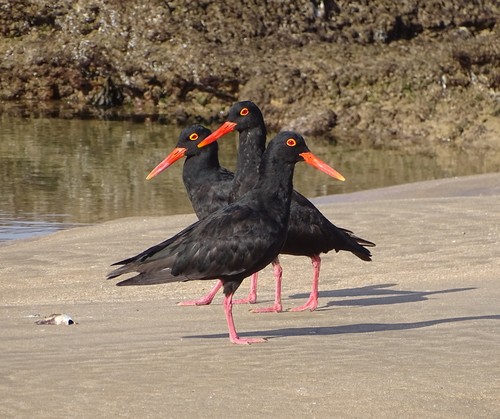
African Oystercatcher (Haematopus moquini) African Oystercatcher
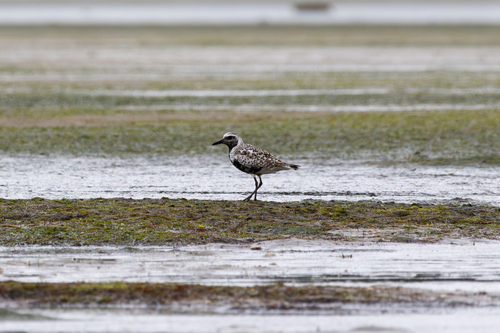
Grey Plover (Pluvialis squatarola) Grey Plover

Media

Loading…

In short

The African Oystercatcher and Grey Plover are distinct in appearance and behavior, despite both being shorebirds. The oystercatcher is all-black with a striking red bill, while the plover has a more varied plumage with grey tones and a black belly in breeding plumage. Behaviorally, the oystercatcher is often seen alone or in pairs, while the plover is more likely to be found in mixed-species flocks.

Identification tips

1. Bill Color: Look for the bright red bill of the African Oystercatcher, a key distinguishing feature. 2. Plumage: Note the all-black plumage of the oystercatcher versus the grey and white of the plover. 3. Behavior: Observe feeding behavior; oystercatchers pry open shellfish, while plovers dash after invertebrates. 4. Habitat: Check the habitat; oystercatchers are on rocky shores, plovers on mudflats and beaches. 5. Calls: Listen for the oystercatcher's piping call versus the plover's 'pee-oo'.

Size

The African Oystercatcher is generally larger and bulkier than the Grey Plover.

Plumage

The African Oystercatcher is uniformly black with a bright red bill and eye-ring. The Grey Plover has a grey and white mottled appearance, with a distinctive black belly during breeding season and a white rump visible in flight.

Behaviour

African Oystercatchers are often seen foraging along rocky shores, using their strong bills to pry open shellfish. Grey Plovers are more likely to be seen on open mudflats or sandy beaches, often standing still and then suddenly running to catch prey.

Habitat

African Oystercatchers prefer rocky coastlines, while Grey Plovers are found on sandy beaches and mudflats, especially during migration and winter.

Voice

The African Oystercatcher has a loud, piping call, often heard in flight. The Grey Plover is known for its plaintive 'pee-oo' call, often given in flight or when alarmed.

Submit a better description

Use the same sections as the comparison. Your text is published immediately.

The African Oystercatcher and Grey Plover are distinct in appearance and behavior, despite both being shorebirds. The oystercatcher is all-black with a striking red bill, while the plover has a more varied plumage with grey tones and a black belly in breeding plumage. Behaviorally, the oystercatcher is often seen alone or in pairs, while the plover is more likely to be found in mixed-species flocks.

1. Bill Color: Look for the bright red bill of the African Oystercatcher, a key distinguishing feature. 2. Plumage: Note the all-black plumage of the oystercatcher versus the grey and white of the plover. 3. Behavior: Observe feeding behavior; oystercatchers pry open shellfish, while plovers dash after invertebrates. 4. Habitat: Check the habitat; oystercatchers are on rocky shores, plovers on mudflats and beaches. 5. Calls: Listen for the oystercatcher's piping call versus the plover's 'pee-oo'.

The African Oystercatcher is generally larger and bulkier than the Grey Plover.

The African Oystercatcher is uniformly black with a bright red bill and eye-ring. The Grey Plover has a grey and white mottled appearance, with a distinctive black belly during breeding season and a white rump visible in flight.

African Oystercatchers are often seen foraging along rocky shores, using their strong bills to pry open shellfish. Grey Plovers are more likely to be seen on open mudflats or sandy beaches, often standing still and then suddenly running to catch prey.

African Oystercatchers prefer rocky coastlines, while Grey Plovers are found on sandy beaches and mudflats, especially during migration and winter.

The African Oystercatcher has a loud, piping call, often heard in flight. The Grey Plover is known for its plaintive 'pee-oo' call, often given in flight or when alarmed.

Discard your changes?

You have unsaved edits. If you leave now, those changes will be lost.

African Oystercatcher · Grey Plover · My Tricky Birds