Birdr

African Paradise-Flycatcher vs Green-backed Twinspot

Terpsiphone viridis versus Mandingoa nitidula

Play a quiz with African Paradise-Flycatcher and Green-backed Twinspot
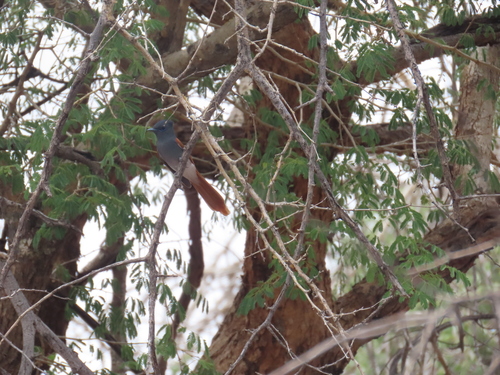
African Paradise-Flycatcher (Terpsiphone viridis) African Paradise-Flycatcher
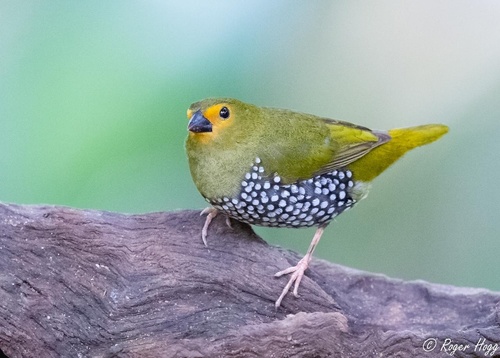
Green-backed Twinspot (Mandingoa nitidula) Green-backed Twinspot

Media

Loading…

In short

The African Paradise-Flycatcher and the Green-backed Twinspot are distinct in both appearance and behavior. The Paradise-Flycatcher is notable for its long tail and striking plumage, while the Twinspot is smaller with a more subdued, greenish back. Observing their habitat and behavior can also aid in identification.

Identification tips

  1. Look for the long tail and active canopy behavior to identify the Paradise-Flycatcher. 2. Note the greenish back and ground-level foraging for the Twinspot. 3. Listen for the melodious whistles of the Paradise-Flycatcher versus the softer calls of the Twinspot. 4. Consider the habitat: wooded areas for the Paradise-Flycatcher and dense undergrowth for the Twinspot.

Size

The African Paradise-Flycatcher is larger with a long tail, whereas the Green-backed Twinspot is smaller and more compact.

Plumage

The Paradise-Flycatcher has a striking appearance with long tail feathers and a contrasting color pattern, often with bright rufous or white. The Green-backed Twinspot has a more subtle plumage with a greenish back and orange breast, lacking the long tail.

Behaviour

Paradise-Flycatchers are often seen flitting actively in the canopy, catching insects mid-air. Twinspots are more likely to be found foraging on or near the ground, often in pairs or small groups.

Habitat

Paradise-Flycatchers are typically found in wooded areas, including forests and gardens. Green-backed Twinspots prefer dense undergrowth in forests and thickets.

Voice

The Paradise-Flycatcher's song is a series of melodious whistles, while the Twinspot's vocalizations are quieter and less musical, often consisting of soft calls.

Submit a better description

Use the same sections as the comparison. Your text is published immediately.

The African Paradise-Flycatcher and the Green-backed Twinspot are distinct in both appearance and behavior. The Paradise-Flycatcher is notable for its long tail and striking plumage, while the Twinspot is smaller with a more subdued, greenish back. Observing their habitat and behavior can also aid in identification.

  1. Look for the long tail and active canopy behavior to identify the Paradise-Flycatcher. 2. Note the greenish back and ground-level foraging for the Twinspot. 3. Listen for the melodious whistles of the Paradise-Flycatcher versus the softer calls of the Twinspot. 4. Consider the habitat: wooded areas for the Paradise-Flycatcher and dense undergrowth for the Twinspot.

The African Paradise-Flycatcher is larger with a long tail, whereas the Green-backed Twinspot is smaller and more compact.

The Paradise-Flycatcher has a striking appearance with long tail feathers and a contrasting color pattern, often with bright rufous or white. The Green-backed Twinspot has a more subtle plumage with a greenish back and orange breast, lacking the long tail.

Paradise-Flycatchers are often seen flitting actively in the canopy, catching insects mid-air. Twinspots are more likely to be found foraging on or near the ground, often in pairs or small groups.

Paradise-Flycatchers are typically found in wooded areas, including forests and gardens. Green-backed Twinspots prefer dense undergrowth in forests and thickets.

The Paradise-Flycatcher's song is a series of melodious whistles, while the Twinspot's vocalizations are quieter and less musical, often consisting of soft calls.

Discard your changes?

You have unsaved edits. If you leave now, those changes will be lost.

African Paradise-Flycatcher · Green-backed Twinspot · My Tricky Birds