Birdr

African Pied Starling vs Dark-backed Weaver

Lamprotornis bicolor versus Ploceus bicolor

Play a quiz with African Pied Starling and Dark-backed Weaver
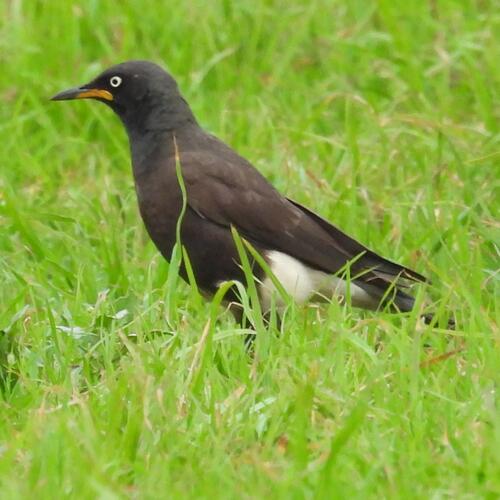
African Pied Starling (Lamprotornis bicolor) African Pied Starling
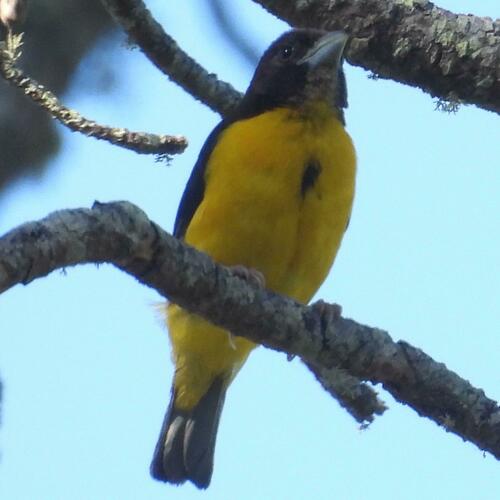
Dark-backed Weaver (Ploceus bicolor) Dark-backed Weaver

Media

Loading…

In short

The African Pied Starling and Dark-backed Weaver can be distinguished primarily by their plumage and habitat preferences. The starling is a glossy black and white bird often found in open areas, while the weaver is more uniformly colored and prefers wooded habitats.

Identification tips

Look for the African Pied Starling's glossy black and white plumage in open habitats. The Dark-backed Weaver will be more uniformly colored and found in wooded areas. Size and behavior, such as flocking in starlings and solitary nesting in weavers, can also aid in identification.

Size

The African Pied Starling is generally larger and bulkier than the Dark-backed Weaver.

Plumage

The African Pied Starling has a distinctive glossy black and white plumage, with a white belly and vent. In contrast, the Dark-backed Weaver is more uniformly colored, with a dark back and less contrasting underparts.

Behaviour

The African Pied Starling is often seen in open areas, sometimes in flocks, while the Dark-backed Weaver is more solitary or in pairs, often seen weaving nests in trees.

Habitat

African Pied Starlings are typically found in open grasslands and savannas, whereas Dark-backed Weavers prefer wooded areas and forest edges.

Voice

The vocalizations of the two species differ, with the African Pied Starling having a more varied and melodious song compared to the simpler calls of the Dark-backed Weaver.

Submit a better description

Use the same sections as the comparison. Your text is published immediately.

The African Pied Starling and Dark-backed Weaver can be distinguished primarily by their plumage and habitat preferences. The starling is a glossy black and white bird often found in open areas, while the weaver is more uniformly colored and prefers wooded habitats.

Look for the African Pied Starling's glossy black and white plumage in open habitats. The Dark-backed Weaver will be more uniformly colored and found in wooded areas. Size and behavior, such as flocking in starlings and solitary nesting in weavers, can also aid in identification.

The African Pied Starling is generally larger and bulkier than the Dark-backed Weaver.

The African Pied Starling has a distinctive glossy black and white plumage, with a white belly and vent. In contrast, the Dark-backed Weaver is more uniformly colored, with a dark back and less contrasting underparts.

The African Pied Starling is often seen in open areas, sometimes in flocks, while the Dark-backed Weaver is more solitary or in pairs, often seen weaving nests in trees.

African Pied Starlings are typically found in open grasslands and savannas, whereas Dark-backed Weavers prefer wooded areas and forest edges.

The vocalizations of the two species differ, with the African Pied Starling having a more varied and melodious song compared to the simpler calls of the Dark-backed Weaver.

Discard your changes?

You have unsaved edits. If you leave now, those changes will be lost.

African Pied Starling · Dark-backed Weaver · My Tricky Birds