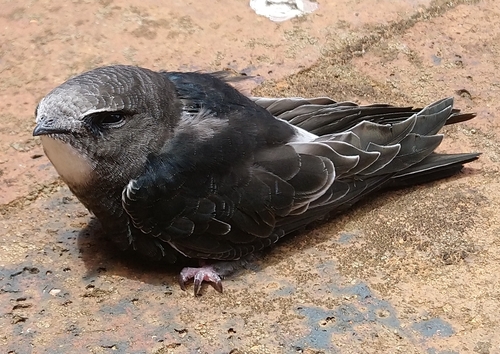
African Swift vs Horus Swift
Apus barbatus versus Apus horus
Play a quiz with African Swift and Horus Swift
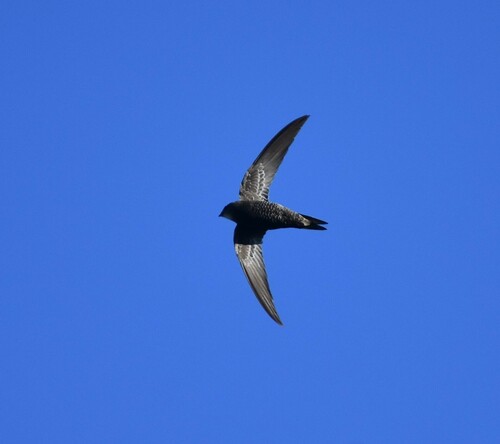
African Swift
Horus Swift
In short
The African Swift and Horus Swift are both members of the Apodidae family and can be challenging to differentiate in the field. The most reliable field mark is the tail shape: African Swifts have a slightly forked tail, while Horus Swifts have a more square-ended tail. Observing their flight behavior and habitat preferences can also aid in identification.
Identification tips
- Tail shape: African Swift has a slightly forked tail; Horus Swift has a square-ended tail.
- Plumage: Look for a paler throat and rump patch on Horus Swift, though subtle.
- Flight behavior: African Swift often flies higher and in larger flocks.
- Habitat: African Swift prefers highland areas; Horus Swift is more adaptable to various habitats.
Size
Both species are similar in size, typical of medium-sized swifts, making size a less reliable distinguishing feature.
Plumage
Both species have dark plumage overall, but the African Swift may appear slightly darker and more uniform, whereas the Horus Swift can show a paler throat and rump patch, though these features can be subtle and hard to discern in the field.
Behaviour
Both species exhibit swift, agile flight patterns typical of swifts, but the African Swift often flies higher and in larger flocks compared to the Horus Swift, which may be seen foraging lower and in smaller groups.
Habitat
African Swifts are typically found in moist highland areas, often at elevations of 1,600–2,400 m, while Horus Swifts are more adaptable, often seen in a variety of habitats including lowlands and near water bodies.
Voice
Vocalizations are not a reliable distinguishing feature in the field as both species produce similar high-pitched calls typical of swifts.