
African Woolly-necked Stork vs White Stork
Ciconia microscelis versus Ciconia ciconia
Play a quiz with African Woolly-necked Stork and White Stork
 African Woolly-necked Stork
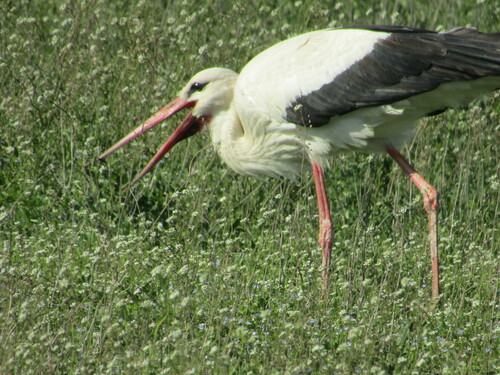 White Stork
In short
The African Woolly-necked Stork and the White Stork can be distinguished by their neck plumage and habitat preferences. The African Woolly-necked Stork has a distinctive 'woolly' neck and head, while the White Stork has a smooth white neck. Both species are found in different habitats, with the African Woolly-necked Stork often seen foraging in mudflats and rice fields, and the White Stork more commonly associated with open fields and wetlands.
Identification tips
Look for the 'woolly' texture on the neck and head of the African Woolly-necked Stork. Note the habitat: African Woolly-necked Storks are more likely to be seen in mudflats and rice fields, while White Storks prefer open fields and wetlands.
Plumage
The African Woolly-necked Stork features a 'woolly' neck and head, which is a key distinguishing feature from the White Stork, which has a smooth white neck.
Habitat
The African Woolly-necked Stork is often observed foraging on mudflats, coral reefs at low tide, and in rice fields. In contrast, the White Stork is typically found in open fields and wetlands.