Birdr

Akikiki vs Maui Alauahio

Oreomystis bairdi versus Paroreomyza montana

Play a quiz with Akikiki and Maui Alauahio
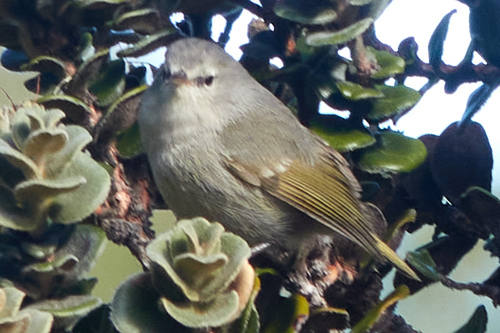
Akikiki (Oreomystis bairdi) Akikiki
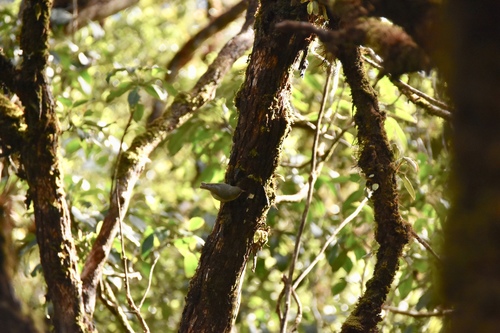
Maui Alauahio (Paroreomyza montana) Maui Alauahio

Media

Loading…

In short

The Akikiki and Maui Alauahio are both small Hawaiian honeycreepers, but they can be distinguished by their plumage and behavior. Akikiki are generally more subdued in color, while Maui Alauahio males have brighter yellow plumage. Behaviorally, Akikiki are more nuthatch-like in their foraging, whereas Maui Alauahio exhibit a more typical honeycreeper behavior.

Identification tips

  1. Plumage: Look for the brighter yellow face and breast of male Maui Alauahio. 2. Behavior: Note the nuthatch-like foraging of Akikiki. 3. Location: Akikiki are on Kaua'i, while Maui Alauahio are on Maui. 4. Vocalization: Listen for the distinctive song of the Maui Alauahio.

Size

Both species are small, but the Akikiki is slightly more compact and nuthatch-like in appearance.

Plumage

Akikiki have a more subdued plumage, often grayish with some olive tones, while male Maui Alauahio are brighter yellow, especially on the face and breast.

Behaviour

Akikiki forage in a nuthatch-like manner, often seen moving along tree trunks and branches. Maui Alauahio are more typical honeycreepers, gleaning insects from leaves and branches.

Habitat

Both species inhabit native forests, but Akikiki are found on Kaua'i, while Maui Alauahio are restricted to Maui.

Voice

Maui Alauahio males have a distinctive song, which can be a useful auditory cue, but specific vocalizations for Akikiki are not well-documented.

Submit a better description

Use the same sections as the comparison. Your text is published immediately.

The Akikiki and Maui Alauahio are both small Hawaiian honeycreepers, but they can be distinguished by their plumage and behavior. Akikiki are generally more subdued in color, while Maui Alauahio males have brighter yellow plumage. Behaviorally, Akikiki are more nuthatch-like in their foraging, whereas Maui Alauahio exhibit a more typical honeycreeper behavior.

  1. Plumage: Look for the brighter yellow face and breast of male Maui Alauahio. 2. Behavior: Note the nuthatch-like foraging of Akikiki. 3. Location: Akikiki are on Kaua'i, while Maui Alauahio are on Maui. 4. Vocalization: Listen for the distinctive song of the Maui Alauahio.

Both species are small, but the Akikiki is slightly more compact and nuthatch-like in appearance.

Akikiki have a more subdued plumage, often grayish with some olive tones, while male Maui Alauahio are brighter yellow, especially on the face and breast.

Akikiki forage in a nuthatch-like manner, often seen moving along tree trunks and branches. Maui Alauahio are more typical honeycreepers, gleaning insects from leaves and branches.

Both species inhabit native forests, but Akikiki are found on Kaua'i, while Maui Alauahio are restricted to Maui.

Maui Alauahio males have a distinctive song, which can be a useful auditory cue, but specific vocalizations for Akikiki are not well-documented.

Discard your changes?

You have unsaved edits. If you leave now, those changes will be lost.

Akikiki · Maui Alauahio · My Tricky Birds