Birdr

Alpine Swift vs Common Swift

Tachymarptis melba versus Apus apus

Play a quiz with Alpine Swift and Common Swift
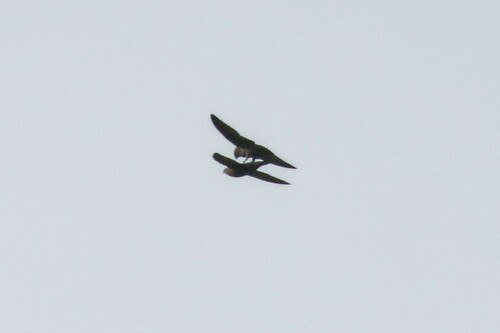
Alpine Swift (Tachymarptis melba) Alpine Swift
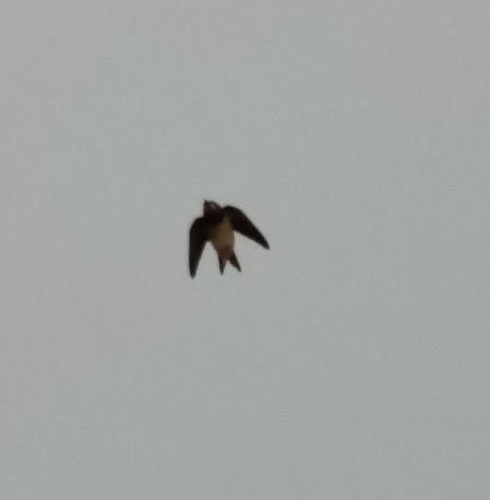
Common Swift (Apus apus) Common Swift

Media

Loading…

In short

The Alpine Swift and Common Swift are both aerial insectivores with streamlined bodies and long wings, but they can be distinguished by size and plumage details. The Alpine Swift is larger and has a distinctive white belly and throat, while the Common Swift is uniformly dark with a small white throat patch.

Identification tips

Look for the larger size and white belly of the Alpine Swift compared to the smaller, uniformly dark Common Swift. In flight, observe the wing shape: the Alpine Swift has broader wings, while the Common Swift's wings are more scythe-like. Listen for the Common Swift's screaming calls during flight, which are not typical of the Alpine Swift.

Size

The Alpine Swift is larger, with a wingspan of 51–58 cm, compared to the Common Swift's 42–48 cm.

Plumage

The Alpine Swift has a white belly and throat, contrasting with its dark brown upperparts. In contrast, the Common Swift is uniformly dark brown with only a small white throat patch.

Behaviour

Both species are highly aerial, spending most of their time in flight. However, the Common Swift is known for being almost continuously airborne during its non-breeding period.

Habitat

The Alpine Swift is often found in mountainous regions, while the Common Swift inhabits a wide range of habitats, including urban areas, from temperate to boreal zones.

Voice

The Common Swift has a distinctive, high-pitched screaming call, often heard in flight. The Alpine Swift's vocalizations are less well-documented in the notes.

Submit a better description

Use the same sections as the comparison. Your text is published immediately.

The Alpine Swift and Common Swift are both aerial insectivores with streamlined bodies and long wings, but they can be distinguished by size and plumage details. The Alpine Swift is larger and has a distinctive white belly and throat, while the Common Swift is uniformly dark with a small white throat patch.

Look for the larger size and white belly of the Alpine Swift compared to the smaller, uniformly dark Common Swift. In flight, observe the wing shape: the Alpine Swift has broader wings, while the Common Swift's wings are more scythe-like. Listen for the Common Swift's screaming calls during flight, which are not typical of the Alpine Swift.

The Alpine Swift is larger, with a wingspan of 51–58 cm, compared to the Common Swift's 42–48 cm.

The Alpine Swift has a white belly and throat, contrasting with its dark brown upperparts. In contrast, the Common Swift is uniformly dark brown with only a small white throat patch.

Both species are highly aerial, spending most of their time in flight. However, the Common Swift is known for being almost continuously airborne during its non-breeding period.

The Alpine Swift is often found in mountainous regions, while the Common Swift inhabits a wide range of habitats, including urban areas, from temperate to boreal zones.

The Common Swift has a distinctive, high-pitched screaming call, often heard in flight. The Alpine Swift's vocalizations are less well-documented in the notes.

Discard your changes?

You have unsaved edits. If you leave now, those changes will be lost.

Alpine Swift · Common Swift · My Tricky Birds