Alpine Swift vs Little Swift
Tachymarptis melba versus Apus affinis
Play a quiz with Alpine Swift and Little Swift
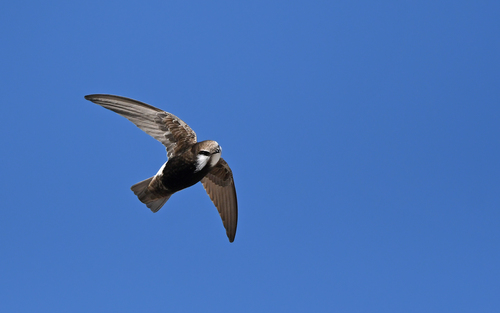
Alpine Swift
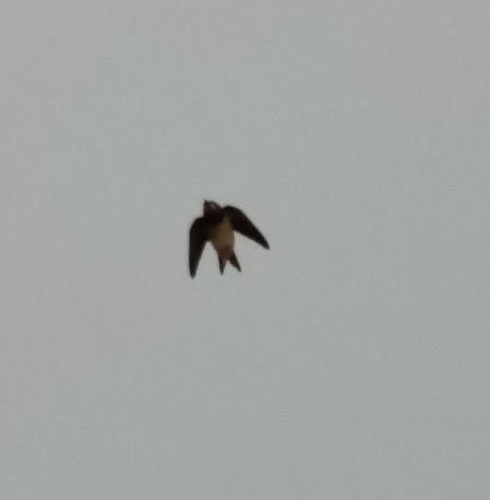
Little Swift
In short
The Alpine Swift is significantly larger than the Little Swift, with a distinctive white belly and throat contrasting with its dark wings and back. In contrast, the Little Swift is smaller, with a more uniform dark plumage and a white rump patch. Both species are often seen in flight, making size and plumage key differentiators.
Identification tips
- Size: Look for the larger size of the Alpine Swift. 2. Plumage: Note the Alpine Swift's white belly and throat versus the Little Swift's white rump patch. 3. Flight pattern: Observe the soaring behavior of the Alpine Swift compared to the rapid, erratic flight of the Little Swift. 4. Habitat: Consider the location; Alpine Swifts prefer mountainous areas, while Little Swifts are common in urban settings.
Size
The Alpine Swift is much larger, with a wingspan of up to 57 cm, compared to the Little Swift's more compact size and wingspan of around 33 cm.
Plumage
The Alpine Swift has a prominent white belly and throat, which starkly contrasts with its dark upperparts. The Little Swift, however, is mostly dark with a small but noticeable white rump patch.
Behaviour
Both species are highly aerial, often seen in swift, agile flight. Alpine Swifts tend to soar higher and for longer periods, while Little Swifts are more likely to be seen in rapid, erratic flight closer to structures.
Habitat
Alpine Swifts are typically found in mountainous regions and open areas, often near cliffs. Little Swifts are more adaptable, frequently seen in urban areas and near buildings.
Voice
The vocalizations of both species are not distinctively different enough to be a reliable field mark, with both producing high-pitched calls.