Birdr

Amami Thrush vs Japanese Thrush

Zoothera major versus Turdus cardis

Play a quiz with Amami Thrush and Japanese Thrush
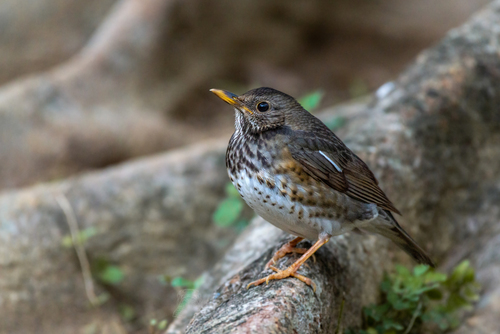
Amami Thrush (Zoothera major) Amami Thrush
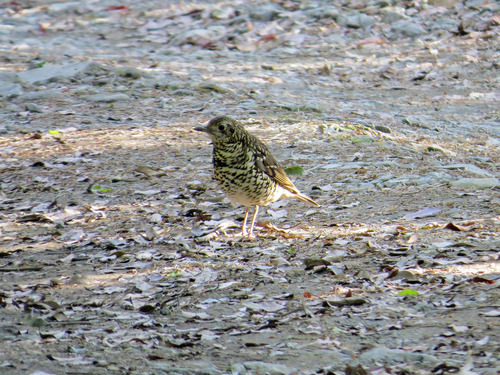
Japanese Thrush (Turdus cardis) Japanese Thrush

Media

Loading…

In short

The Amami Thrush and Japanese Thrush can be distinguished by their structure and plumage. The Amami Thrush has a more robust build with a shorter tail, while the Japanese Thrush is more slender with a longer tail. Plumage differences are subtle, but the Amami Thrush often shows more pronounced spotting on the underparts.

Identification tips

  1. Structure: Look for the more robust build and shorter tail of the Amami Thrush. 2. Plumage: Note the more pronounced spotting on the underparts of the Amami Thrush. 3. Habitat: Consider the location; Amami Thrush is endemic to the Amami Islands. 4. Vocalizations: Listen carefully for subtle differences in song and calls, though this requires experience.

Size

The Amami Thrush is generally more robust with a shorter tail compared to the more slender and longer-tailed Japanese Thrush.

Plumage

Amami Thrush typically exhibits more pronounced spotting on the underparts, whereas the Japanese Thrush has a cleaner, less spotted appearance. Both species have similar overall coloration, but these subtle differences can be noted with careful observation.

Behaviour

Both species exhibit similar thrush-like behaviors, such as foraging on the ground and moving through dense undergrowth. Behavioral differences are not a reliable field mark.

Habitat

Amami Thrush is more restricted to the Amami Islands, often found in subtropical forests, while the Japanese Thrush has a broader range across Japan and prefers mixed and deciduous forests.

Voice

Vocalizations are similar, with both species producing melodious songs. Specific differences in song structure and call notes are subtle and require careful listening.

Submit a better description

Use the same sections as the comparison. Your text is published immediately.

The Amami Thrush and Japanese Thrush can be distinguished by their structure and plumage. The Amami Thrush has a more robust build with a shorter tail, while the Japanese Thrush is more slender with a longer tail. Plumage differences are subtle, but the Amami Thrush often shows more pronounced spotting on the underparts.

  1. Structure: Look for the more robust build and shorter tail of the Amami Thrush. 2. Plumage: Note the more pronounced spotting on the underparts of the Amami Thrush. 3. Habitat: Consider the location; Amami Thrush is endemic to the Amami Islands. 4. Vocalizations: Listen carefully for subtle differences in song and calls, though this requires experience.

The Amami Thrush is generally more robust with a shorter tail compared to the more slender and longer-tailed Japanese Thrush.

Amami Thrush typically exhibits more pronounced spotting on the underparts, whereas the Japanese Thrush has a cleaner, less spotted appearance. Both species have similar overall coloration, but these subtle differences can be noted with careful observation.

Both species exhibit similar thrush-like behaviors, such as foraging on the ground and moving through dense undergrowth. Behavioral differences are not a reliable field mark.

Amami Thrush is more restricted to the Amami Islands, often found in subtropical forests, while the Japanese Thrush has a broader range across Japan and prefers mixed and deciduous forests.

Vocalizations are similar, with both species producing melodious songs. Specific differences in song structure and call notes are subtle and require careful listening.

Discard your changes?

You have unsaved edits. If you leave now, those changes will be lost.

Amami Thrush · Japanese Thrush · My Tricky Birds