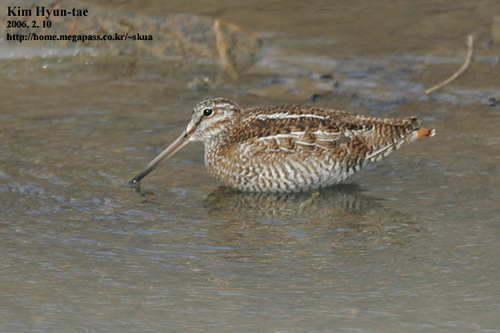
Amami Woodcock vs Solitary Snipe
Scolopax mira versus Gallinago solitaria
Play a quiz with Amami Woodcock and Solitary Snipe
Amami Woodcock
Solitary Snipe
In short
The Amami Woodcock and Solitary Snipe are both cryptically plumaged birds of the Scolopacidae family, but they can be distinguished by their structure and habitat preferences. The Amami Woodcock is typically found in forested areas on Amami Island, while the Solitary Snipe is more often associated with mountainous regions and wetlands in Asia.
Identification tips
- Location: Amami Woodcock is endemic to Amami Island, while Solitary Snipe is found in broader Asian regions. 2. Habitat: Look for Amami Woodcock in dense forests and Solitary Snipe in open wetlands or mountainous areas. 3. Bill Length: Solitary Snipe has a longer bill compared to the more robust Amami Woodcock. 4. Plumage: Check for more uniform plumage in Amami Woodcock versus more distinct barring in Solitary Snipe.
Size
Both species are similar in size, but the Amami Woodcock is generally more robust with a slightly shorter bill compared to the Solitary Snipe.
Plumage
Both species have intricate brown and buff patterns for camouflage, but the Amami Woodcock tends to have a more uniform plumage with less contrast between the back and underparts. The Solitary Snipe may show more distinct barring on the underparts.
Behaviour
The Amami Woodcock is more likely to be seen in dense forest undergrowth, often remaining still to avoid detection. The Solitary Snipe is more likely to be found in open, wet habitats, where it may be seen probing the ground for food.
Habitat
Amami Woodcock is restricted to the forested areas of Amami Island, Japan, whereas the Solitary Snipe is found in a variety of wetland and mountainous habitats across Asia.
Voice
Vocalizations are not well-documented for either species, but the Amami Woodcock is generally quieter, while the Solitary Snipe may produce a variety of calls, especially during the breeding season.