Birdr

Amazonian Motmot vs Rufous-capped Motmot

Momotus momota versus Baryphthengus ruficapillus

Play a quiz with Amazonian Motmot and Rufous-capped Motmot
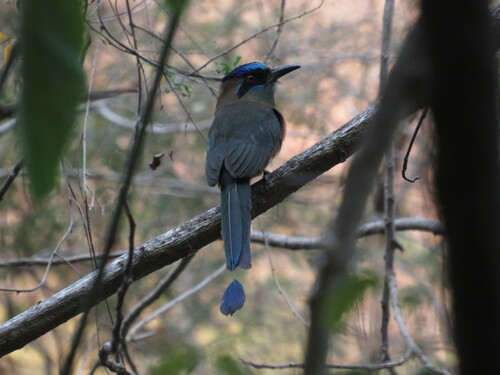
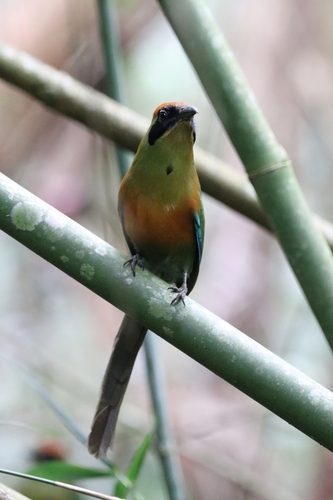
Amazonian Motmot (Momotus momota) Amazonian Motmot
Rufous-capped Motmot (Baryphthengus ruficapillus) Rufous-capped Motmot

Media

Loading…

In short

The Amazonian Motmot (Momotus momota) and the Rufous-capped Motmot (Baryphthengus ruficapillus) can be differentiated by their tail structure and cap coloration. The Amazonian Motmot has a distinctive racquet-tipped tail, while the Rufous-capped Motmot lacks this feature and has a more uniform tail. Additionally, the Rufous-capped Motmot is named for its rufous crown, which contrasts with the Amazonian Motmot's more varied head coloration.

Identification tips

  1. Look for the racquet-tipped tail in the Amazonian Motmot. 2. Note the rufous crown of the Rufous-capped Motmot. 3. Observe the head pattern: Amazonian has a black mask and blue crown, Rufous-capped has a more uniform rufous head. 4. Consider habitat: Amazonian in lowland Amazon forests, Rufous-capped in southeastern Brazilian forests.

Size

Both species are similar in size, though the Rufous-capped Motmot is generally bulkier.

Plumage

The Amazonian Motmot has a more varied head pattern with a black mask and a blue crown, while the Rufous-capped Motmot features a distinctive rufous crown and lacks the blue crown.

Behaviour

Both species exhibit similar behavior, often perching quietly in the forest understory. However, the Amazonian Motmot is more likely to be seen using its tail for communication.

Habitat

The Amazonian Motmot is typically found in lowland forests of the Amazon basin, whereas the Rufous-capped Motmot prefers subtropical or tropical moist lowland forests in southeastern Brazil.

Voice

Vocalizations differ, with the Amazonian Motmot producing a series of hooting calls, while the Rufous-capped Motmot's calls are less documented but generally quieter.

Submit a better description

Use the same sections as the comparison. Your text is published immediately.

The Amazonian Motmot (Momotus momota) and the Rufous-capped Motmot (Baryphthengus ruficapillus) can be differentiated by their tail structure and cap coloration. The Amazonian Motmot has a distinctive racquet-tipped tail, while the Rufous-capped Motmot lacks this feature and has a more uniform tail. Additionally, the Rufous-capped Motmot is named for its rufous crown, which contrasts with the Amazonian Motmot's more varied head coloration.

  1. Look for the racquet-tipped tail in the Amazonian Motmot. 2. Note the rufous crown of the Rufous-capped Motmot. 3. Observe the head pattern: Amazonian has a black mask and blue crown, Rufous-capped has a more uniform rufous head. 4. Consider habitat: Amazonian in lowland Amazon forests, Rufous-capped in southeastern Brazilian forests.

Both species are similar in size, though the Rufous-capped Motmot is generally bulkier.

The Amazonian Motmot has a more varied head pattern with a black mask and a blue crown, while the Rufous-capped Motmot features a distinctive rufous crown and lacks the blue crown.

Both species exhibit similar behavior, often perching quietly in the forest understory. However, the Amazonian Motmot is more likely to be seen using its tail for communication.

The Amazonian Motmot is typically found in lowland forests of the Amazon basin, whereas the Rufous-capped Motmot prefers subtropical or tropical moist lowland forests in southeastern Brazil.

Vocalizations differ, with the Amazonian Motmot producing a series of hooting calls, while the Rufous-capped Motmot's calls are less documented but generally quieter.

Discard your changes?

You have unsaved edits. If you leave now, those changes will be lost.

Amazonian Motmot · Rufous-capped Motmot · My Tricky Birds