Birdr

Amazonian Pygmy-Owl vs Ferruginous Pygmy-Owl

Glaucidium hardyi versus Glaucidium brasilianum

Play a quiz with Amazonian Pygmy-Owl and Ferruginous Pygmy-Owl
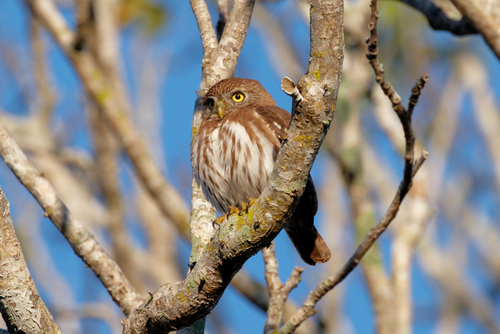
Amazonian Pygmy-Owl (Glaucidium hardyi) Amazonian Pygmy-Owl
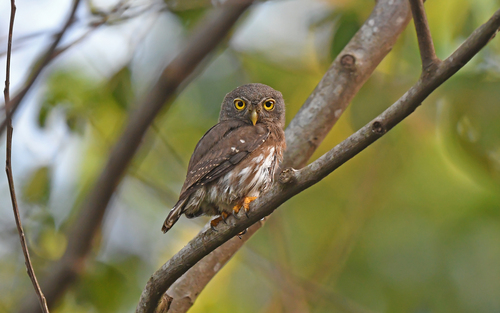
Ferruginous Pygmy-Owl (Glaucidium brasilianum) Ferruginous Pygmy-Owl

Media

Loading…

In short

The Amazonian Pygmy-Owl and Ferruginous Pygmy-Owl are small owls that can be differentiated by habitat preference and subtle plumage differences. The Amazonian Pygmy-Owl is typically found in dense forest interiors, while the Ferruginous Pygmy-Owl prefers forest edges and more open areas. Observing their behavior and habitat can aid in identification.

Identification tips

  1. Habitat: Check the habitat; dense forest interiors suggest Amazonian, while edges and open areas suggest Ferruginous. 2. Behavior: Look for tail movements; Ferruginous may cock or jerk its tail. 3. Plumage: Note overall color tone; Ferruginous may appear more rufous.

Size

Both species are similar in size, typical of small pygmy-owls.

Plumage

Plumage differences are subtle, but the Amazonian Pygmy-Owl may appear slightly darker overall compared to the Ferruginous Pygmy-Owl, which often has a more rufous tone.

Behaviour

The Ferruginous Pygmy-Owl often perches with its tail cocked upward or jerks its tail when agitated, a behavior not commonly noted for the Amazonian Pygmy-Owl.

Habitat

The Amazonian Pygmy-Owl is found in dense forest interiors, whereas the Ferruginous Pygmy-Owl is more often seen at forest edges and in open river-edge forests.

Submit a better description

Use the same sections as the comparison. Your text is published immediately.

The Amazonian Pygmy-Owl and Ferruginous Pygmy-Owl are small owls that can be differentiated by habitat preference and subtle plumage differences. The Amazonian Pygmy-Owl is typically found in dense forest interiors, while the Ferruginous Pygmy-Owl prefers forest edges and more open areas. Observing their behavior and habitat can aid in identification.

  1. Habitat: Check the habitat; dense forest interiors suggest Amazonian, while edges and open areas suggest Ferruginous. 2. Behavior: Look for tail movements; Ferruginous may cock or jerk its tail. 3. Plumage: Note overall color tone; Ferruginous may appear more rufous.

Both species are similar in size, typical of small pygmy-owls.

Plumage differences are subtle, but the Amazonian Pygmy-Owl may appear slightly darker overall compared to the Ferruginous Pygmy-Owl, which often has a more rufous tone.

The Ferruginous Pygmy-Owl often perches with its tail cocked upward or jerks its tail when agitated, a behavior not commonly noted for the Amazonian Pygmy-Owl.

The Amazonian Pygmy-Owl is found in dense forest interiors, whereas the Ferruginous Pygmy-Owl is more often seen at forest edges and in open river-edge forests.

Discard your changes?

You have unsaved edits. If you leave now, those changes will be lost.

Amazonian Pygmy-Owl · Ferruginous Pygmy-Owl · My Tricky Birds