Birdr

American Barn Owl vs Little Owl

Tyto furcata versus Athene noctua

Play a quiz with American Barn Owl and Little Owl
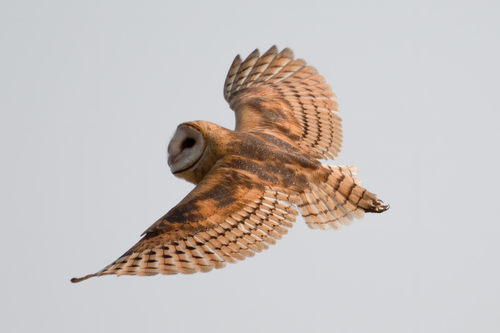
American Barn Owl (Tyto furcata) American Barn Owl
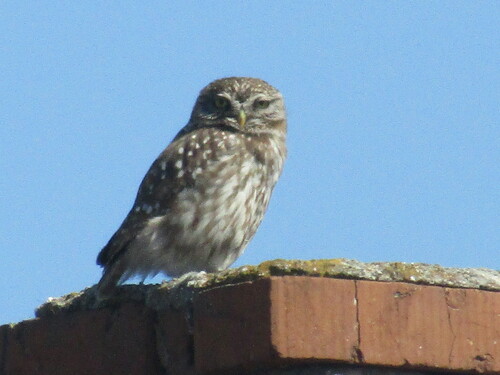
Little Owl (Athene noctua) Little Owl

Media

Loading…

In short

The American Barn Owl (Tyto furcata) and Little Owl (Athene noctua) are distinct in size and appearance. The Barn Owl is larger with a heart-shaped face, while the Little Owl is smaller with a more rounded head. Their habitats overlap minimally, aiding identification.

Identification tips

1. Size and Shape: Look for the larger size and heart-shaped face of the Barn Owl compared to the smaller, round-headed Little Owl. 2. Activity Time: Note the time of activity; Barn Owls are more active at night, while Little Owls can be seen during the day. 3. Vocalization: Listen for the Barn Owl's screech versus the Little Owl's 'kew-kew' call. 4. Habitat: Consider the habitat; Barn Owls are often near open fields, while Little Owls are more versatile in habitat choice.

Size

The American Barn Owl is significantly larger, with a wingspan of about 107-110 cm, compared to the Little Owl's compact size and wingspan of approximately 54-58 cm.

Plumage

The Barn Owl has a distinctive pale, heart-shaped facial disc and a mix of white and golden-buff plumage. In contrast, the Little Owl features a more rounded head with a spotted brown and white plumage, lacking the heart-shaped face.

Behaviour

Barn Owls are primarily nocturnal and often seen hunting over open fields at night. Little Owls are more diurnal, frequently observed perched on posts or rocks during the day.

Habitat

Barn Owls prefer open habitats like fields and farmlands, often near human structures. Little Owls are found in more varied habitats, including farmland, orchards, and rocky areas, often in drier regions.

Voice

The Barn Owl is known for its eerie, drawn-out screech, whereas the Little Owl produces a variety of calls, including a repeated 'kew-kew' sound.

Submit a better description

Use the same sections as the comparison. Your text is published immediately.

The American Barn Owl (Tyto furcata) and Little Owl (Athene noctua) are distinct in size and appearance. The Barn Owl is larger with a heart-shaped face, while the Little Owl is smaller with a more rounded head. Their habitats overlap minimally, aiding identification.

1. Size and Shape: Look for the larger size and heart-shaped face of the Barn Owl compared to the smaller, round-headed Little Owl. 2. Activity Time: Note the time of activity; Barn Owls are more active at night, while Little Owls can be seen during the day. 3. Vocalization: Listen for the Barn Owl's screech versus the Little Owl's 'kew-kew' call. 4. Habitat: Consider the habitat; Barn Owls are often near open fields, while Little Owls are more versatile in habitat choice.

The American Barn Owl is significantly larger, with a wingspan of about 107-110 cm, compared to the Little Owl's compact size and wingspan of approximately 54-58 cm.

The Barn Owl has a distinctive pale, heart-shaped facial disc and a mix of white and golden-buff plumage. In contrast, the Little Owl features a more rounded head with a spotted brown and white plumage, lacking the heart-shaped face.

Barn Owls are primarily nocturnal and often seen hunting over open fields at night. Little Owls are more diurnal, frequently observed perched on posts or rocks during the day.

Barn Owls prefer open habitats like fields and farmlands, often near human structures. Little Owls are found in more varied habitats, including farmland, orchards, and rocky areas, often in drier regions.

The Barn Owl is known for its eerie, drawn-out screech, whereas the Little Owl produces a variety of calls, including a repeated 'kew-kew' sound.

Discard your changes?

You have unsaved edits. If you leave now, those changes will be lost.

American Barn Owl · Little Owl · My Tricky Birds