Birdr

American Barn Owl vs Western Barn Owl

Tyto furcata versus Tyto alba

Play a quiz with American Barn Owl and Western Barn Owl
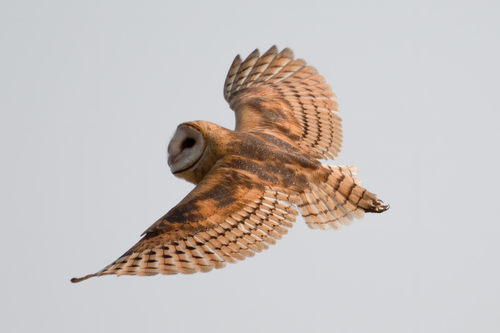
American Barn Owl (Tyto furcata) American Barn Owl
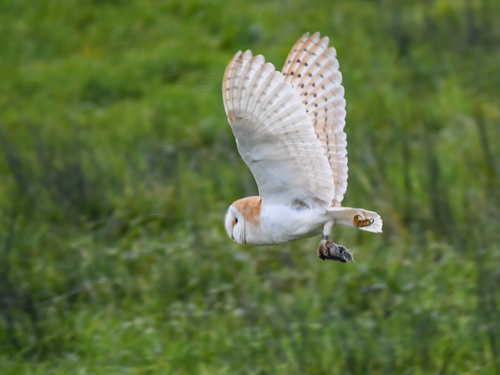
Western Barn Owl (Tyto alba) Western Barn Owl

Media

Loading…

In short

The American Barn Owl (Tyto furcata) and Western Barn Owl (Tyto alba) are closely related, with subtle differences in plumage and habitat preferences. Both species share a similar structure, but regional variations in color and markings can aid identification.

Identification tips

  1. Plumage: Look for the more golden or reddish upperparts in the American Barn Owl compared to the paler Western Barn Owl. 2. Underparts: Check for spotting; American Barn Owls may have more spots than Western Barn Owls. 3. Habitat: Consider the location and typical habitat; American Barn Owls are more flexible in habitat choice, often found in lower elevations.

Size

Both species are similar in size, with no significant differences in overall dimensions.

Plumage

American Barn Owls tend to have a more golden or reddish hue on the upperparts, while Western Barn Owls often appear paler with more extensive white and gray mottling. The underparts of the Western Barn Owl are generally less spotted or entirely unmarked compared to the American Barn Owl.

Behaviour

Both species exhibit similar nocturnal and secretive behaviors, often hunting in open areas. They are generally monogamous but can display polygamous tendencies.

Habitat

American Barn Owls are found in a wide range of open habitats, from urban to rural, often at lower elevations. Western Barn Owls have a broad distribution as well, but specific habitat preferences may vary by region.

Voice

Vocalizations are generally similar between the two species, characterized by screeches and hisses, with no significant differences noted.

Submit a better description

Use the same sections as the comparison. Your text is published immediately.

The American Barn Owl (Tyto furcata) and Western Barn Owl (Tyto alba) are closely related, with subtle differences in plumage and habitat preferences. Both species share a similar structure, but regional variations in color and markings can aid identification.

  1. Plumage: Look for the more golden or reddish upperparts in the American Barn Owl compared to the paler Western Barn Owl. 2. Underparts: Check for spotting; American Barn Owls may have more spots than Western Barn Owls. 3. Habitat: Consider the location and typical habitat; American Barn Owls are more flexible in habitat choice, often found in lower elevations.

Both species are similar in size, with no significant differences in overall dimensions.

American Barn Owls tend to have a more golden or reddish hue on the upperparts, while Western Barn Owls often appear paler with more extensive white and gray mottling. The underparts of the Western Barn Owl are generally less spotted or entirely unmarked compared to the American Barn Owl.

Both species exhibit similar nocturnal and secretive behaviors, often hunting in open areas. They are generally monogamous but can display polygamous tendencies.

American Barn Owls are found in a wide range of open habitats, from urban to rural, often at lower elevations. Western Barn Owls have a broad distribution as well, but specific habitat preferences may vary by region.

Vocalizations are generally similar between the two species, characterized by screeches and hisses, with no significant differences noted.

Discard your changes?

You have unsaved edits. If you leave now, those changes will be lost.

American Barn Owl · Western Barn Owl · My Tricky Birds