American Black Duck vs Mottled Duck
Anas rubripes versus Anas fulvigula
Play a quiz with American Black Duck and Mottled Duck
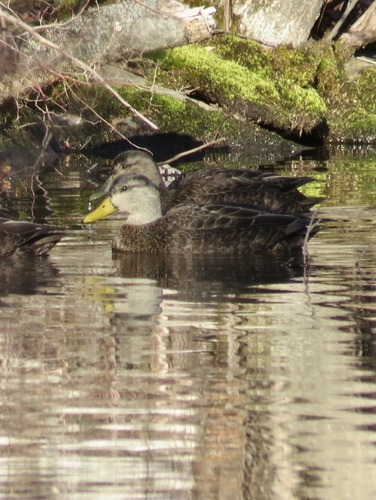
American Black Duck
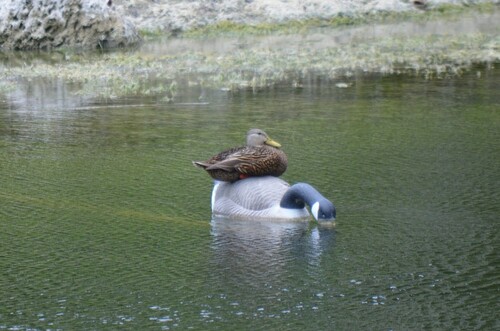
Mottled Duck
In short
The American Black Duck and Mottled Duck are similar in appearance but can be distinguished by subtle differences in plumage and habitat preferences. The American Black Duck typically has a darker, more uniform body with a contrasting pale face, while the Mottled Duck is lighter overall with a more mottled appearance. Both species can be found in overlapping regions, but their preferred habitats often differ.
Identification tips
- Look for the darker body and pale face of the American Black Duck compared to the lighter, mottled appearance of the Mottled Duck.
- Check the speculum color: American Black Duck has a purplish speculum, while Mottled Duck has a blue speculum.
- Consider the habitat: American Black Duck is more likely in northeastern marshes, while Mottled Duck is common in southeastern coastal areas.
- Be cautious of hybrids with Mallards, which can complicate identification.
Size
Both species are similar in size, with no significant differences that are easily observable in the field.
Plumage
The American Black Duck has a darker, more uniform body with a slightly iridescent purplish speculum bordered by black. Its face is pale, providing a stark contrast to its body. The Mottled Duck is generally lighter with a more mottled appearance and a blue speculum bordered by white. The Mottled Duck's face is less contrasting with its body.
Behaviour
Both species exhibit similar behaviors typical of dabbling ducks, such as foraging in shallow waters. There are no significant behavioral differences noted in the sources.
Habitat
The American Black Duck is more commonly found in freshwater and brackish marshes, especially in the northeastern United States and Canada. The Mottled Duck prefers coastal marshes and is more common in the southeastern United States, particularly in Florida and along the Gulf Coast.
Voice
The vocalizations of both species are similar, consisting of quacks typical of dabbling ducks. There are no distinct differences noted in the sources.