Birdr

American Woodcock vs Wilson's Snipe

Scolopax minor versus Gallinago delicata

Play a quiz with American Woodcock and Wilson's Snipe
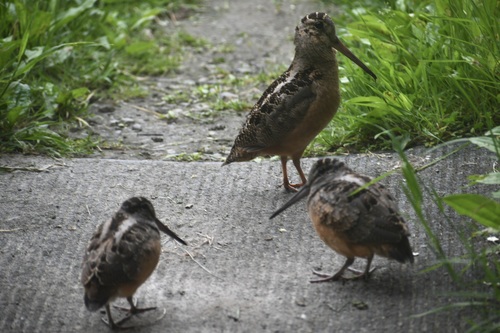
American Woodcock (Scolopax minor) American Woodcock
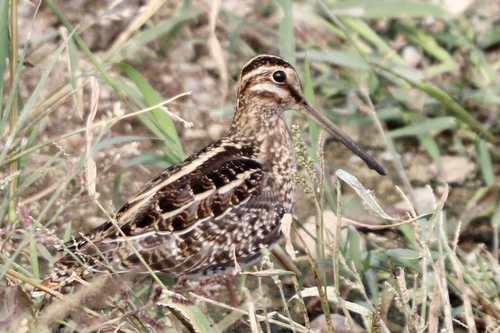
Wilson's Snipe (Gallinago delicata) Wilson's Snipe

Media

Loading…

In short

The American Woodcock and Wilson's Snipe are both cryptically patterned shorebirds, but they differ in structure and behavior. The American Woodcock is more robust with a shorter bill and is often found in forested areas, while Wilson's Snipe is slimmer with a longer bill, frequenting wetlands.

Identification tips

1. Bill Length: American Woodcock has a shorter, thicker bill; Wilson's Snipe has a longer, slender bill. 2. Habitat: Look for American Woodcock in forested areas, Wilson's Snipe in wetlands. 3. Flight Display: American Woodcock performs sky dances with peenting; Wilson's Snipe winnows with tail feathers. 4. Plumage: American Woodcock has more uniform leaf-brown mottling; Wilson's Snipe shows more striping and a pronounced supercilium.

Size

American Woodcock is more robust and compact, while Wilson's Snipe is slimmer and slightly smaller.

Plumage

Both species have mottled brown plumage, but the American Woodcock has more leaf-brown patterns that blend with forest floors, whereas Wilson's Snipe has more distinct striping on the back and a more defined supercilium.

Behaviour

American Woodcock performs unique 'sky dances' during courtship, spiraling up and then descending with a peenting display. Wilson's Snipe is more likely to flush from wetland vegetation with a zigzag flight.

Habitat

American Woodcock prefers young forests and old fields, while Wilson's Snipe is found in wetlands and marshes.

Voice

American Woodcock is known for its peenting calls during courtship displays. Wilson's Snipe produces a distinctive winnowing sound with its tail during display flights.

Submit a better description

Use the same sections as the comparison. Your text is published immediately.

The American Woodcock and Wilson's Snipe are both cryptically patterned shorebirds, but they differ in structure and behavior. The American Woodcock is more robust with a shorter bill and is often found in forested areas, while Wilson's Snipe is slimmer with a longer bill, frequenting wetlands.

1. Bill Length: American Woodcock has a shorter, thicker bill; Wilson's Snipe has a longer, slender bill. 2. Habitat: Look for American Woodcock in forested areas, Wilson's Snipe in wetlands. 3. Flight Display: American Woodcock performs sky dances with peenting; Wilson's Snipe winnows with tail feathers. 4. Plumage: American Woodcock has more uniform leaf-brown mottling; Wilson's Snipe shows more striping and a pronounced supercilium.

American Woodcock is more robust and compact, while Wilson's Snipe is slimmer and slightly smaller.

Both species have mottled brown plumage, but the American Woodcock has more leaf-brown patterns that blend with forest floors, whereas Wilson's Snipe has more distinct striping on the back and a more defined supercilium.

American Woodcock performs unique 'sky dances' during courtship, spiraling up and then descending with a peenting display. Wilson's Snipe is more likely to flush from wetland vegetation with a zigzag flight.

American Woodcock prefers young forests and old fields, while Wilson's Snipe is found in wetlands and marshes.

American Woodcock is known for its peenting calls during courtship displays. Wilson's Snipe produces a distinctive winnowing sound with its tail during display flights.

Discard your changes?

You have unsaved edits. If you leave now, those changes will be lost.

American Woodcock · Wilson's Snipe · My Tricky Birds