
Birdr

Amur Paradise-Flycatcher vs Indian Paradise-Flycatcher

Terpsiphone incei versus Terpsiphone paradisi

Play a quiz with Amur Paradise-Flycatcher and Indian Paradise-Flycatcher
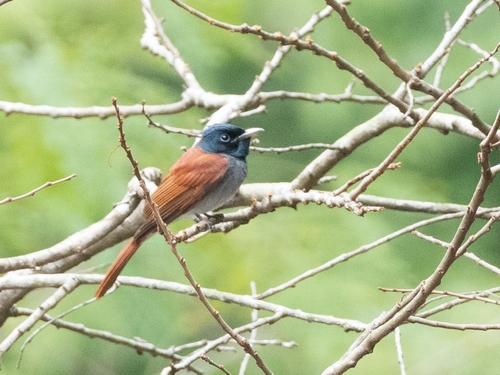
Amur Paradise-Flycatcher (Terpsiphone incei) Amur Paradise-Flycatcher
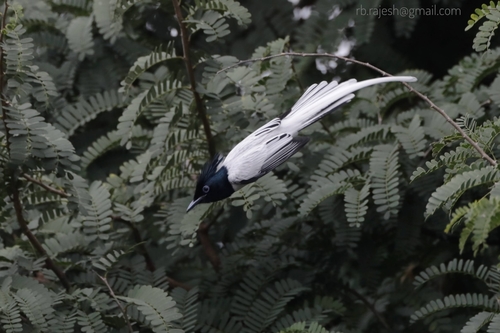
Indian Paradise-Flycatcher (Terpsiphone paradisi) Indian Paradise-Flycatcher

Media

Loading…

In short

The Amur Paradise-Flycatcher and Indian Paradise-Flycatcher are visually similar, but can be distinguished by tail length and plumage details. The Amur has a shorter tail compared to the Indian, which often has a long, flowing tail in males. Vocalizations are not a reliable differentiator in the field.

Identification tips

  1. Look for the tail: Indian males often have long, flowing central tail feathers. 2. Check the plumage: Amur males have a shorter tail and slightly duller colors. 3. Consider the location: Amur is more likely in temperate areas during migration, while Indian prefers tropical forests. 4. Vocalizations are similar; focus on visual cues.

Size

Both species are similar in size, but the Indian Paradise-Flycatcher typically appears larger due to its longer tail.

Plumage

Male Amur Paradise-Flycatchers have a shorter tail and lack the long central tail feathers of the Indian males. Females of both species are similar, but the Amur female may show slightly duller plumage.

Behaviour

Both species exhibit similar flycatching behavior, often seen darting from perches to catch insects.

Habitat

Both species inhabit similar forested environments, but the Amur is more likely to be found in temperate regions during migration, while the Indian is more common in subtropical and tropical forests.

Voice

Vocalizations are similar and not a reliable field mark to differentiate these species.

Submit a better description

Use the same sections as the comparison. Your text is published immediately.

The Amur Paradise-Flycatcher and Indian Paradise-Flycatcher are visually similar, but can be distinguished by tail length and plumage details. The Amur has a shorter tail compared to the Indian, which often has a long, flowing tail in males. Vocalizations are not a reliable differentiator in the field.

  1. Look for the tail: Indian males often have long, flowing central tail feathers. 2. Check the plumage: Amur males have a shorter tail and slightly duller colors. 3. Consider the location: Amur is more likely in temperate areas during migration, while Indian prefers tropical forests. 4. Vocalizations are similar; focus on visual cues.

Both species are similar in size, but the Indian Paradise-Flycatcher typically appears larger due to its longer tail.

Male Amur Paradise-Flycatchers have a shorter tail and lack the long central tail feathers of the Indian males. Females of both species are similar, but the Amur female may show slightly duller plumage.

Both species exhibit similar flycatching behavior, often seen darting from perches to catch insects.

Both species inhabit similar forested environments, but the Amur is more likely to be found in temperate regions during migration, while the Indian is more common in subtropical and tropical forests.

Vocalizations are similar and not a reliable field mark to differentiate these species.

Discard your changes?

You have unsaved edits. If you leave now, those changes will be lost.

Amur Paradise-Flycatcher · Indian Paradise-Flycatcher · My Tricky Birds