Anna's Hummingbird vs Costa's Hummingbird
Calypte anna versus Calypte costae
Play a quiz with Anna's Hummingbird and Costa's Hummingbird
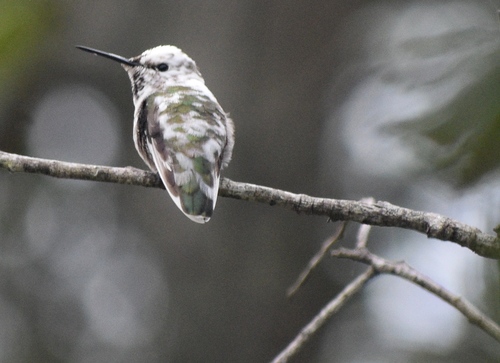
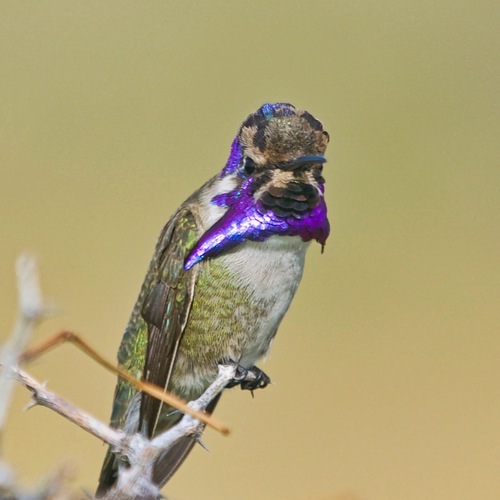
Anna's Hummingbird
Costa's Hummingbird
In short
Anna's Hummingbird and Costa's Hummingbird are similar in size and shape, but can be distinguished by their throat coloration and habitat preferences. Anna's Hummingbird typically has a more extensive iridescent crown and throat, while Costa's Hummingbird features a more restricted purple gorget with elongated sides.
Identification tips
- Look for the throat coloration: Anna's has a rose-pink crown and throat, while Costa's has a purple gorget with elongated sides. 2. Consider the habitat: Anna's is more likely in urban and varied environments, Costa's in desert scrub. 3. Listen for vocalizations: Costa's has a distinctive whistled call during dives, Anna's a sharp chip. 4. Be cautious with females and immatures, as they can be challenging to differentiate.
Size
Both species are similar in size, with no significant difference in overall body length or wingspan.
Plumage
Anna's Hummingbird males have a rose-pink crown and throat that can extend to the forehead, while Costa's Hummingbird males have a more restricted, vibrant purple gorget with elongated sides. Females of both species are less colorful, but Costa's females often show a slightly more muted throat patch.
Behaviour
Both species exhibit similar feeding and flying behaviors typical of hummingbirds, including hovering at flowers and feeders.
Habitat
Anna's Hummingbird is more adaptable and can be found in a variety of habitats, including urban areas, while Costa's Hummingbird is more associated with desert scrub and chaparral, particularly in the southwestern United States.
Voice
Costa's Hummingbird males are known for their distinctive whistled vocalizations during courtship dives, while Anna's Hummingbird males produce a sharp, metallic chip.