Birdr

Antillean Nighthawk vs Sooty Tern

Chordeiles gundlachii versus Onychoprion fuscatus

Play a quiz with Antillean Nighthawk and Sooty Tern
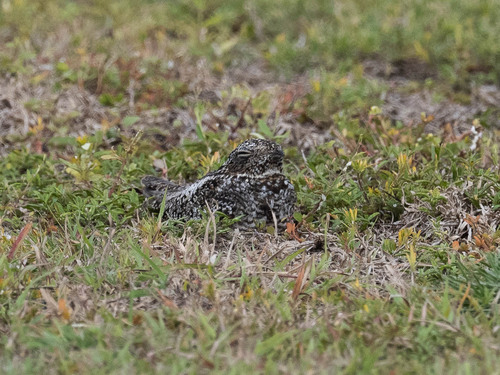
Antillean Nighthawk (Chordeiles gundlachii) Antillean Nighthawk
Sooty Tern (Onychoprion fuscatus) Sooty Tern

Media

Loading…

In short

The Antillean Nighthawk and Sooty Tern are distinct in both habitat and behavior, with the nighthawk being a land-based nightjar and the tern a pelagic seabird. Key differences include the nighthawk's cryptic plumage and nocturnal habits compared to the tern's striking black-and-white plumage and oceanic lifestyle.

Identification tips

  1. Habitat: Look for Antillean Nighthawk in open terrestrial areas at dusk; Sooty Tern is found over open ocean. 2. Plumage: Note the nighthawk's mottled brown plumage versus the tern's black-and-white contrast. 3. Behavior: Observe the nighthawk's low, erratic flight at dusk compared to the tern's graceful, continuous flight over water. 4. Vocalization: Listen for the nighthawk's 'peent' at dusk and the tern's harsh calls near colonies.

Size

The Sooty Tern is generally larger, with a wingspan that can exceed that of the Antillean Nighthawk.

Plumage

Antillean Nighthawk has cryptic, mottled brown plumage suited for camouflage on the ground. In contrast, the Sooty Tern has a striking black cap and back with white underparts, making it more conspicuous.

Behaviour

Antillean Nighthawk is nocturnal and often seen flying at dusk or dawn, while the Sooty Tern is diurnal and spends most of its life on the wing over open ocean.

Habitat

Antillean Nighthawk is found in open areas on islands in the Caribbean, while the Sooty Tern inhabits tropical and subtropical oceans, nesting on remote islands.

Voice

Antillean Nighthawk has a distinctive 'peent' call, often heard at dusk. Sooty Tern is known for its loud, harsh calls, especially around breeding colonies.

Submit a better description

Use the same sections as the comparison. Your text is published immediately.

The Antillean Nighthawk and Sooty Tern are distinct in both habitat and behavior, with the nighthawk being a land-based nightjar and the tern a pelagic seabird. Key differences include the nighthawk's cryptic plumage and nocturnal habits compared to the tern's striking black-and-white plumage and oceanic lifestyle.

  1. Habitat: Look for Antillean Nighthawk in open terrestrial areas at dusk; Sooty Tern is found over open ocean. 2. Plumage: Note the nighthawk's mottled brown plumage versus the tern's black-and-white contrast. 3. Behavior: Observe the nighthawk's low, erratic flight at dusk compared to the tern's graceful, continuous flight over water. 4. Vocalization: Listen for the nighthawk's 'peent' at dusk and the tern's harsh calls near colonies.

The Sooty Tern is generally larger, with a wingspan that can exceed that of the Antillean Nighthawk.

Antillean Nighthawk has cryptic, mottled brown plumage suited for camouflage on the ground. In contrast, the Sooty Tern has a striking black cap and back with white underparts, making it more conspicuous.

Antillean Nighthawk is nocturnal and often seen flying at dusk or dawn, while the Sooty Tern is diurnal and spends most of its life on the wing over open ocean.

Antillean Nighthawk is found in open areas on islands in the Caribbean, while the Sooty Tern inhabits tropical and subtropical oceans, nesting on remote islands.

Antillean Nighthawk has a distinctive 'peent' call, often heard at dusk. Sooty Tern is known for its loud, harsh calls, especially around breeding colonies.

Discard your changes?

You have unsaved edits. If you leave now, those changes will be lost.

Antillean Nighthawk · Sooty Tern · My Tricky Birds