Birdr

Antipodean Albatross vs Short-tailed Albatross

Diomedea antipodensis versus Phoebastria albatrus

Play a quiz with Antipodean Albatross and Short-tailed Albatross
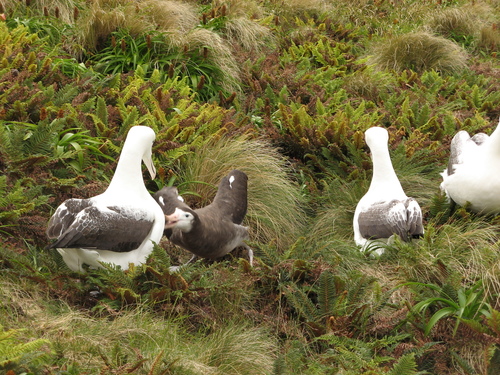
Antipodean Albatross (Diomedea antipodensis) Antipodean Albatross
Short-tailed Albatross (Phoebastria albatrus) Short-tailed Albatross

Media

Loading…

In short

The Antipodean Albatross and Short-tailed Albatross can be distinguished primarily by their bill color and plumage. The Antipodean has a pale bill with a pinkish hue, while the Short-tailed features a distinctive pink bill with a bluish tip. Both species are large albatrosses, but the Short-tailed has a more robust build.

Identification tips

  1. Look for the bill color: Antipodean has a pale pinkish bill, while Short-tailed has a pink bill with a bluish tip. 2. Check for the golden wash on the head and neck of adult Short-tailed Albatrosses. 3. Consider location: Antipodean is more likely in the Southern Hemisphere, Short-tailed in the North Pacific. 4. Note the tail length: Short-tailed has a shorter tail compared to its body size.

Size

Both are large albatrosses, but the Short-tailed Albatross is slightly more robust and has a shorter tail.

Plumage

Antipodean Albatrosses have a mostly white body with dark upper wings, while Short-tailed Albatrosses have a golden wash on the head and neck, especially in adults, which is absent in Antipodeans.

Behaviour

Both species exhibit similar soaring flight patterns typical of albatrosses, but specific behavioral differences are not well-documented.

Habitat

Antipodean Albatrosses are primarily found in the Southern Ocean around New Zealand, whereas Short-tailed Albatrosses are more associated with the North Pacific, particularly around Japan.

Voice

Vocalizations are not a primary distinguishing feature in the field for these species.

Submit a better description

Use the same sections as the comparison. Your text is published immediately.

The Antipodean Albatross and Short-tailed Albatross can be distinguished primarily by their bill color and plumage. The Antipodean has a pale bill with a pinkish hue, while the Short-tailed features a distinctive pink bill with a bluish tip. Both species are large albatrosses, but the Short-tailed has a more robust build.

  1. Look for the bill color: Antipodean has a pale pinkish bill, while Short-tailed has a pink bill with a bluish tip. 2. Check for the golden wash on the head and neck of adult Short-tailed Albatrosses. 3. Consider location: Antipodean is more likely in the Southern Hemisphere, Short-tailed in the North Pacific. 4. Note the tail length: Short-tailed has a shorter tail compared to its body size.

Both are large albatrosses, but the Short-tailed Albatross is slightly more robust and has a shorter tail.

Antipodean Albatrosses have a mostly white body with dark upper wings, while Short-tailed Albatrosses have a golden wash on the head and neck, especially in adults, which is absent in Antipodeans.

Both species exhibit similar soaring flight patterns typical of albatrosses, but specific behavioral differences are not well-documented.

Antipodean Albatrosses are primarily found in the Southern Ocean around New Zealand, whereas Short-tailed Albatrosses are more associated with the North Pacific, particularly around Japan.

Vocalizations are not a primary distinguishing feature in the field for these species.

Discard your changes?

You have unsaved edits. If you leave now, those changes will be lost.

Antipodean Albatross · Short-tailed Albatross · My Tricky Birds