
Birdr

Ashy-throated Chlorospingus vs Common Chlorospingus

Chlorospingus canigularis versus Chlorospingus flavopectus

Play a quiz with Ashy-throated Chlorospingus and Common Chlorospingus
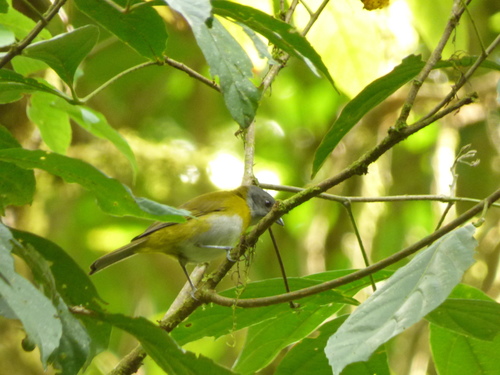
Ashy-throated Chlorospingus (Chlorospingus canigularis) Ashy-throated Chlorospingus
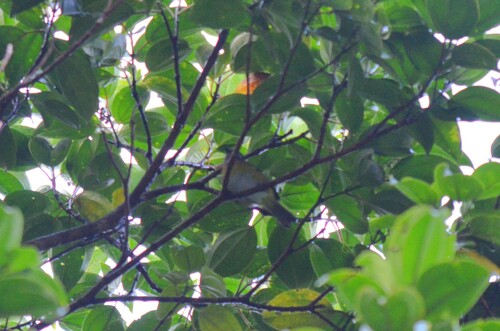
Common Chlorospingus (Chlorospingus flavopectus) Common Chlorospingus

Media

Loading…

In short

The Ashy-throated Chlorospingus and Common Chlorospingus are similar in structure but can be distinguished by their throat color and subtle plumage differences. The Ashy-throated has a distinctive ashy-gray throat, while the Common Chlorospingus typically shows a more uniform olive or yellowish throat. Both species are often found in mixed-species flocks, making behavior and habitat context important for identification.

Identification tips

Size

Both species are similar in size, typical of the Chlorospingus genus.

Plumage

The Ashy-throated Chlorospingus has an ashy-gray throat and a more contrasting head pattern, while the Common Chlorospingus generally has a more uniform olive or yellowish throat and less contrast in the head region. Both species share a similar overall olive-green body coloration.

Behaviour

Both species often join mixed-species flocks and are active foragers, frequently seen moving through the mid-levels of the forest.

Habitat

Both species inhabit montane forests, but the Common Chlorospingus has a broader range, found from Mexico to Argentina, while the Ashy-throated is more localized in its distribution.

Voice

Vocalizations are not well-documented for field separation; both species have similar calls, typically high-pitched and thin.

Submit a better description

Use the same sections as the comparison. Your text is published immediately.

The Ashy-throated Chlorospingus and Common Chlorospingus are similar in structure but can be distinguished by their throat color and subtle plumage differences. The Ashy-throated has a distinctive ashy-gray throat, while the Common Chlorospingus typically shows a more uniform olive or yellowish throat. Both species are often found in mixed-species flocks, making behavior and habitat context important for identification.

  • Throat color: Look for the ashy-gray throat of the Ashy-throated Chlorospingus versus the more uniform olive or yellowish throat of the Common Chlorospingus.
  • Head pattern: Note the more contrasting head pattern in the Ashy-throated.
  • Habitat context: Consider the geographic location and habitat, as the Common Chlorospingus has a wider range.
  • Behavior: Observe flocking behavior and association with mixed-species flocks.

Both species are similar in size, typical of the Chlorospingus genus.

The Ashy-throated Chlorospingus has an ashy-gray throat and a more contrasting head pattern, while the Common Chlorospingus generally has a more uniform olive or yellowish throat and less contrast in the head region. Both species share a similar overall olive-green body coloration.

Both species often join mixed-species flocks and are active foragers, frequently seen moving through the mid-levels of the forest.

Both species inhabit montane forests, but the Common Chlorospingus has a broader range, found from Mexico to Argentina, while the Ashy-throated is more localized in its distribution.

Vocalizations are not well-documented for field separation; both species have similar calls, typically high-pitched and thin.

Discard your changes?

You have unsaved edits. If you leave now, those changes will be lost.

Ashy-throated Chlorospingus · Common Chlorospingus · My Tricky Birds